
Advanced Materials and Metallurgy
Expert-defined terms from the Certified Specialist Programme in AR Weapon Design course at LearnUNI. Free to read, free to share, paired with a professional course.
ABERRATION CORRECTION – Related terms #
electron optics, spherical distortion – Technique used in transmission electron microscopy to improve image resolution of alloy microstructures. In AR weapon components, it reveals nanoscale precipitates. Challenge: requires precise calibration and stable vacuum conditions.
ABSORPTION HEAT TREATING – Related terms #
carburizing, nitriding – A surface hardening process where a workpiece absorbs carbon or nitrogen from a reactive gas. Example: hardened barrel sleeves for directed‑energy weapons. Challenge: controlling case depth and avoiding distortion.
ADDITIVE MANUFACTURING – Related terms #
3D printing, powder bed fusion – Layer‑by‑layer fabrication of metal parts from metal powders or wire. Enables complex lattice structures for lightweight AR weapon frames. Challenge: residual porosity and anisotropic mechanical properties.
AEROGEL COMPOSITES – Related terms #
silica aerogel, thermal insulation – Ultra‑light porous materials with low thermal conductivity. Used as heat shields for high‑energy laser emitters. Challenge: brittleness and handling sensitivity.
AGE HARDENING – Related terms #
precipitation strengthening, tempering – Heat‑treatment sequence that forms fine precipitates, increasing yield strength of alloys such as Al‑Cu. In AR weapons, it improves structural integrity of moving parts. Challenge: over‑aging reduces toughness.
ALLOY DESIGN – Related terms #
composition optimization, phase diagram – Systematic selection of alloying elements to achieve target properties like high‑temperature strength. Example: Ti‑Al‑V alloys for turbine‑driven projectile launchers. Challenge: balancing corrosion resistance with manufacturability.
ALLOYING ELEMENTS – Related terms #
nickel, chromium, molybdenum – Chemical species added to a base metal to modify its microstructure and performance. In AR weapons, they tailor magnetic permeability and thermal stability. Challenge: avoiding detrimental intermetallics.
ALUMINIDE COATINGS – Related terms #
thermal spray, oxidation barrier – Aluminum‑based ceramic layers applied to steel components to protect against high‑temperature oxidation. Used on missile launch rails. Challenge: coating adhesion under cyclic heating.
ANODIC Oxidation – Related terms #
anodizing, surface hardening – Electrochemical process that thickens the natural oxide layer on aluminum alloys, increasing wear resistance. In AR weapon housings, it reduces surface wear. Challenge: achieving uniform thickness on complex geometries.
APPLIED STRESS RUPTURE – Related terms #
fatigue, creep‑rupture – Failure mode where a material cracks under constant load at elevated temperature. Critical for turbine blades in directed‑energy systems. Challenge: predicting life under variable thermal cycles.
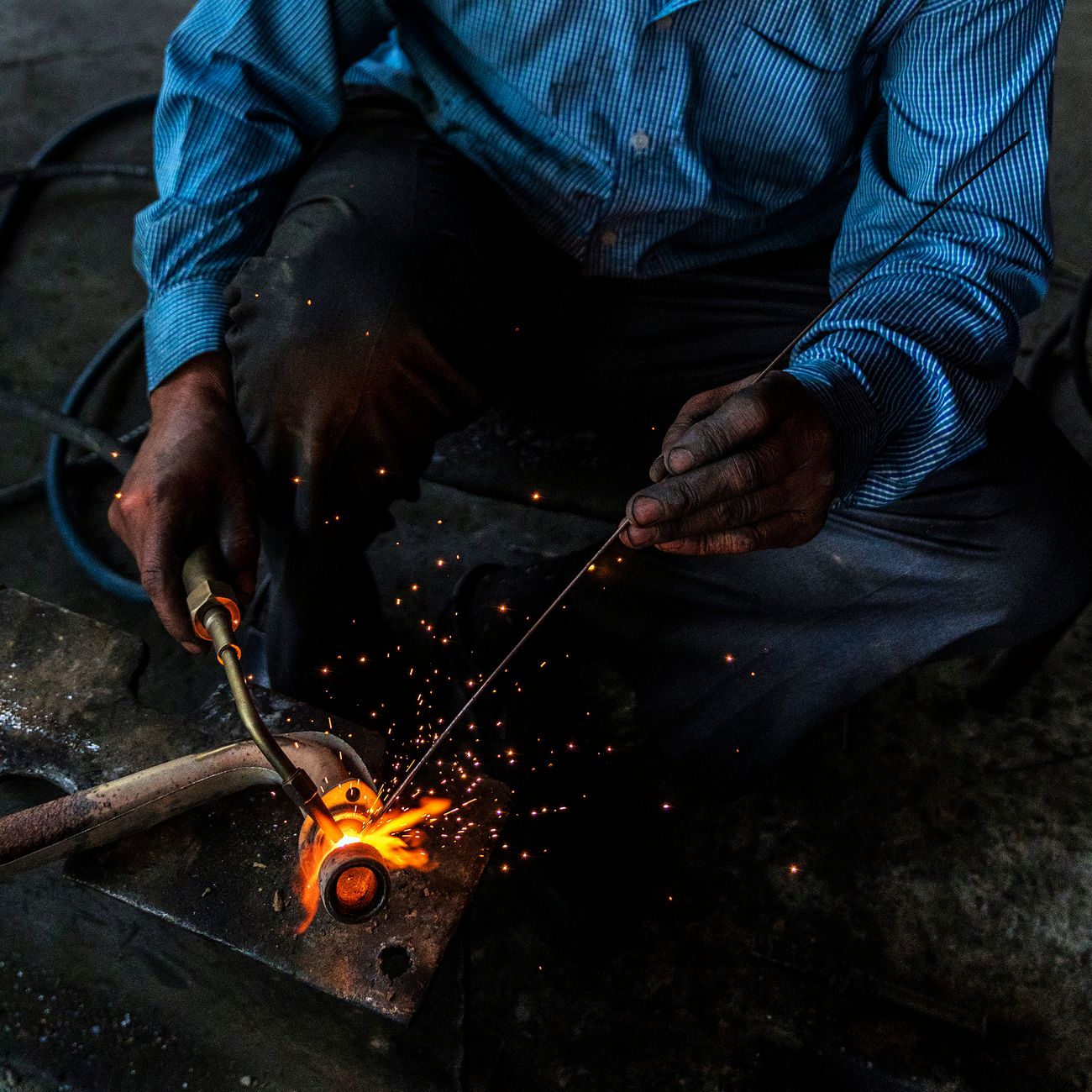
ARC‑WELDING – Related terms #
fusion welding, electrode – High‑current welding process for joining conductive metals. Used to assemble high‑current busbars in railgun modules. Challenge: controlling heat input to prevent grain growth.
ARROW‑SHAPED CRYSTALS – Related terms #
single crystal, directional solidification – Crystals grown with a tapered geometry to optimize heat flow. Employed in high‑power laser gain media. Challenge: maintaining crystal purity during growth.
ASTM STANDARDS – Related terms #
material specifications, testing protocols – Internationally recognized specifications for material properties and testing. Provide baseline for qualifying AR weapon components. Challenge: adapting standards to novel alloys.
ATOMIC‑LEVEL SIMULATION – Related terms #
molecular dynamics, ab initio – Computational methods that model interactions of atoms to predict material behavior. Used to design alloys with tailored magnetic saturation. Challenge: high computational cost for large systems.
AUSTENITIC STAINLESS STEEL – Related terms #
304L, 316L, corrosion resistance – Non‑magnetic stainless steels with a face‑centered cubic structure. Ideal for housings that must avoid magnetic interference. Challenge: lower strength compared with martensitic grades.
AVALANCHE PHOTODIODE – Related terms #
semiconductor, high‑gain detector – Device that amplifies photon signals via impact ionization, used in targeting sensors. Requires semiconductor materials with precise doping. Challenge: managing dark current at high temperatures.
BASE METAL – Related terms #
substrate, matrix – Primary metal in an alloy that forms the continuous phase. Determines bulk properties like ductility. In AR weapons, base metals such as titanium provide lightweight support. Challenge: ensuring compatibility with alloying additions.
BETHE THEORY – Related terms #
electron scattering, X‑ray diffraction – Model describing scattering of electrons by atoms, foundational for interpreting diffraction patterns. Applied to characterize thin‑film coatings on weapon optics. Challenge: requires high‑quality data.
BINARY PHASE DIAGRAM – Related terms #
eutectic, peritectic – Graphical representation of phase equilibria for two‑component systems. Guides heat‑treatment schedules for alloy development. Challenge: complex multi‑component systems need ternary or higher diagrams.
BLACK‑BODY EMISSIVITY – Related terms #
radiative heat transfer, surface finish – Measure of a material’s ability to emit thermal radiation. High emissivity coatings improve cooling of high‑energy emitters. Challenge: maintaining emissivity under abrasive wear.
BLASTING – Related terms #
explosive forming, rapid prototyping – Use of controlled explosions to shape metal sheets. Enables quick fabrication of complex weapon casings. Challenge: controlling dimensions and surface integrity.
BORE‑STRESS RELIEF – Related terms #
stress relieving, annealing – Heat treatment applied after drilling to reduce residual tensile stresses that can cause crack initiation. Essential for high‑pressure gas channels. Challenge: optimizing temperature to avoid grain coarsening.
BRINELL HARDNESS – Related terms #
HB, indentation test – Macro‑indentation method measuring resistance to plastic deformation. Used to verify surface hardness of armor‑piercing projectiles. Challenge: limited sensitivity for very hard materials.
BRONZE ALLOY – Related terms #
copper‑tin, bearing material – Copper alloy with tin, offering good wear resistance and low friction. Utilized in sliding interfaces of electromagnetic launchers. Challenge: susceptibility to corrosion in humid environments.
CARBIDE REINFORCED COMPOSITES – Related terms #
WC‑Co, cemented carbide – Materials where hard carbide particles are embedded in a metallic binder. Provide high wear resistance for barrel liners. Challenge: brittleness under impact loading.
CARBURIZING – Related terms #
case hardening, carbon diffusion – Process that diffuses carbon into the surface layer of steel, increasing hardness. Used on external weapon surfaces to resist abrasion. Challenge: managing case depth and avoiding distortion.
CENTRIFUGAL CASTING – Related terms #
rotary molding, ingot – Casting method where molten metal is forced to the periphery of a rotating mold, producing cylindrical components with fine grain structure. Applied to missile motor casings. Challenge: precise control of rotation speed to prevent defects.
CERAMIC MATRIX COMPOSITES – Related terms #
CMC, SiC‑SiC – Composite materials where ceramic fibers reinforce a ceramic matrix, offering high temperature capability and fracture resistance. Used in heat shields for directed‑energy weapons. Challenge: complex manufacturing and cost.
CHALCOGENIDE LASER – Related terms #
solid‑state laser, gain medium – Laser using a metal‑chalcogenide crystal (e.g., CdSe) as the gain medium, providing specific wavelengths for targeting. Material purity affects beam quality. Challenge: thermal lensing at high power.
CHEMICAL VAPOR DEPOSITION – Related terms #
CVD, thin‑film growth – Process depositing material from vapor‑phase precursors onto a substrate. Used to coat turbine blades with protective ceramics. Challenge: controlling film stress and uniformity.
CHROMIUM NITRIDING – Related terms #
surface hardening, diffusion layer – Introduces nitrogen and chromium to form hard CrN surface layers. Increases wear resistance of high‑speed gears in kinetic weapons. Challenge: achieving deep, crack‑free layers.
COLD ROLLING – Related terms #
plastic deformation, work hardening – Metal sheet thickness reduction at ambient temperature, improving strength and surface finish. Used to produce thin armor plates. Challenge: managing strain‑induced anisotropy.
COLD SPRAY – Related terms #
kinetic deposition, particle velocity – Solid‑state deposition technique where particles are accelerated to high velocity and bond upon impact. Enables repair of damaged weapon components without heating. Challenge: achieving sufficient bonding strength.
COMPOSITE LAMINATE – Related terms #
ply, interlaminar shear – Stack of alternating layers of fibers and matrix material, providing tailored stiffness. Used in lightweight structural panels of AR weapon mounts. Challenge: delamination under cyclic loading.
CONDUCTIVE THERMAL INTERFACES – Related terms #
thermal paste, TIM, heat spreader – Materials that simultaneously conduct heat and electricity, used to couple high‑current busbars to heat sinks. Challenge: maintaining low contact resistance over temperature swings.
CORROSION RESISTANCE – Related terms #
passivation, galvanic coupling – Ability of a material to withstand degradation in aggressive environments. Critical for maritime deployment of AR weapons. Challenge: alloy selection versus mechanical performance trade‑offs.
CREEP – Related terms #
steady‑state deformation, high‑temperature – Time‑dependent plastic deformation under constant load at elevated temperature. Influences lifespan of turbine blades in high‑energy systems. Challenge: predicting creep rates for novel alloys.
CRYSTALLINE AMORPHOUS METALS – Related terms #
metallic glass, glass transition – Non‑crystalline alloys with high strength and elastic limit. Used for spring elements in rapid‑fire mechanisms. Challenge: limited ductility and sensitivity to annealing.
CURIE POINT – Related terms #
magnetic transition, ferromagnetism – Temperature at which a ferromagnetic material loses its spontaneous magnetization. Relevant for magnetic shielding in electromagnetic launchers. Challenge: maintaining performance near the Curie temperature.
CYCLIC LOADING – Related terms #
fatigue, S‑N curve – Repeated application of stress or strain, leading to fatigue failure. Critical for rotating components of kinetic energy weapons. Challenge: accurate life prediction under variable amplitude.
DAMAGE TOLERANCE – Related terms #
fracture mechanics, safety factor – Design philosophy allowing limited damage without catastrophic failure. Applied to armor modules that must survive micro‑impacts. Challenge: balancing weight penalty with protection level.
DENTING – Related terms #
impact deformation, hardness – Localized plastic deformation caused by a hard projectile. Measures material resistance to penetration. Used in testing of protective coatings. Challenge: correlating dent size with ballistic performance.
DIFFUSION COATING – Related terms #
interdiffusion, metallizing – Layer formed by mutual diffusion of substrate and coating material, providing graded composition. Example: Ni‑P diffusion on steel for corrosion protection. Challenge: controlling diffusion depth.
DOPING – Related terms #
semiconductor, impurity atoms – Introduction of small concentrations of foreign atoms to modify electrical properties. In photonic sensors, precise doping sets wavelength response. Challenge: uniform distribution at nanometer scale.
DRAG REDUCTION COATINGS – Related terms #
hydrophobic, riblet surface – Surface treatments that lower aerodynamic drag on projectile bodies. Utilizes micro‑structured polymer layers. Challenge: durability under high‑speed heating.
DRYING KINETICS – Related terms #
moisture removal, sintering – Rate at which moisture evaporates from powders before consolidation. Influences powder flow in additive manufacturing. Challenge: preventing agglomeration during drying.
DUPLICATE METALLIC GLASSES – Related terms #
bulk metallic glass, rapid quench – Production of large‑volume amorphous metals through controlled cooling. Used for high‑strength, low‑weight components. Challenge: avoiding crystallization during scale‑up.
ELECTROCHEMICAL DEPOSITION – Related terms #
electroplating, galvanic coating – Process depositing metal layers from an electrolyte using electric current. Provides protective copper or nickel layers on weapon circuitry. Challenge: achieving uniform thickness on complex geometry.
ELECTROLYTIC CORROSION – Related terms #
galvanic cell, anodic dissolution – Corrosion mechanism driven by electric potential differences. Considered in design of conductive armor systems. Challenge: mitigating through material selection and coating.
ELECTRON BEAM MELTING – Related terms #
EBM, additive manufacturing – High‑energy electron beam fuses metal powder layer‑by‑layer in a vacuum. Produces dense Ti‑6Al‑4V parts for high‑temperature sections. Challenge: residual stress management.
ELECTRONICALLY RECONFIGURABLE MATERIALS – Related terms #
smart alloys, adaptive structures – Materials whose properties change under an applied electric field, such as shape‑memory alloys with electric actuation. Used for variable‑geometry optics. Challenge: power consumption and response time.
ELASTIC MODULUS – Related terms #
Young’s modulus, stiffness – Ratio of stress to strain in the linear elastic region. Determines deflection of weapon mounts under load. Challenge: anisotropic materials require direction‑dependent values.
EMISSIVITY COATING – Related terms #
thermal radiator, IR paint – Surface layer that enhances radiative heat loss. Applied to high‑power laser housings to maintain temperature. Challenge: coating adhesion under rapid thermal cycling.
ENCRUSTED MICROSTRUCTURE – Related terms #
grain boundary, precipitation – Microstructural feature where precipitates line grain boundaries, strengthening the material. Common in precipitation‑hardened steels for railgun breeches. Challenge: controlling distribution during heat treatment.
ENGLANDITE – Related terms #
intermetallic, Ni3Al – High‑temperature intermetallic compound with excellent oxidation resistance. Used in turbine blades of kinetic‑energy launchers. Challenge: brittleness at room temperature.
ENTHALPY – Related terms #
heat content, thermodynamics – Total heat content of a system, used to calculate energy release during combustion of propellants. Challenge: accurate measurement in transient processes.
EPITAXIAL GROWTH – Related terms #
heteroepitaxy, lattice matching – Deposition of a crystalline layer on a substrate such that the film inherits the substrate’s orientation. Used for semiconductor photodetectors in targeting pods. Challenge: lattice mismatch induced defects.
EUTECTIC POINT – Related terms #
phase diagram, invariant reaction – Temperature and composition where liquid transforms directly into two solid phases. Guides alloy design for rapid solidification. Challenge: controlling cooling rates to avoid segregation.
EXTRUSION – Related terms #
die, profile – Process forcing material through a shaped die to produce continuous profiles. Produces heat‑sink fins for high‑power modules. Challenge: maintaining dimensional tolerances over long runs.
FACTOR OF SAFETY – Related terms #
design margin, reliability – Ratio of material strength to applied stress. Determines allowable load for AR weapon components. Challenge: optimizing for weight while meeting stringent safety margins.
FERROUS METALS – Related terms #
iron alloys, carbon steel – Metals containing iron, typically magnetic. Used in structural frames where magnetic signature must be minimized. Challenge: corrosion protection in humid environments.
FIBER REINFORCED METALS – Related terms #
metal matrix composite, MMC – Metals embedded with reinforcing fibers (e.g., SiC fibers). Provide high specific strength for weapon launch tubes. Challenge: fiber‑matrix bonding and thermal expansion mismatch.
FIRE‑HARDENING – Related terms #
flame treatment, surface modification – Rapid heating of a surface to create a hardened layer, often using laser pulses. Increases wear resistance of high‑speed components. Challenge: controlling heat‑affected zone.
FLUIDITY – Related terms #
melt flow index, casting – Ability of molten metal to flow and fill molds. Critical for casting complex geometries of AR weapon internals. Challenge: viscosity changes with temperature and alloy composition.
FORGING – Related terms #
die, deformation – Plastic deformation of metal under compressive forces, refining grain structure. Produces high‑strength billets for barrel fabrication. Challenge: tool wear and die design for high‑strength alloys.
FRACTURE TOUGHNESS – Related terms #
KIC, crack propagation – Resistance of a material to crack growth. Determines survivability of components under impact. Used to select alloys for projectile nose caps. Challenge: measuring in brittle ceramic composites.
GALVANIC COATING – Related terms #
electroplating, corrosion barrier – Protective metal layer applied by electrolytic deposition. Commonly zinc over steel to prevent rust. Challenge: coating uniformity on intricate parts.
GRAIN BOUNDARY STRENGTHENING – Related terms #
segregation, solute drag – Enhancement of mechanical properties through solute atoms accumulating at grain boundaries. Improves high‑temperature creep resistance. Challenge: avoiding embrittlement.
GRAIN SIZE CONTROL – Related terms #
recrystallization, Hall‑Petch – Manipulating average grain diameter to tune strength and ductility. Fine grains increase yield strength for high‑stress components. Challenge: maintaining size during high‑temperature exposure.
HEAT TREATMENT – Related terms #
annealing, quenching, tempering – Controlled thermal processes to alter microstructure and properties. Essential for achieving desired hardness in weapon steel. Challenge: precise temperature control to avoid over‑tempering.
HEAT‑EXCHANGER METALS – Related terms #
Al‑Si, Cu‑Zn alloys – Materials with high thermal conductivity used to transfer heat away from power modules. Example: copper‑tungsten alloys for high‑flux cooling channels. Challenge: balancing conductivity with mechanical strength.
HIGH‑ENTROPY ALLOYS – Related terms #
multi‑principal, refractory – Alloys containing several principal elements in near‑equal proportions, offering superior strength and oxidation resistance. Potential for extreme‑environment weapon components. Challenge: complex phase behavior and cost.
HYPERCOATING – Related terms #
laser cladding, surface alloying – Application of a thick, wear‑resistant coating by melting and fusing alloy powders onto a substrate. Used on high‑impact surfaces of kinetic weapons. Challenge: residual stress and cracking.
IDEAL SOLID SOLUTION – Related terms #
thermodynamics, mixing entropy – Model describing alloy systems where atoms mix without lattice distortion. Guides alloy composition predictions. Challenge: real systems deviate due to size mismatch.
IMPACT TESTING – Related terms #
Charpy, fracture energy – Dynamic test measuring energy absorbed during crack propagation. Evaluates toughness of armor plates. Challenge: interpreting results for anisotropic composites.
INCONEL – Related terms #
Ni‑Cr‑Fe alloy, superalloy – High‑temperature nickel‑based alloy with excellent oxidation resistance. Used for turbine sections in high‑power directed‑energy systems. Challenge: machining difficulty and high cost.
INJECTION MOLDING – Related terms #
feedstock, powder injection – Process where a metal‑filled polymer feedstock is injected into a mold, then debound and sintered. Enables mass production of intricate components. Challenge: shrinkage and porosity control.
INTERMETALLIC PHASES – Related terms #
ordered compounds, brittle – Distinct compounds formed between alloying elements, often hard and brittle. Can improve wear resistance but reduce ductility. Challenge: controlling distribution during solidification.
INTERSTITIAL CARBON – Related terms #
solid solution, lattice distortion – Carbon atoms occupying spaces between metal atoms, strengthening steels. Used in high‑strength low‑alloy (HSLA) steels for weapon frames. Challenge: balancing hardness with weldability.
ION PLATING – Related terms #
PVD, thin‑film deposition – Physical vapor deposition technique where ions are accelerated onto a substrate, forming dense coatings. Provides wear‑resistant layers on moving parts. Challenge: equipment complexity.
JUNCTION TEMPERATURE – Related terms #
melting point, eutectic – Temperature at which two different materials form a joint, such as soldering. Critical for electronic integration in AR weapon control units. Challenge: thermal expansion mismatch.
KNOCKDOWN FACTOR – Related terms #
impact attenuation, ballistic limit – Ratio describing reduction of projectile energy after penetrating a material. Used to assess armor performance. Challenge: variability with impact angle.
KRYPTON LASER – Related terms #
gas laser, UV output – Gas laser using krypton ions to generate ultraviolet light, useful for precision targeting. Requires high‑purity gas cells. Challenge: maintaining discharge stability.
LATTICE MATCHING – Related terms #
epitaxy, misfit strain – Alignment of crystal lattice parameters between substrate and film to minimize defects. Essential for high‑quality semiconductor layers in sensor arrays. Challenge: limited material pairs.
LAMINAR FLOW – Related terms #
Reynolds number, fluid dynamics – Smooth, orderly fluid motion with minimal mixing. In cooling channels of high‑energy weapons, laminar flow reduces vibration. Challenge: achieving sufficient heat transfer.
LASEM (Laser‑Assisted Selective Etching and Moulding) – Related terms #
laser sintering, microfabrication – Process where a focused laser locally modifies material properties to enable selective etching, creating micro‑features. Used for fabricating micro‑optics. Challenge: controlling thermal gradients.
LAYERED DOUBLE HYDROXIDE – Related terms #
LDH, anion exchange – Nanostructured material capable of reversible ion exchange, employed as corrosion‑inhibiting coatings. Challenge: integration with metal substrates.
LASER HARDENING – Related terms #
surface treatment, rapid quench – Use of high‑power laser to melt and quickly solidify surface layers, creating hardened zones. Applied to gear teeth of kinetic launch systems. Challenge: controlling heat input to avoid distortion.
LEAST‑SQUARES FITTING – Related terms #
data analysis, regression – Statistical method for modeling material property trends from experimental data. Helps refine alloy composition models. Challenge: handling outliers in high‑temperature data.
LEVERAGE EFFECT – Related terms #
mechanical advantage, stress distribution – Use of geometry to amplify force in weapon mechanisms. Materials must resist localized stress concentrations. Challenge: fatigue at high‑load points.
LIGA PROCESS – Related terms #
microfabrication, X‑ray lithography – Lithography, electroplating, and molding technique to produce high‑aspect‑ratio microstructures. Utilized for precision alignment guides in AR weapon optics. Challenge: equipment cost and alignment accuracy.
LIGHT‑WEIGHT ALLOYS – Related terms #
Mg, Al‑Li, Ti‑Al – Alloys with low density yet adequate strength, essential for portable AR weapon platforms. Challenge: susceptibility to corrosion and limited high‑temperature capability.
LOX‑FUEL COMBUSTION – Related terms #
propellant, specific impulse – Reaction of liquid oxygen with fuel, producing high exhaust velocities for rocket‑propelled weapons. Materials must resist oxidative wear. Challenge: thermal cycling stresses.
LOYALTY OF METAL – Related terms #
chemical stability, oxidation resistance – Tendency of a metal to retain its composition under service conditions. Important for long‑life weapon components. Challenge: alloy design to minimize degradation.
MAGNETIC PERMEABILITY – Related terms #
μr, ferromagnetism – Measure of material’s ability to support magnetic field lines. Critical for magnetic railgun armature design. Challenge: maintaining permeability at elevated temperatures.
MAGNETOSTRICTIVE ALLoy – Related terms #
Terfenol‑D, shape‑memory – Alloy that changes dimensions under magnetic field, used for adaptive optics. Example: Tb‑Dy‑Fe alloys. Challenge: hysteresis loss and fatigue.
MECHANICAL METAMATERIALS – Related terms #
negative Poisson’s ratio, auxetic – Engineered structures exhibiting unusual mechanical responses, such as expanding laterally when stretched. Applied to vibration damping in weapon mounts. Challenge: fabrication complexity.
MECHANICAL PROPERTIES – Related terms #
tensile strength, hardness – Set of characteristics describing material response to forces. Guides selection of structural components. Challenge: property variation with temperature and strain rate.
METALLIC GLASS FORMING – Related terms #
rapid quench, amorphous – Process of cooling molten metal at rates >10⁶ K/s to avoid crystallization. Produces bulk metallic glasses for high‑strength springs. Challenge: size limitation and brittleness.
MICRO‑STRUCTURAL ANALYSIS – Related terms #
SEM, EBSD – Examination of grain size, phase distribution, and defects using microscopy techniques. Essential for quality control of weapon alloys. Challenge: sample preparation for high‑resolution imaging.
MICRO‑ELECTROMECHANICAL SYSTEMS (MEMS) – Related terms #
microactuators, sensors – Miniaturized devices integrating mechanical and electrical functions. Used for rapid target acquisition. Challenge: material fatigue at micro‑scale.
MOLECULAR DIFFUSION – Related terms #
Fick’s law, interdiffusion – Movement of atoms driven by concentration gradients. Governs case depth in carburizing. Challenge: predicting diffusion rates in multi‑component alloys.
MOLECULAR DYNAMIC SIMULATION – Related terms #
MD, interatomic potentials – Computer method modeling atomic motions over time. Helps predict defect formation in high‑strain-rate events. Challenge: scaling to realistic system sizes.
MONOCRYSTALLINE SILICON – Related terms #
Si wafer, photovoltaic – Single‑crystal silicon used for photonic detectors. Provides high quantum efficiency for laser targeting. Challenge: thermal management under high‑power illumination.
MOULD DESIGN – Related terms #
draft angle, venting – Engineering of casting molds to ensure proper fill and solidification. Critical for producing defect‑free weapon barrels. Challenge: accounting for shrinkage and gating.
NEUTRON ACTIVATION ANALYSIS – Related terms #
NAA, elemental detection – Non‑destructive technique using neutron irradiation to identify material composition. Used for verification of alloy specifications. Challenge: access to neutron source.
NI–C HARDENING – Related terms #
nitride coating, surface treatment – Deposition of nickel‑carbon alloy layers to increase surface hardness and wear resistance. Applied to high‑speed gear teeth. Challenge: coating adhesion under high shear.
NON‑DESIGNABLE METALS – Related terms #
restricted alloys, regulatory – Metals prohibited for certain applications due to security concerns. Must be avoided in classified AR weapon designs. Challenge: sourcing compliant alternatives.
NON‑LINEAR HARDENING – Related terms #
strain hardening, work hardening – Increase in material strength that does not follow a simple linear relationship with strain. Observed in high‑strain‑rate deformation of alloys. Challenge: modeling for predictive design.
NUCLEAR‑GRADE METALS – Related terms #
radiation resistance, low activation – Materials engineered to minimize activation under neutron bombardment, essential for weapons operating in nuclear environments. Challenge: maintaining mechanical performance.
OIL‑CANNING – Related terms #
cold working, surface finish – Process where a metal sheet is pressed onto a mandrel, creating a seamless cylindrical part. Used for pressure vessels in propulsion units. Challenge: controlling wall thickness uniformity.
OPAL GLASS – Related terms #
transparent ceramic, high‑strength – Alumina‑based glass‑ceramic with excellent optical clarity and toughness. Used for protective windows in high‑energy laser systems. Challenge: polishing without inducing micro‑cracks.
OPTICAL COATING – Related terms #
AR coating, dielectric stack – Thin‑film layers designed to control reflection, transmission, and absorption of light. Applied to lenses and mirrors in AR targeting optics. Challenge: durability under high‑intensity laser exposure.
ORGANIC‑INORGANIC HYBRID MATERIALS – Related terms #
sol‑gel, polymer matrix – Materials combining organic polymers with inorganic nanoparticles, offering tailored thermal and mechanical properties. Used for vibration damping panels. Challenge: long‑term environmental stability.
OVER‑ALL TEMPERATURE COEFFICIENT – Related terms #
CTE, thermal expansion – Measure of how a material’s dimensions change with temperature. Critical for maintaining alignment of precision optics. Challenge: matching CTE across dissimilar materials.
OXIDATION RESISTANCE – Related terms #
scale formation, protective layer – Ability of a material to form a stable oxide film that prevents further degradation. Important for turbine blades in high‑temperature environments. Challenge: spallation under thermal cycling.
PAINTED COATINGS – Related terms #
polymer coating, camouflage – Surface finishes applied by spraying, providing environmental protection and signature reduction. Challenge: maintaining adhesion under high‑velocity airflow.
PARTICLE REINFORCED METALS – Related terms #
dispersion strengthening, ceramic particles – Metal matrix composites containing fine ceramic particles to increase hardness. Used in wear‑critical components. Challenge: particle clustering and brittleness.
PEAK STRESS – Related terms #
maximum load, failure point – Highest stress experienced in a component during operation. Determines design limits for AR weapon parts. Challenge: accurate prediction under dynamic loading.
PELTIER COOLING – Related terms #
thermoelectric, solid‑state refrigeration – Use of thermoelectric devices to pump heat away from sensitive electronics. Enables compact cooling of laser diodes. Challenge: limited heat‑pumping capacity.
PHASE TRANSFORMATION – Related terms #
martensite, austenite – Change in crystal structure induced by temperature or composition. Drives hardening in steels. Challenge: controlling transformation kinetics to avoid unwanted brittleness.
PHOTONIC CRYSTALS – Related terms #
bandgap, waveguide – Periodic dielectric structures that affect propagation of light. Integrated into AR weapon sensors for wavelength filtering. Challenge: fabrication precision at sub‑micron scale.
PIERCE‑AND‑CUT – Related terms #
laser machining, material removal – Technique using focused laser to penetrate and then cut material along a defined path. Enables rapid prototyping of weapon components. Challenge: heat‑affected zone management.
PINNING OF DISLOCATIONS – Related terms #
obstacle, strengthening – Mechanism where solute atoms or particles impede dislocation motion, increasing strength. Utilized in precipitation‑hardened alloys. Challenge: maintaining ductility.
PIPELINE SINTERING – Related terms #
continuous sintering, powder feed – Process where powder is continuously fed, heated, and consolidated into a solid product. Enables production of long rods for missile casings. Challenge: controlling dimensional tolerances.
PLASMA SPRAY COATING – Related terms #
thermal spray, ceramic coating – Deposition of molten particles onto a substrate using a plasma jet, forming dense ceramic layers. Applied to turbine inlet guides. Challenge: porosity and coating adhesion.
POCKETING (MACHINING) – Related terms #
cavities, CNC – Creation of recessed features within a component using precision machining. Used for integrating electronic modules into weapon housings. Challenge: tool wear on hard alloys.
POISSON’S RATIO – Related terms #
ν, lateral strain – Ratio of transverse contraction strain to longitudinal extension strain in a material under load. Influences deformation analysis of weapon structures. Challenge: anisotropic values in composites.
POLYCRYSTALLINE MATERIAL – Related terms #
grain boundaries, polygrain – Material composed of many crystallites with varied orientations. Most engineering metals are polycrystalline. Challenge: grain boundary engineering to improve performance.
PRECIPITATE HARDENING – Related terms #
age hardening, intermetallic precipitates – Process where fine particles form within the matrix, hindering dislocation movement. Increases yield strength of high‑strength steels. Challenge: controlling size and distribution.
PRESSURE CASTING – Related terms #
die casting, high pressure – Injection of molten metal into a die under high pressure to produce dense, accurate parts. Used