
Directing for Actors: Working with Directors and Cinematographers
Directing for Actors: Key Terms and Vocabulary
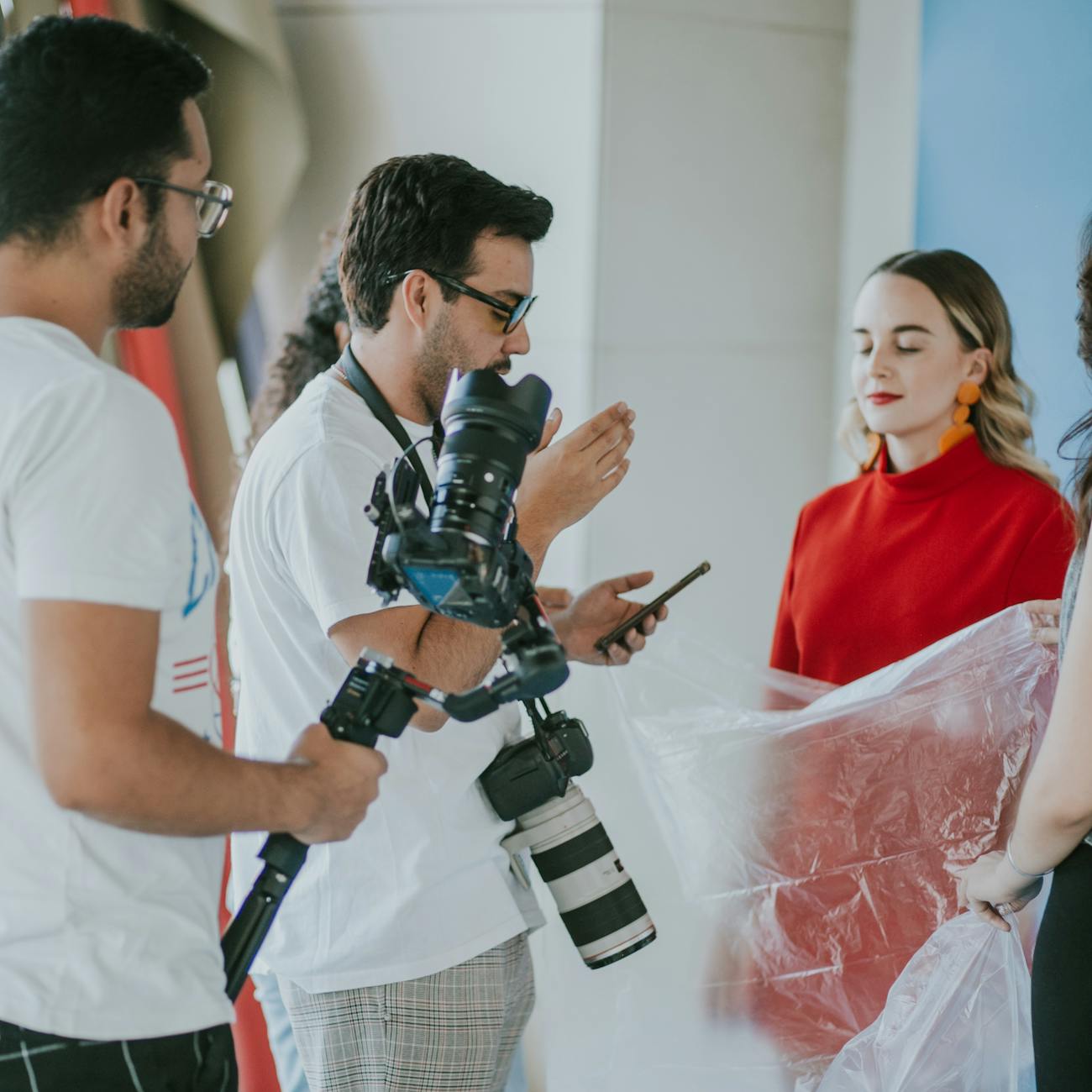
Directing for Actors: Key Terms and Vocabulary
As an actor, understanding the language and terminology used by directors and cinematographers is crucial to your success in the film and television industry. In this explanation, we will cover key terms and vocabulary related to directing for actors, working with directors and cinematographers in the Executive Certificate in Acting for Film and Television.
1. Blocking
Blocking refers to the movement of actors and the placement of cameras within a scene. The director will work with the actors to determine where they will stand, walk, and interact during each shot. The cinematographer will then determine the best camera angles and movements to capture the action.
Example: During a scene in a restaurant, the director may block the actors to have the male lead sit at a table while the female lead stands by the bar. The cinematographer may then choose to use a wide shot to establish the setting and a close-up of the male lead's face as he watches the female lead.
Practical Application: During rehearsals, practice blocking with your director and fellow actors. Be open to suggestions and experiment with different movements to find what works best for the scene.
Challenge: Try blocking a scene without the use of words. Use only body language and facial expressions to communicate with your scene partner.
2. Shot Composition
Shot composition refers to the way the frame is arranged within a shot. This includes the placement of actors, props, and set pieces within the frame, as well as the use of lighting and color.
Example: In a close-up shot, the director may choose to have the actor's face take up most of the frame, with a shallow depth of field to blur the background. This creates a sense of intimacy and focus on the actor's emotions.
Practical Application: Pay attention to the composition of each shot during filming. Make adjustments as necessary to ensure that you are framed correctly and that the background elements do not distract from your performance.
Challenge: Experiment with different shot compositions during a scene. Try shooting the same lines from a wide shot, close-up, and medium shot to see how the different compositions affect the tone and mood of the scene.
3. Eye Line
Eye line refers to the direction in which an actor is looking during a shot. This is important for maintaining continuity between shots and helping the audience understand the spatial relationship between characters.
Example: During a conversation between two actors, the director may have one actor look slightly off-camera to create the illusion that they are looking at the other actor, even if they are not in the same shot.
Practical Application: Always be aware of your eye line during filming. Make sure you are looking in the correct direction and maintaining consistent eye contact with your scene partner.
Challenge: Practice maintaining eye contact while delivering your lines. Try looking directly into the camera lens to create a more intimate connection with the audience.
4. Continuity
Continuity refers to the consistent flow of action and dialogue between shots. This includes maintaining the same eye line, props, and costumes throughout a scene.
Example: During a fight scene, the director may use several different camera angles to capture the action. It is important to maintain continuity by ensuring that the actors' positions, movements, and facial expressions are consistent between shots.
Practical Application: Pay attention to continuity during filming. Make sure your props, costumes, and hair are consistent between takes.
Challenge: Practice maintaining continuity during a scene with multiple camera angles. Make sure your movements and expressions match up between shots.
5. Match Cut
A match cut is a transition between two shots that match in terms of action, composition, or subject matter. This creates a smooth and seamless flow between shots.
Example: A match cut may be used to transition between a close-up of an actor's face and a wide shot of the surrounding environment. The composition and action of the two shots should match to create a seamless transition.
Practical Application: Work with your director and cinematographer to create match cuts that flow smoothly between shots.
Challenge: Experiment with different match cuts during a scene. Try transitioning between shots with similar compositions or actions to create a cohesive flow.
6. Cross Cutting
Cross cutting refers to the use of parallel editing to show two or more actions happening simultaneously in different locations. This creates tension and anticipation in the scene.
Example: During a chase scene, the director may use cross cutting to show the pursuer and the pursued in different locations. This creates a sense of urgency and tension as the audience waits to see who will catch up to whom.
Practical Application: Practice cross cutting during rehearsals. Make sure your movements and expressions match the pace and tone of the scene.
Challenge: Experiment with cross cutting during a scene with multiple characters. Try showing different actions happening simultaneously to create a more complex narrative.
7. Coverage
Coverage refers to the collection of different camera angles and shots of a scene. This gives the editor flexibility in cutting the scene together.
Example: During a conversation between two actors, the director may shoot multiple takes from different angles, including close-ups, medium shots, and wide shots. This provides the editor with a variety of options for cutting the scene together.
Practical Application: Be prepared to shoot multiple takes from different angles during filming. Make sure your performance is consistent and engaging in each shot.
Challenge: Try directing your own scene with different camera angles and shots. Experiment with different coverage options to create a dynamic and engaging final product.
8. Shot Size
Shot size refers to the size of the subject within the frame. This includes close-ups, medium shots, and wide shots.
Example: In a close-up shot, the actor's face takes up most of the frame. In a medium shot, the actor's upper body is visible. In a wide shot, the actor is shown within the surrounding environment.
Practical Application: Be aware of the shot size during filming. Make adjustments as necessary to ensure that you are framed correctly and that the background elements do not distract from your performance.
Challenge: Experiment with different shot sizes during a scene. Try shooting the same lines from a close-up, medium shot, and wide shot to see how the different shot sizes affect the tone and mood of the scene.
9. Lighting
Lighting refers to the use of artificial or natural light to illuminate a scene. This includes the direction, intensity, and color of the light.
Example: In a dramatic scene, the director may choose to use low-key lighting with strong shadows to create a moody and intense atmosphere. In a comedic scene, the director may use high-key lighting with bright and even light to create a more upbeat and playful tone.
Practical Application: Pay attention to the lighting during filming. Make adjustments as necessary to ensure that you are well-lit and that the lighting enhances your performance.
Challenge: Experiment with different lighting setups during a scene. Try using different angles, intensities, and colors to create a unique and engaging atmosphere.
10. Sound
Sound refers to the use of audio elements in a scene, including dialogue, music, and sound effects.
Example: In a dramatic scene, the director may use music to enhance the emotional impact of the performance. In an action scene, the director may use sound effects to create a more immersive and exciting experience.
Practical Application: Be aware of the sound during filming. Make adjustments as necessary to ensure that your dialogue is clear and that the sound elements enhance your performance.
Challenge: Experiment with different sound elements during a scene. Try adding music, sound effects, or other audio elements to create a more engaging and dynamic performance.
Conclusion
Understanding the key terms and vocabulary related to directing for actors is essential for success in the film and television industry. By practicing blocking, shot composition, eye line, continuity, match cuts, cross cutting, coverage, shot size, lighting, and sound, actors can work more effectively with directors and cinematographers to create dynamic and engaging performances. Remember to always be aware of your movements, expressions, and framing during filming, and to experiment with different techniques to create a unique and memorable final product.
Key takeaways
- In this explanation, we will cover key terms and vocabulary related to directing for actors, working with directors and cinematographers in the Executive Certificate in Acting for Film and Television.
- The director will work with the actors to determine where they will stand, walk, and interact during each shot.
- Example: During a scene in a restaurant, the director may block the actors to have the male lead sit at a table while the female lead stands by the bar.
- Be open to suggestions and experiment with different movements to find what works best for the scene.
- Use only body language and facial expressions to communicate with your scene partner.
- This includes the placement of actors, props, and set pieces within the frame, as well as the use of lighting and color.
- Example: In a close-up shot, the director may choose to have the actor's face take up most of the frame, with a shallow depth of field to blur the background.