
Equine Conformation and Movement
Equine conformation and movement are crucial aspects of understanding the biomechanics of horses. Conformation refers to the physical structure and proportions of a horse, while movement pertains to how a horse uses its body to perform vari…
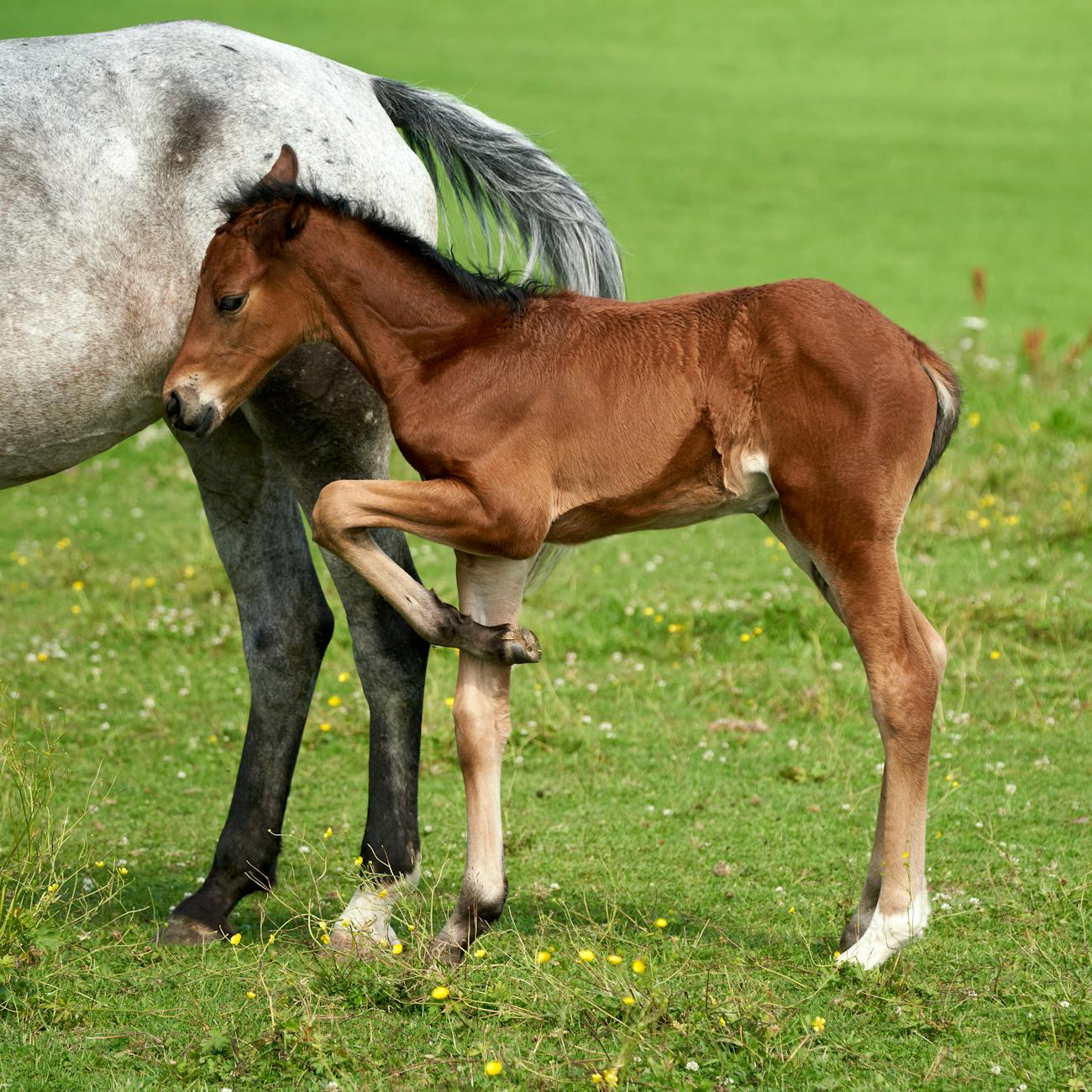
Equine conformation and movement are crucial aspects of understanding the biomechanics of horses. Conformation refers to the physical structure and proportions of a horse, while movement pertains to how a horse uses its body to perform various activities such as walking, trotting, cantering, and jumping. In this course, we will delve into the key terms and vocabulary related to equine conformation and movement to enhance your knowledge and skills in this field.
### Conformation
**1. Conformation:** The overall physical structure and appearance of a horse, including its skeletal structure, muscle mass, and body proportions. Conformation plays a significant role in a horse's performance, soundness, and longevity.
**2. Ideal Conformation:** Refers to the standard or optimal physical structure that is desirable for a particular discipline or purpose. Ideal conformation varies depending on the intended use of the horse, such as racing, dressage, or jumping.
**3. Balance:** The harmonious proportions and symmetry of a horse's body parts, such as the head, neck, back, and legs. A well-balanced horse is more likely to move efficiently and perform well in various activities.
**4. Topline:** The outline or silhouette of a horse's back from the withers to the tail. A strong and well-developed topline is essential for carrying a rider and maintaining proper balance during movement.
**5. Shoulder Angle:** The angle formed by the scapula (shoulder blade) and the humerus (upper arm bone). A more open shoulder angle allows for greater extension of the forelimbs, leading to a longer stride and improved movement.
**6. Hip Angle:** The angle formed by the pelvis and the femur (thigh bone). A more closed hip angle is associated with greater power and propulsion, while a more open hip angle is linked to increased flexibility and agility.
**7. Pastern Angle:** The angle formed by the pastern (area between the fetlock and the hoof) and the hoof. The pastern angle influences the shock-absorbing ability of the legs and can affect a horse's soundness and movement quality.
**8. Hoof Angle:** The angle of the hoof wall relative to the ground. The hoof angle is crucial for proper weight distribution, balance, and support, affecting the horse's movement and overall performance.
**9. Conformation Faults:** Structural abnormalities or deviations from ideal conformation that may impact a horse's soundness, movement, or performance. Common conformation faults include cow-hocked, sickle-hocked, and upright pasterns.
**10. Conformation Assessment:** The process of evaluating a horse's physical structure and proportions to determine its strengths, weaknesses, and suitability for a specific discipline or activity. Conformation assessment involves visual inspection, palpation, and movement analysis.
### Movement
**1. Movement:** The coordinated action of a horse's muscles, bones, and joints to propel itself forward or engage in various gaits or activities. Movement quality is influenced by conformation, fitness, training, and other factors.
**2. Gait:** A specific sequence of footfalls and movements performed by a horse at different speeds or levels of collection. Common gaits include walk, trot, canter, and gallop, each with distinct rhythm, cadence, and suspension phases.
**3. Stride Length:** The distance covered by a horse in a single step or sequence of steps. Stride length is influenced by the horse's conformation, muscle strength, flexibility, and coordination, affecting its speed and efficiency of movement.
**4. Suspension:** The phase of a gait where all four hooves are off the ground simultaneously. Suspension is crucial for dynamic movement, agility, and impulsion, especially in jumping, dressage, and other high-performance activities.
**5. Collection:** The ability of a horse to shift its weight onto the hindquarters, engage the hind end, and elevate the forehand during movement. Collection enhances balance, agility, and power, enabling the horse to perform advanced maneuvers with ease.
**6. Extension:** The lengthening of a horse's stride or reach in a gait, typically associated with increased speed or energy. Extension requires flexibility, strength, and coordination in the horse's muscles and joints to maintain balance and control.
**7. Impulsion:** The energy, forward momentum, and drive generated by a horse during movement. Impulsion is essential for expressive and powerful gaits, jumps, and other athletic performances, reflecting the horse's willingness and engagement.
**8. Lateral Movement:** Sideways or diagonal movements performed by a horse, such as leg-yielding, shoulder-in, haunches-in, and half-pass. Lateral movements improve suppleness, balance, and coordination, enhancing the horse's overall flexibility and responsiveness.
**9. Collection vs. Extension:** The balance between collecting (shortening and elevating) and extending (lengthening and reaching) a horse's frame during movement. Achieving the right blend of collection and extension is essential for balance, impulsion, and performance in various disciplines.
**10. Straightness:** The alignment and symmetry of a horse's body in relation to its direction of travel. Straightness is crucial for balance, coordination, and even distribution of weight, preventing asymmetry, stiffness, or lameness in the horse's movement.
### Practical Applications
Understanding equine conformation and movement is essential for various aspects of horsemanship, training, and performance. By mastering the key terms and vocabulary associated with conformation and movement, you can:
- Evaluate horses for soundness, athleticism, and suitability for specific disciplines or activities. - Identify conformation strengths and weaknesses that may affect a horse's performance or potential. - Improve training programs by focusing on enhancing movement quality, balance, and coordination. - Enhance riding skills by recognizing and correcting issues related to conformation, movement, and alignment. - Optimize horse health and well-being by addressing conformation faults, movement imbalances, and performance limitations.
### Challenges
While studying equine conformation and movement, you may encounter some challenges that require attention and practice. These challenges include:
- Recognizing subtle conformational differences and their impact on movement and performance. - Understanding the biomechanics of various gaits, movements, and training exercises. - Developing a keen eye for assessing conformation, movement quality, and soundness in horses. - Applying corrective measures or training techniques to address conformation faults or movement issues. - Continuously refining your skills and knowledge in equine biomechanics to enhance your effectiveness as a rider, trainer, or handler.
By immersing yourself in the terminology and concepts of equine conformation and movement, you can deepen your understanding of horse anatomy, physiology, and performance. This knowledge will not only benefit your own horsemanship skills but also contribute to the well-being and success of the horses under your care.
Key takeaways
- Conformation refers to the physical structure and proportions of a horse, while movement pertains to how a horse uses its body to perform various activities such as walking, trotting, cantering, and jumping.
- Conformation:** The overall physical structure and appearance of a horse, including its skeletal structure, muscle mass, and body proportions.
- Ideal Conformation:** Refers to the standard or optimal physical structure that is desirable for a particular discipline or purpose.
- Balance:** The harmonious proportions and symmetry of a horse's body parts, such as the head, neck, back, and legs.
- A strong and well-developed topline is essential for carrying a rider and maintaining proper balance during movement.
- A more open shoulder angle allows for greater extension of the forelimbs, leading to a longer stride and improved movement.
- A more closed hip angle is associated with greater power and propulsion, while a more open hip angle is linked to increased flexibility and agility.