
Data Analytics for Operational Technology
Data Analytics in the context of Operational Technology (OT) refers to the systematic computational analysis of data generated by industrial equipment, control systems, and supporting infrastructure. The objective is to transform raw measur…
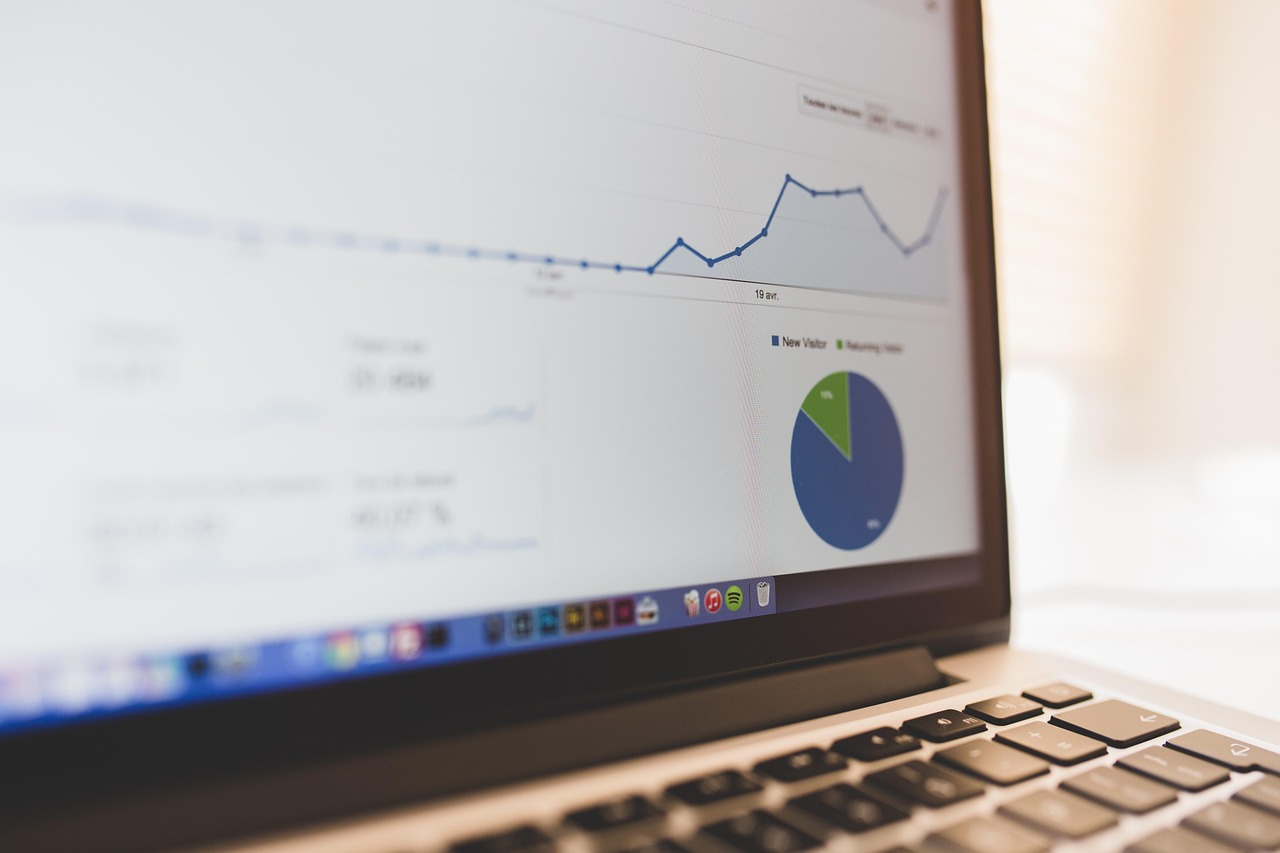
Data Analytics in the context of Operational Technology (OT) refers to the systematic computational analysis of data generated by industrial equipment, control systems, and supporting infrastructure. The objective is to transform raw measurements into actionable insights that improve efficiency, reliability, safety, and profitability of physical processes. Unlike traditional IT analytics, OT analytics must contend with real‑time constraints, high‑frequency data streams, and the critical nature of the underlying processes.
Operational Technology itself denotes the hardware and software that directly monitors and controls physical devices. This includes programmable logic controllers (PLCs), distributed control systems (DCS), supervisory control and data acquisition (SCADA) platforms, and a variety of sensors and actuators. Understanding the vocabulary specific to OT is essential because the data sources, communication protocols, and performance requirements differ markedly from those found in enterprise IT environments.
Sensor is a generic term for any device that measures a physical variable such as temperature, pressure, flow, vibration, or position. Sensors convert analog phenomena into electrical signals that can be digitized. In OT, sensors are often attached to critical assets like turbines, pumps, or conveyors. A typical example is a temperature transducer on a heat exchanger that reports readings every second. The quality of sensor data—its accuracy, resolution, and latency—directly impacts the reliability of downstream analytics.
Actuator is the counterpart to a sensor; it receives control commands and moves a physical component. Examples include variable‑frequency drives that adjust motor speed, pneumatic valves that regulate fluid flow, and robotic arms that position workpieces. While actuators do not generate data in the same way sensors do, they produce status reports and diagnostic information that can be analyzed to detect wear or failure.
Programmable Logic Controller (PLC) is a ruggedized computer used for real‑time control of industrial processes. PLCs execute a deterministic scan cycle: Read inputs, execute logic, update outputs. They can also host communication stacks that expose data to higher‑level systems. In many plants, PLCs are the primary source of tag data, where a “tag” is a named variable representing a sensor reading, actuator state, or computed value. Understanding the tag architecture is critical for building a coherent data model.
Distributed Control System (DCS) expands on the PLC concept by providing a hierarchical control architecture. A DCS typically consists of multiple controller nodes, each responsible for a subset of the process, coordinated by a supervisory layer. The DCS offers richer functionality such as advanced process control, alarm management, and historical data logging. When discussing data analytics, the DCS is often the source of high‑resolution process variables and alarm streams.
Supervisory Control and Data Acquisition (SCADA) is a system that aggregates data from PLCs and DCSs, provides operator interfaces, and enables remote control of geographically dispersed assets. SCADA servers collect tag values, store them in a historian, and present them on graphical user interfaces (GUIs). For analytics, SCADA is a key integration point because it centralizes data from many disparate controllers and can push data to enterprise systems via standardized protocols.
Historian is a specialized time‑series database optimized for storing large volumes of industrial data. Unlike generic relational databases, historians are designed to handle high ingestion rates (often millions of points per second), support efficient retrieval of data across wide time windows, and provide built‑in compression. Common historian vendors include OSIsoft PI, Aspen InfoPlus.21, And GE Proficy. When building analytical pipelines, the historian serves as the canonical source of “ground truth” process data.
Tag is a short, often alphanumeric identifier that represents a specific data point in an OT system. Tags are defined in the control system configuration and include metadata such as engineering units, data type, sampling rate, and alarm thresholds. For example, a tag named “TMP_001” might denote the temperature of a boiler feedwater line. Proper tag naming conventions facilitate data discovery and reduce ambiguity when analysts design models.
Data Acquisition (DAQ) refers to the process of collecting raw measurements from sensors, PLCs, and other field devices. In OT, DAQ may be performed by the control system itself, by dedicated gateway devices, or by edge computers that aggregate data before forwarding it to the historian. The DAQ layer must manage issues such as sampling synchronization, jitter, and data loss, all of which affect downstream analytics.
Edge Computing describes the practice of processing data close to its source, rather than sending all raw data to a central server or cloud. In the OT context, edge devices can perform filtering, aggregation, compression, and even preliminary analytics such as anomaly detection. Edge computing reduces bandwidth requirements, shortens response times, and can keep sensitive data within the plant perimeter, thereby enhancing security.
Protocol is a set of rules governing data exchange between devices. OT environments often rely on industry‑specific protocols such as Modbus, Profibus, EtherNet/IP, and OPC UA. Understanding protocol characteristics—latency, reliability, security features—is essential when designing data pipelines. For example, OPC UA provides built‑in encryption and data modeling capabilities, making it a preferred choice for secure data integration.
OPC Unified Architecture (OPC UA) is a platform‑independent service‑oriented architecture that enables secure and reliable data exchange between industrial devices and enterprise applications. OPC UA defines a rich information model, allowing tags to be grouped into objects, methods, and relationships. This semantic richness supports advanced analytics that require context, such as linking a temperature tag to the specific heat exchanger it belongs to.
Modbus is a simple, widely adopted serial communication protocol that operates over RS‑485 or TCP/IP. It is commonly used to read discrete inputs, coils, and registers from PLCs. While Modbus is easy to implement, it lacks built‑in security, so additional measures (VPNs, firewalls) are often required when exposing Modbus data to external analytics platforms.
Data Integration is the activity of consolidating data from multiple OT sources into a unified repository. Integration may involve protocol translation, tag mapping, and temporal alignment. Effective integration ensures that data from a turbine’s vibration sensor, a flow meter, and a maintenance log can be correlated for holistic analysis.
Data Quality encompasses accuracy, completeness, consistency, and timeliness of data. In OT, data quality issues arise from sensor drift, communication noise, missed scans, and misconfigured tags. Poor data quality propagates errors through analytics pipelines, leading to unreliable predictions. Data cleansing techniques—outlier removal, interpolation, validation against engineering limits—are therefore essential.
Data Modeling is the process of structuring data to reflect the relationships among physical assets, process variables, and business concepts. A well‑designed data model enables analysts to query across domains, for example, retrieving temperature trends for all heat exchangers belonging to a particular production line. Common modeling approaches include relational schemas, dimensional models (star schemas), and graph structures.
Time Series is a sequence of data points indexed in chronological order. Most OT data is time‑series, as sensors continuously report measurements. Time‑series analysis techniques—trend decomposition, seasonal adjustment, autocorrelation—are used to detect patterns, forecast future values, and identify anomalies.
Sampling Rate defines how frequently a sensor or tag is recorded. High‑frequency data (e.G., 1 KHz vibration) provides fine‑grained detail but generates large volumes, while lower rates (e.G., 1 Minute temperature) reduce storage needs. Determining the appropriate sampling rate is a trade‑off between analytical fidelity and resource consumption.
Latency measures the delay between a physical event and its appearance in the analytics system. Low latency is crucial for real‑time control or safety‑critical alerts. Edge analytics can reduce latency by processing data locally, whereas cloud‑centric solutions may introduce higher latency due to network transmission.
Anomaly Detection is the identification of data points or patterns that deviate significantly from normal behavior. In OT, anomalies may indicate equipment faults, sensor failures, or process upsets. Techniques range from simple thresholding (e.G., Temperature > 200 °C) to sophisticated statistical methods (e.G., Gaussian mixture models) and machine‑learning algorithms (e.G., Autoencoders).
Predictive Maintenance leverages analytics to anticipate equipment failures before they occur. By analyzing historical vibration spectra, temperature trends, and operating hours, models can predict the remaining useful life of a bearing or motor. Predictive maintenance reduces unplanned downtime, extends asset life, and optimizes spare‑part inventory.
Machine Learning (ML) is a subset of artificial intelligence that enables computers to learn patterns from data without explicit programming. In OT analytics, ML is employed for classification (fault type identification), regression (remaining‑life estimation), clustering (grouping similar operating conditions), and reinforcement learning (optimizing control strategies).
Supervised Learning requires labeled training data, where each example is paired with a known outcome. For instance, a dataset of vibration signatures labeled as “normal,” “bearing wear,” or “imbalance” can be used to train a classifier that automatically identifies the fault type on new data.
Unsupervised Learning works with unlabeled data, discovering inherent structure. Clustering algorithms such as K‑means can group operating points into normal and abnormal clusters, revealing hidden patterns that may correspond to emerging failure modes.
Deep Learning involves neural networks with multiple hidden layers, capable of learning hierarchical representations. Convolutional neural networks (CNNs) can process spectrograms of vibration signals, while recurrent neural networks (RNNs) excel at modeling sequential data such as temperature trajectories.
Feature Engineering is the practice of transforming raw sensor data into informative variables that improve model performance. Examples include calculating the root‑mean‑square (RMS) of a vibration signal, extracting frequency‑domain peaks, or computing moving averages of temperature. Good features capture domain knowledge and reduce model complexity.
Label denotes the ground‑truth classification or numeric value associated with a data point used in supervised learning. In OT, labels may be derived from maintenance records (e.G., “Failed at 12,000 h”) or operator annotations (e.G., “Alarm triggered”).
Training Set is the subset of data used to fit a machine‑learning model. It should be representative of the operating conditions the model will encounter. Careful partitioning avoids over‑fitting, where a model memorizes the training data but performs poorly on new data.
Validation Set is used to tune model hyperparameters and assess generalization performance during development. The validation set helps prevent over‑fitting by providing an unbiased evaluation of model changes.
Test Set is a final, unseen dataset used to estimate the model’s real‑world performance. In OT, the test set may consist of data from a later time period or from a different plant, ensuring that the model can generalize across variations.
Cross‑Validation involves repeatedly splitting data into training and validation subsets to obtain robust performance estimates. K‑fold cross‑validation is common, where the data is divided into K folds and each fold serves as the validation set once.
Over‑fitting occurs when a model captures noise instead of underlying patterns, leading to poor predictive accuracy on new data. Techniques to mitigate over‑fitting include regularization, pruning, dropout (in deep networks), and simplifying the model architecture.
Under‑fitting happens when a model is too simple to capture the complexity of the data, resulting in high error on both training and test sets. Increasing model capacity, adding relevant features, or reducing regularization can address under‑fitting.
Regression predicts a continuous output variable, such as remaining‑life hours of a pump. Linear regression, decision‑tree regression, and support‑vector regression are common methods. Regression models can be embedded in control loops for predictive set‑point adjustments.
Classification assigns discrete categories, such as “normal,” “degraded,” or “failed.” Logistic regression, random forests, and neural networks are typical classifiers. Classification outcomes are often used to trigger alarms or maintenance actions.
Clustering groups similar data points without pre‑defined labels. In OT, clustering can reveal operating regimes, identify groups of assets with similar wear patterns, or detect outliers that merit further investigation.
Dimensionality Reduction reduces the number of variables while preserving essential information. Techniques like principal component analysis (PCA) help visualize high‑dimensional sensor data and can improve model speed and robustness.
Statistical Process Control (SPC) applies statistical methods to monitor and control a process. Control charts track variables such as temperature or pressure, flagging points that exceed control limits. SPC is a foundational technique that blends well with modern analytics.
Control Limits are statistically derived thresholds (typically ± 3 σ) that define the expected range of variation for a stable process. Points outside these limits indicate a special cause that may require corrective action.
Root‑Cause Analysis (RCA) investigates the underlying reasons for an observed anomaly or failure. RCA often uses data mining, correlation analysis, and domain expertise to trace back from a symptom (e.G., High vibration) to the root cause (e.G., Misaligned coupling).
Correlation measures the linear relationship between two variables. In OT, a strong correlation between motor current and load can be used to detect abnormal consumption patterns. However, correlation does not imply causation, so analysts must be cautious.
Covariance extends correlation by quantifying how two variables vary together, considering their units. Covariance matrices are used in multivariate statistical methods such as Mahalanobis distance for anomaly detection.
Mahalanobis Distance computes the distance of a point from a multivariate mean, taking into account the covariance structure. It is a powerful metric for detecting multivariate outliers in high‑dimensional OT data.
Time‑Windowing segments continuous data streams into fixed or sliding intervals for analysis. For example, a 10‑minute sliding window can be used to compute rolling averages of temperature, providing smoother trends for visualization.
Rolling Statistics calculate metrics (mean, variance, min, max) over a moving window. Rolling statistics are useful for detecting gradual drift, such as slowly increasing pressure that may indicate a blockage.
Data Lake is a storage repository that holds raw, unstructured, and structured data at any scale. In OT, a data lake can ingest sensor streams, log files, and maintenance records, preserving them for future analytics. Unlike a historian, a data lake does not impose strict schema, allowing flexible exploration.
Data Warehouse is a curated, structured repository optimized for reporting and analytics. Data from the historian and data lake may be transformed (ETL) into a warehouse schema that supports business intelligence tools. Warehouses are typically used for long‑term trend analysis and KPI reporting.
ETL (Extract, Transform, Load) is the classic pipeline pattern that extracts data from source systems, transforms it (e.G., Unit conversion, aggregation), and loads it into a target repository. In OT, ETL processes must handle high‑velocity streams and preserve temporal fidelity.
ELT (Extract, Load, Transform) reverses the order, loading raw data first and performing transformations later, often within the target system. ELT is attractive when the destination (e.G., A cloud data warehouse) offers powerful compute resources for on‑the‑fly transformations.
Metadata describes data about data, such as tag definitions, units, sampling rates, and data lineage. Rich metadata enables analysts to understand the provenance and context of each measurement, which is essential for accurate modeling.
Data Lineage tracks the flow of data from its original source through each transformation step to its final destination. Lineage information supports auditability, regulatory compliance, and troubleshooting of data‑pipeline failures.
Ontology is a formal representation of concepts and relationships within a domain. In OT, an ontology might define assets, subsystems, sensor types, and maintenance actions, enabling semantic queries that understand the meaning of tags beyond their numeric values.
Semantic Tagging enriches raw tags with additional meaning, such as linking a temperature reading to a specific heat exchanger model. Semantic tagging facilitates cross‑asset analysis and supports advanced AI applications that require contextual understanding.
Event‑Driven Architecture (EDA) structures systems around the production, detection, and reaction to events. In OT, events could be alarm triggers, state changes, or threshold crossings. EDA enables real‑time analytics by processing events as they occur, rather than relying on batch jobs.
Stream Processing handles continuous data flows, applying transformations, aggregations, and analytics in near‑real time. Technologies such as Apache Kafka, Apache Flink, and Azure Stream Analytics are commonly used to implement stream processing pipelines for OT data.
Batch Processing operates on static snapshots of data, typically executed on a scheduled basis (e.G., Nightly). Batch jobs are suitable for heavy‑weight analytics like model retraining, large‑scale aggregations, and historical reporting.
Real‑Time Analytics delivers insights with minimal delay, often within seconds or milliseconds of data capture. Real‑time analytics are essential for safety‑critical applications such as rapid shutdown, leak detection, and dynamic set‑point optimization.
Latency (re‑emphasized) is a key performance metric for real‑time analytics. Engineers must measure end‑to‑end latency, including sensor acquisition, network transmission, edge processing, and final decision rendering.
Throughput quantifies the volume of data processed per unit time (e.G., Points per second). High‑throughput pipelines are necessary when handling high‑frequency vibration data from hundreds of assets simultaneously.
Scalability describes the ability of a system to handle growing data volumes, device counts, or analytical complexity without performance degradation. Horizontal scaling (adding more nodes) and vertical scaling (increasing resources per node) are common strategies.
High‑Availability ensures continuous operation despite component failures. Redundant historians, failover edge gateways, and clustered stream processors contribute to HA, which is mandatory for mission‑critical OT analytics.
Security in OT analytics encompasses confidentiality, integrity, and availability of data. OT networks often use legacy protocols lacking encryption, so additional security layers such as VPNs, firewalls, and intrusion detection systems are required.
Encryption protects data in transit and at rest. TLS is commonly used for securing OPC UA communication, while AES encryption can be applied to data stored in cloud repositories.
Authentication verifies the identity of devices and users accessing OT data. Certificate‑based authentication is preferred for machine‑to‑machine connections, reducing reliance on weak password schemes.
Authorization controls what authenticated entities are allowed to do. Role‑based access control (RBAC) can restrict analysts to read‑only access for certain tags while granting engineers write permissions for control parameters.
Cyber‑Physical Security merges traditional IT security with physical safety concerns. A breach that manipulates sensor data could cause equipment damage or safety incidents, making robust security a regulatory requirement.
IEC 62443 is an international standard series that defines security requirements for industrial automation and control systems. Compliance with IEC 62443 guides the design of secure OT analytics architectures.
Regulatory Compliance in the UK may involve standards such as NERC CIP (for energy utilities) or ISO 27001 (information security). Analytics projects must document data handling procedures, access controls, and incident response plans to satisfy auditors.
Key Performance Indicator (KPI) is a quantifiable metric used to assess performance against strategic goals. OT KPIs include Overall Equipment Effectiveness (OEE), mean time between failures (MTBF), and energy consumption per unit output.
Overall Equipment Effectiveness (OEE) combines availability, performance efficiency, and quality rate into a single percentage. Analytics can compute OEE automatically from historian data, providing a dashboard for plant managers.
Mean Time Between Failures (MTBF) measures the average elapsed time between successive failures of a component. Predictive‑maintenance models aim to maximize MTBF by intervening before failures occur.
Mean Time To Repair (MTTR) captures the average time required to restore a failed asset to operational status. Analytics can track MTTR by correlating alarm logs with work‑order completion times.
Dashboard is a visual interface that aggregates key metrics, alerts, and trends for rapid situational awareness. Effective dashboards combine real‑time charts, historical graphs, and drill‑down capabilities.
Visualization techniques include line charts for temperature trends, heat maps for equipment health scores, and scatter plots for correlation analysis. Choosing the appropriate chart type enhances comprehension and decision making.
Drill‑Down allows users to click on a high‑level metric to explore underlying data, such as viewing individual pump temperature histories when the aggregate OEE drops. Drill‑down functionality is essential for root‑cause investigation.
Alerting mechanisms generate notifications when data meets predefined conditions, such as exceeding a temperature threshold or detecting an anomaly. Alerts can be delivered via email, SMS, or integration with incident‑management platforms.
Threshold is a static or dynamic limit used to trigger alerts. Dynamic thresholds may be derived from statistical models that adapt to changing process conditions, reducing false positives.
False Positive occurs when an alert is raised despite the system being normal. High false‑positive rates erode trust in the analytics system and can lead to alarm fatigue among operators.
False Negative is the failure to raise an alert when a genuine abnormal condition exists. In safety‑critical contexts, false negatives are especially dangerous and must be minimized through robust detection algorithms.
Alarm Management is the systematic handling of alarms to ensure that critical events are recognized and acted upon promptly. Analytics can prioritize alarms based on severity, likelihood of impact, and historical response times.
Data Governance defines policies, procedures, and responsibilities for data management. Governance frameworks ensure data quality, security, privacy, and compliance across the OT analytics lifecycle.
Data Steward is an individual responsible for maintaining data assets, overseeing metadata, and enforcing governance policies. In OT, data stewards often bridge the gap between engineering and analytics teams.
Data Owner holds accountability for a specific dataset, such as the historian for a particular plant. Owners define access rights, retention periods, and usage guidelines.
Retention Policy specifies how long data must be kept to satisfy regulatory, operational, or business requirements. For example, a plant may retain vibration data for five years to support warranty claims.
Data Masking obscures sensitive information (e.G., Operator IDs) while preserving analytical value. Masking is useful when sharing data with external partners or cloud services.
Digital Twin is a virtual replica of a physical asset, process, or system, continuously synchronized with real‑time data. Digital twins enable simulation, scenario analysis, and what‑if studies without impacting the actual plant.
Simulation uses mathematical models to predict how a system will behave under varying conditions. Coupling simulation with live sensor data creates a hybrid model that can test control strategies before deployment.
What‑If Analysis explores the impact of hypothetical changes, such as adjusting a set‑point or replacing a component. Analysts can use digital twins to evaluate potential energy savings or risk reductions.
Optimization seeks the best configuration of control variables to achieve objectives like minimizing energy use while maintaining product quality. Optimization algorithms may be linear programming, genetic algorithms, or reinforcement‑learning agents.
Reinforcement Learning trains an agent to make sequential decisions by rewarding desirable outcomes. In OT, reinforcement learning can be applied to auto‑tune control loops for improved efficiency.
Control Loop is a feedback system that adjusts a process variable to maintain a desired set‑point. Analytics can monitor loop performance, detect oscillations, and recommend retuning.
PID Controller (Proportional‑Integral‑Derivative) is the most common control algorithm in OT. Understanding PID parameters (Kp, Ki, Kd) is useful when analyzing control‑loop data for stability or performance issues.
Set‑Point is the target value that a control loop aims to achieve. Changes to set‑points are often recorded in the historian, enabling analysts to study the impact of operational decisions.
Process Variable (PV) is the measured value that a control loop seeks to regulate, such as temperature or flow rate. PV data is a primary input for performance analytics.
Control Variable (CV) is the manipulated variable that the controller adjusts, like valve position or motor speed. Correlating CV and PV trends helps assess control effectiveness.
Alarm Fatigue describes the desensitization of operators due to excessive or irrelevant alarms. Reducing alarm fatigue involves refining detection algorithms, prioritizing alerts, and implementing intelligent suppression.
Data Silos occur when data is isolated within departmental boundaries, preventing holistic analysis. Overcoming silos often requires integration platforms, common data models, and cross‑functional governance.
Interoperability is the ability of different systems, devices, and software to exchange and use information seamlessly. Standards such as OPC UA and MQTT promote interoperability in OT analytics ecosystems.
MQTT (Message Queuing Telemetry Transport) is a lightweight publish‑subscribe protocol suited for low‑bandwidth, high‑latency networks. MQTT brokers can aggregate sensor data from edge devices and forward it to analytics services.
Publish‑Subscribe architecture decouples data producers from consumers, enabling scalable distribution of real‑time data streams. This model is well‑matched to the many‑to‑many relationships in OT environments.
Data Fusion combines multiple data sources—sensor streams, maintenance logs, weather forecasts—to create richer information sets. Fusion can improve prediction accuracy by providing complementary context.
Contextualization adds meaning to raw measurements by linking them to asset hierarchies, operating conditions, and business processes. Contextualized data supports more precise analytics and reporting.
Asset Hierarchy organizes equipment into logical groups (plant → line → unit → component). Hierarchical models enable roll‑up of metrics, such as aggregating pump temperatures to a unit‑level health score.
Root‑Cause Correlation uses statistical techniques (e.G., Granger causality) to infer causal relationships between variables. Correlation analysis can suggest that a rise in inlet pressure precedes a temperature spike, guiding corrective actions.
Statistical Learning blends statistics with machine learning, emphasizing interpretability and confidence intervals. Techniques like Bayesian inference provide probabilistic estimates, useful for risk‑aware decision making.
Bayesian Inference updates the probability of a hypothesis as new data arrives. In OT, a Bayesian model could estimate the likelihood of a bearing failure given the latest vibration spectrum.
Confidence Interval quantifies the uncertainty around a prediction, indicating the range within which the true value is expected to lie with a certain probability. Including confidence intervals in dashboards helps managers assess risk.
Probability Distribution describes the likelihood of different outcomes. Common distributions in OT analytics include normal (for sensor noise), exponential (for time‑to‑failure), and Weibull (for reliability modeling).
Reliability Modeling predicts the probability that a component will perform without failure over a given time. Weibull analysis is frequently used to model failure rates that change over the component’s life.
Weibull Plot visualizes failure data to estimate shape and scale parameters, informing maintenance schedules. Analysts can generate Weibull plots from historical failure logs stored in the historian.
Failure Mode identifies the specific way an asset can fail, such as fatigue crack, corrosion, or lubrication loss. Categorizing failures enables targeted analytics and mitigations.
Failure Mode and Effects Analysis (FMEA) systematically evaluates potential failure modes, their causes, and consequences. FMEA results can be encoded as metadata for each tag, enriching analytics with risk information.
Condition Monitoring continuously assesses equipment health using sensor data, often focusing on vibration, temperature, and acoustic emissions. Condition monitoring is the foundation for predictive‑maintenance analytics.
Acoustic Emission sensors capture high‑frequency sound waves generated by material deformation. Analyzing acoustic patterns can reveal early signs of crack propagation before vibration sensors detect anomalies.
Thermography uses infrared imaging to visualize temperature distributions across equipment surfaces. Thermographic data can be integrated with point temperature sensors for comprehensive heat‑map analytics.
Vibration Analysis decomposes mechanical vibrations into frequency components to detect imbalance, misalignment, bearing wear, and looseness. Fast Fourier Transform (FFT) is the primary tool for converting time‑domain signals to the frequency domain.
Fast Fourier Transform (FFT) efficiently computes the frequency spectrum of a signal, enabling real‑time vibration monitoring. FFT results are often stored as spectral peaks in the historian for later analysis.
Spectral Peak refers to a prominent frequency component in a vibration spectrum, typically associated with a specific fault signature. Tracking spectral peaks over time helps assess the progression of mechanical degradation.
Root‑Mean‑Square (RMS) is a statistical measure of signal amplitude, commonly used to quantify overall vibration energy. RMS values are compared against industry standards to determine equipment health status.
Baseline defines the normal operating range for a metric, established from historical data under stable conditions. Baselines serve as reference points for anomaly detection and trend analysis.
Trend Analysis examines data over time to identify gradual changes, seasonal patterns, or cyclical behavior. Trend analysis can uncover slow‑burn issues such as gradual wear or fouling.
Seasonality captures periodic fluctuations that repeat over a fixed interval, such as daily temperature cycles or weekly production shifts. Accounting for seasonality improves forecast accuracy.
Forecasting predicts future values of a time series using models like ARIMA, exponential smoothing, or machine‑learning regressors. Accurate forecasts enable proactive scheduling of maintenance windows and inventory.
ARIMA (AutoRegressive Integrated Moving Average) is a classic statistical model for time‑series forecasting, handling trends and autocorrelation. ARIMA models can be calibrated on historical temperature data to predict future excursions.
Exponential Smoothing applies weighted averages with decreasing weights for older observations, providing a simple yet effective forecasting method. Holt‑Winters exponential smoothing extends the technique to capture trend and seasonality.
Model Drift occurs when a model’s performance deteriorates over time due to changes in the underlying data distribution. Detecting drift requires continuous monitoring of prediction errors and retraining when necessary.
Model Retraining updates a machine‑learning model with new data to maintain accuracy. In OT, retraining may be scheduled periodically (e.G., Monthly) or triggered by detected drift.
Model Explainability addresses the need to understand how a model arrives at its predictions. Techniques such as SHAP values or feature importance plots help engineers trust and validate AI‑driven decisions.
SHAP (SHapley Additive exPlanations) assigns each feature a contribution value for individual predictions, illuminating why a model flagged a particular sensor reading as anomalous.
Feature Importance ranks variables based on their impact on model performance. In OT, high importance features might include motor current, vibration RMS, and ambient temperature, guiding sensor deployment priorities.
Data Pipeline orchestrates the flow of data from source to destination, encompassing ingestion, processing, storage, and analysis stages. Robust pipelines incorporate error handling, monitoring, and scalability features.
Orchestration tools such as Apache Airflow or Azure Data Factory schedule and manage pipeline tasks, ensuring that each step executes in the correct order and handles dependencies.
Monitoring of pipelines includes health checks, latency metrics, and alerting for failures. Continuous monitoring prevents data loss and ensures timely delivery of analytics results.
Fault Tolerance designs pipelines to recover from failures without data loss, using mechanisms like checkpointing, replay buffers, and redundant processing nodes.
Checkpointing saves the state of a streaming job at regular intervals, allowing recovery from the last checkpoint after a crash. Checkpointing is crucial for maintaining data consistency in long‑running analytics jobs.
Replay Buffer temporarily stores incoming data so that downstream consumers can request reprocessing if needed. Replay buffers are especially useful when a model is updated and historical data must be re‑evaluated.
Data Governance (re‑emphasized) provides the framework for managing data assets responsibly, ensuring that analytics outputs are reliable, secure, and compliant with regulations.
Data Privacy concerns the protection of personally identifiable information (PII) that may appear in OT datasets, such as operator IDs or maintenance logs. Anonymization techniques help preserve privacy while retaining analytical value.
Anonymization removes or masks identifying information, often by replacing names with pseudonyms or aggregating data to higher levels. Anonymized data can be shared with external partners for collaborative analytics.
Collaboration between OT engineers, data scientists, and business stakeholders is essential for successful analytics projects. Clear communication of objectives, constraints, and expectations aligns technical solutions with operational goals.
Use Case defines a specific business problem that analytics will address, such as reducing unplanned downtime, optimizing energy consumption, or improving product quality. A well‑scoped use case guides data collection, model selection, and success metrics.
Proof of Concept (PoC) is a small‑scale implementation that demonstrates feasibility before full deployment. PoCs often focus on a single asset class or a limited set of tags to validate methodology.
Pilot Deployment extends the PoC to a broader scope, incorporating additional assets, users, and integration points. Pilot results inform scaling decisions, cost‑benefit analysis, and risk assessment.
Return on Investment (ROI) quantifies the financial benefits of an analytics initiative relative to its costs. ROI calculations may include savings from reduced downtime, lower energy bills, and decreased maintenance labor.
Cost‑Benefit Analysis evaluates the trade‑offs between implementation expenses (hardware, software, staffing) and anticipated gains (efficiency, safety, compliance). Transparent analysis supports executive sponsorship.
Change Management addresses the organizational adjustments required to adopt analytics, such as training operators, updating standard operating procedures, and redefining roles.
Training equips personnel with the skills to interpret analytics outputs, respond to alerts, and maintain data pipelines. Training programs often combine classroom instruction, hands‑on labs, and documentation.
Documentation provides detailed descriptions of data sources, processing steps, model assumptions, and operational procedures. Comprehensive documentation aids knowledge transfer and supports audits.
Audit Trail records all actions performed on data and models, including ingestion timestamps, transformation steps, and model deployments. Auditable trails satisfy regulatory requirements and facilitate root‑cause investigations.
Incident Response outlines steps to address security breaches, data corruption, or system failures. A well‑defined response plan minimizes downtime and protects critical assets.
Business Continuity planning ensures that essential analytics services remain operational during disruptions, such as network outages or natural disasters. Redundant architectures and disaster‑recovery sites are key components.
Scalable Architecture designs systems that can grow with increasing data volumes, device counts, and analytical complexity.
Key takeaways
- Data Analytics in the context of Operational Technology (OT) refers to the systematic computational analysis of data generated by industrial equipment, control systems, and supporting infrastructure.
- Understanding the vocabulary specific to OT is essential because the data sources, communication protocols, and performance requirements differ markedly from those found in enterprise IT environments.
- Sensor is a generic term for any device that measures a physical variable such as temperature, pressure, flow, vibration, or position.
- While actuators do not generate data in the same way sensors do, they produce status reports and diagnostic information that can be analyzed to detect wear or failure.
- In many plants, PLCs are the primary source of tag data, where a “tag” is a named variable representing a sensor reading, actuator state, or computed value.
- A DCS typically consists of multiple controller nodes, each responsible for a subset of the process, coordinated by a supervisory layer.
- Supervisory Control and Data Acquisition (SCADA) is a system that aggregates data from PLCs and DCSs, provides operator interfaces, and enables remote control of geographically dispersed assets.