
Pet Fashion Design Principles
Pet Fashion Design is a multidisciplinary field that blends creativity, functionality, and animal welfare. The vocabulary used in this discipline is essential for clear communication, precise specification, and successful project execution.…
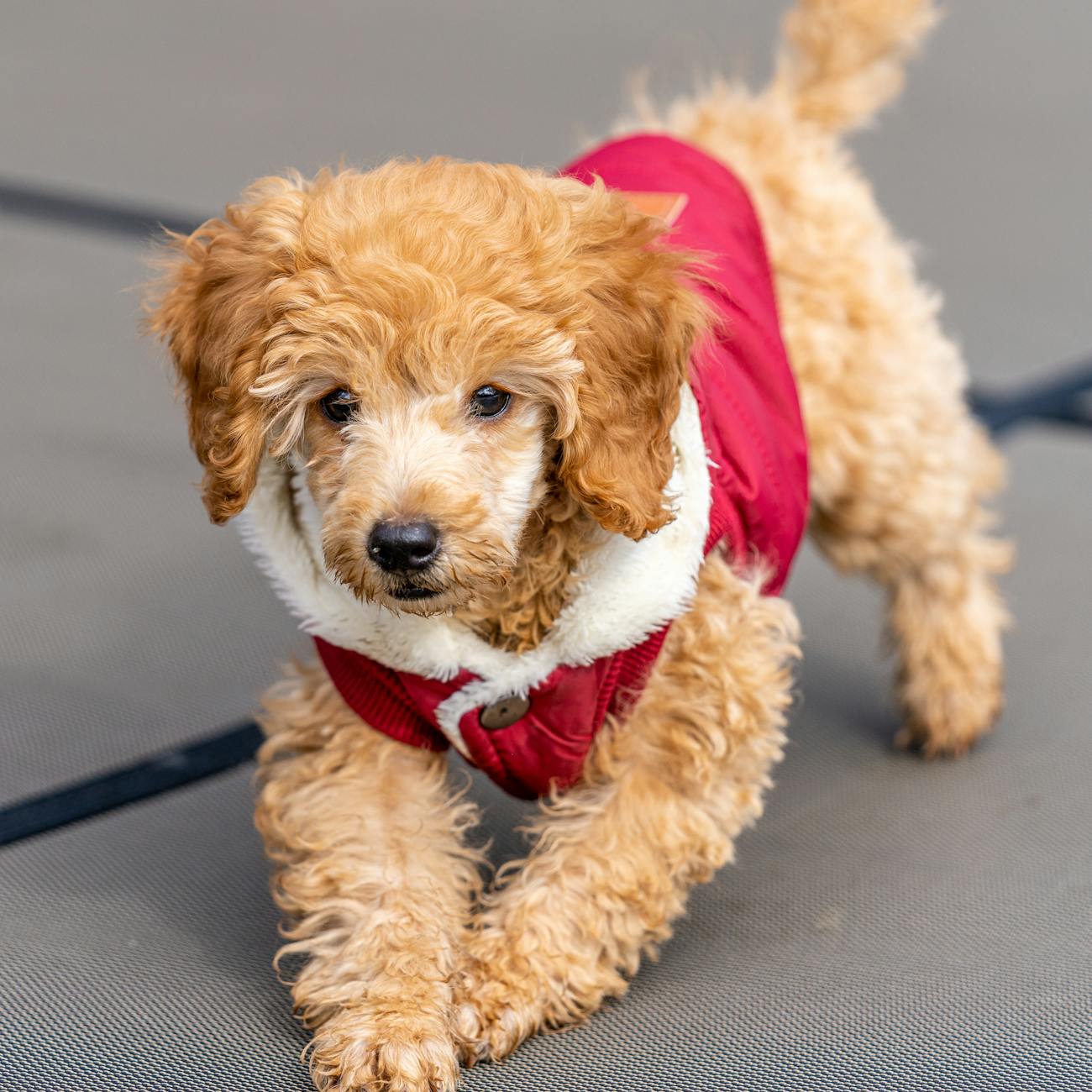
Pet Fashion Design is a multidisciplinary field that blends creativity, functionality, and animal welfare. The vocabulary used in this discipline is essential for clear communication, precise specification, and successful project execution. The following explanation provides an exhaustive list of key terms, definitions, examples, practical applications, and common challenges encountered by students pursuing a Certificate in Pet Fashion Designing. Each term is highlighted with bold formatting to aid memorisation, while italic emphasis is reserved for nuanced concepts that often require deeper reflection.
Silhouette – The overall shape created by a garment when viewed from the side. In pet fashion, the silhouette must complement the animal’s natural body line while achieving the desired aesthetic. For example, a tall‑and‑slim silhouette works well for a greyhound, whereas a rounded silhouette enhances the appearance of a bulldog. Designers balance silhouette with movement; a poorly chosen shape can restrict gait or cause discomfort.
Ergonomics – The study of how a design fits the physical capabilities and limitations of an animal. Ergonomic considerations include joint articulation, muscle groups, and weight distribution. A practical application is the placement of a harness’s load‑bearing points directly over the shoulder blades of a dog, reducing strain on the neck. A common challenge is translating human ergonomic principles to a wide variety of species, each with unique anatomical structures.
Fit Measurement – The process of taking precise dimensions of a pet’s body to create a pattern that ensures comfort and functionality. Core measurements include neck circumference, chest girth, back length, and tail base circumference. For instance, a cat’s chest girth is measured at the widest point of the ribcage, while a rabbit’s measurement must account for a flexible spine. Inaccurate measurements lead to garments that are either too tight, causing restriction, or too loose, creating trip hazards.
Pattern Scaling – Adjusting a design pattern to accommodate different sizes or breeds while preserving proportional relationships. Scaling is not a simple linear multiplication; it requires consideration of breed‑specific body ratios. A practical method involves creating a base pattern for a “standard” breed, then using a scale factor chart to modify key points for a smaller breed (e.g., a Chihuahua) or a larger breed (e.g., a Great Dane). Designers often face challenges when scaling patterns for mixed‑breed animals whose dimensions fall between established categories.
Fabric Selection – Choosing materials that meet criteria for durability, breathability, moisture management, and aesthetic appeal. Common fabrics include nylon ripstop for outdoor wear, cotton jersey for casual comfort, and silicone‑coated fabrics for waterproof coats. Practical application: a raincoat for a Labrador requires a fabric with a high hydrostatic head rating to prevent water penetration while remaining flexible. A frequent challenge is sourcing fabrics that are both pet‑safe (free of toxic dyes) and environmentally sustainable.
Moisture‑Wicking – The ability of a fabric to draw sweat away from the skin and evaporate it quickly, keeping the animal dry. This property is essential for active pets such as working dogs or agility competitors. A commonly used moisture‑wicking blend combines polyester with a proprietary micro‑fiber technology. Designers must test the fabric’s performance under various humidity levels, as inadequate wicking can lead to skin irritation or overheating.
Durability – Resistance to wear, tear, and repeated laundering. Durability is measured by tensile strength, abrasion resistance, and seam integrity. For example, a reinforced stitching technique such as double‑needle stitching adds strength to high‑stress areas like the harness’s D‑rings. Challenges arise when balancing durability with softness; a highly durable fabric may feel too stiff for the pet’s skin, requiring the addition of a soft liner.
Safety Standards – Regulations that ensure a pet garment does not pose hazards. In many regions, safety standards address choking hazards, toxic substances, and load limits. A key standard is the ASTM F2992 test for pet accessories, which evaluates strap strength and release mechanisms. Practical application includes designing a breakaway collar that releases under a specific force to prevent strangulation. Maintaining compliance can be challenging due to differing international standards and the need for third‑party testing.
Attachment Methods – The techniques used to secure garments to the animal’s body. Common methods include snap fasteners, Velcro® strips, adjustable buckles, and seamless bonding. For a high‑performance harness, designers may combine quick‑release buckles with reinforced stitching to ensure both safety and ease of use. A typical challenge is selecting fasteners that are strong enough to withstand pulling forces yet gentle enough to avoid skin abrasions.
Color Theory – The study of how colors interact and the psychological effects they produce. In pet fashion, color choices can highlight or conceal features, influence perception of size, and reflect seasonal trends. For instance, a dark‑tone palette can make a small dog appear larger, while a bright orange enhances visibility for working dogs in low‑light conditions. Designers must also consider the animal’s fur color to avoid clashing or causing visual stress.
Pattern Motif – Repeating decorative elements that add visual interest. Motifs may be inspired by nature (e.g., paw prints, leaf patterns) or cultural symbols (e.g., tribal stripes). A practical example is a laser‑etched floral motif on a pet dress, which creates a subtle texture without adding bulk. Designers often encounter challenges when scaling motifs; a large motif may overwhelm a tiny breed, while a small motif may be lost on a large breed.
Seasonal Design – Adjusting garments to meet the climatic needs of each season. Winter collections typically incorporate insulation, wind‑proof fabrics, and reflective trims, while summer collections focus on lightweight, breathable materials and UV protection. An example is a quilted jacket with removable inner lining for a Chihuahua, allowing the owner to add or remove insulation as temperature fluctuates. Seasonal design challenges include predicting weather variability and ensuring that removable components remain securely attached.
Accessory Integration – The incorporation of additional items such as leashes, tags, and decorative elements into a cohesive design. Successful integration enhances functionality without compromising aesthetics. For example, a matching leash set that uses the same fabric and hardware as the coat creates a unified look. A challenge arises when accessories add weight or bulk, potentially affecting the animal’s balance or mobility.
Sustainable Materials – Eco‑friendly fabrics and components that reduce environmental impact. Options include recycled polyester, organic cotton, hemp, and biodegradable polymers. A practical application is a recycled‑plastic raincoat that repurposes post‑consumer waste into a functional garment. Designers must navigate the trade‑off between sustainability and performance, as some eco‑materials may lack the durability required for rugged use.
Thermal Insulation – The capacity of a garment to retain heat. Insulation is measured in clo units or thermal resistance (R‑value). A common insulating material is Thinsulate™, which offers high warmth‑to‑weight ratio. In practice, a layered system—a base layer, insulating mid‑layer, and protective outer layer—mirrors human outdoor apparel and provides flexibility for varying temperatures. Designers must ensure that insulation does not impede movement or cause overheating during high activity.
Fit Adjustment Mechanism – Features that allow the owner to tailor the garment’s tightness after initial fitting. These mechanisms include adjustable sliders, elastic panels, and drawstring closures. For a cat harness, an elasticized back panel accommodates breathing and slight weight changes without sacrificing security. A recurring challenge is designing adjustments that are intuitive for the owner while remaining tamper‑proof for the pet.
Gait Analysis – The study of an animal’s movement patterns to assess how a garment influences locomotion. Designers may use video recording or pressure‑sensing mats to observe changes in stride length, limb placement, and weight distribution. Practical application: after fitting a new harness, a designer conducts a gait analysis to confirm that the harness does not cause a limp or alter the pet’s natural stride. The main difficulty lies in interpreting data across different breeds, as each possesses distinct baseline gait characteristics.
Breed‑Specific Considerations – Design adaptations that address the unique anatomical traits of particular breeds. For example, a bulldog’s brachycephalic head requires a collar that avoids pressure on the throat, while a German Shepherd’s double‑coat benefits from a coat with a smooth interior to prevent matting. Designers often compile breed profiles that include typical measurements, common health issues, and preferred style elements. The challenge is that individual variation within a breed can be significant, necessitating personalized adjustments.
Weight Distribution – The manner in which a garment’s load is spread across the animal’s body. Proper weight distribution prevents strain on joints and muscles. In a harness designed for a sled dog, the load‑bearing points are positioned over the shoulders and chest, creating a balanced feel. For a small terrier, the weight of a decorative coat must be minimal to avoid neck strain. Designers must calculate the center of gravity for each garment and test prototypes under simulated use conditions.
Breakaway Feature – A safety component that allows a garment or accessory to detach under excessive force. Breakaway collars typically include a weak link that severs when a specified load (e.g., 20 N) is applied. This feature is critical for working dogs that may become entangled in equipment. Practical implementation involves testing the breakaway mechanism with a calibrated force gauge. A challenge is ensuring the breakaway does not activate unintentionally during normal activity, which would defeat its purpose.
UV Protection – The ability of a fabric to block ultraviolet radiation, protecting the pet’s skin and coat. Fabrics are rated by UPF (Ultraviolet Protection Factor). A UPF 50+ shirt provides excellent protection for dogs with thin or light‑colored fur. In practice, designers may treat cotton with a UV‑absorbing finish or select synthetic blends that inherently block UV rays. The difficulty lies in maintaining breathability while achieving high UPF values.
Reflectivity – The inclusion of materials that reflect light, enhancing visibility in low‑light environments. Reflective tape, yarn, or micro‑prismatic coatings are common solutions. A reflective dog jacket may feature high‑visibility strips along the sides, improving safety during night walks. Designers must balance reflectivity with aesthetic appeal, ensuring that safety elements do not dominate the visual design unless intended.
Seam Construction – Techniques used to join fabric pieces. Common seams include flat‑lock, overlock, and hand‑stitched reinforcement. Flat‑lock seams are popular for active wear because they reduce bulk and prevent chafing. In a pet coat, a flat‑lock seam along the belly line minimizes irritation when the animal lies down. Challenges arise when working with stretchy fabrics, which may require specialized stitching machines to avoid seam failure.
Lining Material – The inner layer of a garment that contacts the animal’s skin. Linings must be soft, hypoallergenic, and moisture‑wicking. Common linings include polyester mesh for breathability and bamboo viscose for a silky feel. A practical example is a fleece‑lined sweater for a short‑haired breed, providing warmth without adding excessive weight. Designers must consider the lining’s shrinkage during laundering and its interaction with the outer fabric to prevent seam puckering.
Trim – Decorative or functional additions such as ribbons, buckles, and patches. Trims can add personality but must be securely attached. A metal buckle offers durability, while a fabric‑covered toggle provides a softer aesthetic. In practice, designers often use heat‑bonded appliqués to attach trims without stitching, reducing the risk of snagging. The main challenge is ensuring that trims do not become choking hazards if the pet bites or chews them.
Pattern Placement – The strategic positioning of decorative patterns relative to the animal’s anatomy. For instance, a vertical stripe placed along the spine can create an elongating effect for a short‑bodied breed. Conversely, a horizontal band across the chest may emphasize width. Designers use template overlays on a 3‑D mannequin to visualize pattern placement before cutting fabric. Misplaced patterns can distract from the garment’s intended silhouette or cause visual imbalance.
Size Grading – The systematic method of creating multiple size versions from a base pattern. Grading involves incremental adjustments to key dimensions such as chest girth and back length. A typical grading rule might increase chest girth by 2 cm per size increment. The process enables manufacturers to produce a full size range efficiently. However, size grading must be validated with fit tests for each size to ensure that proportional relationships remain appropriate across breeds.
Fit Session – A hands‑on fitting where the prototype garment is tried on the live animal. Fit sessions allow designers to assess comfort, range of motion, and aesthetic impact. The session often includes a series of movements: walking, sitting, standing, and playful activity. Designers record observations and may mark adjustments directly on the garment with a fabric pen. A common difficulty is the animal’s unpredictable behavior, which may limit the ability to evaluate certain movements.
Prototype Development – The creation of an initial sample to test design concepts. Prototypes are typically made from inexpensive or readily available fabrics to assess fit and function before final production. In pet fashion, prototypes may also incorporate mock‑up hardware to evaluate attachment methods. Challenges during prototype development include sourcing small quantities of specialty fabrics and ensuring that the prototype accurately reflects the final material’s performance.
Technical Sketch – A detailed illustration that conveys construction details, measurements, and material specifications. Technical sketches are often accompanied by callouts indicating seam type, stitch count, and hardware placement. For a pet coat, the sketch may display a cross‑section view of the layering system. The difficulty lies in balancing visual clarity with sufficient detail; overly complex sketches can be confusing, while overly simple sketches may omit critical information.
Specification Sheet – A document that lists all technical requirements for a garment, including fabric type, color codes, hardware specifications, and measurement tolerances. The sheet serves as a communication tool between designer, manufacturer, and quality control. A typical entry might read: “Outer fabric – 100 % recycled nylon, 500 D, water‑repellent finish, color – Ocean Blue (Pantone 2935C).” Maintaining accuracy on the specification sheet is vital; errors can lead to costly production delays.
Quality Control (QC) – Procedures that ensure each finished garment meets the established standards. QC checks may include visual inspection for seam integrity, measurement verification against the specification sheet, and functional testing of fasteners. In pet fashion, QC also involves a fit test on a live animal to confirm comfort. One challenge is that QC personnel must be trained to recognize subtle signs of discomfort in animals, such as skin reddening or altered posture.
Market Trend Analysis – The study of current and emerging styles, colors, and consumer preferences within the pet fashion industry. Trend analysis may involve reviewing runway shows, social media influencers, and sales data. For example, a rising trend in “retro‑vintage” pet wear may encourage designers to incorporate muted pastel palettes and classic silhouettes. The difficulty lies in forecasting which trends will have lasting appeal versus fleeting hype, especially in a niche market.
Brand Identity – The collection of visual and philosophical elements that distinguish a designer’s work. Brand identity includes logo, color palette, design language, and target audience. A strong brand identity helps consumers recognize a product line, such as a “luxury‑leather” line for small‑breed dogs. Designers must ensure that each new collection aligns with the established brand values while offering fresh creativity.
Costing – The calculation of all expenses involved in producing a garment, including material, labor, tooling, and overhead. Accurate costing is essential for setting retail prices that achieve profitability while remaining competitive. For a limited‑edition dog sweater, costing may involve a premium for hand‑embroidered detailing, which must be reflected in the final price. Challenges arise when material costs fluctuate, such as sudden increases in recycled polyester prices, requiring designers to adjust budgets in real time.
Production Planning – The scheduling and coordination of manufacturing steps to meet delivery deadlines. Production planning includes ordering fabrics, allocating cutting time, and coordinating with sewing teams. In pet fashion, lead times may be longer for custom‑fit items, necessitating early communication with clients. A common obstacle is managing inventory for a wide range of sizes and breed‑specific patterns without overstocking, which can tie up capital.
Legal Compliance – Adherence to laws governing animal products, labeling, and safety. Regulations may require disclosure of material composition, country of origin, and care instructions. For instance, the European Union’s REACH regulation mandates that all chemicals used in fabrics be registered and safe for animal contact. Designers must stay informed about changes in legislation to avoid product recalls or penalties.
Care Instructions – Guidelines provided to owners on how to maintain the garment’s appearance and performance. Instructions typically cover washing temperature, drying method, and ironing recommendations. For a delicate silk‑blended dress, the care label may advise “hand wash in cold water, do not tumble dry, iron on low heat.” Clear care instructions extend the product’s lifespan and reduce customer dissatisfaction. The challenge is translating technical care requirements into simple language that pet owners can easily follow.
Fit Tolerance – The allowable range of deviation from the target measurements. A typical fit tolerance might be ±5 mm for chest girth and ±10 mm for back length. Establishing appropriate tolerances ensures consistency across production while accommodating minor variations in animal size. Too tight a tolerance can increase waste due to rejected units; too loose a tolerance may result in ill‑fitting garments.
Material Testing – The evaluation of fabric properties such as tensile strength, abrasion resistance, and shrinkage. Testing may be performed in-house or by certified labs. For a pet harness, material testing could involve pulling the strap to 150 % of its rated load to verify that it does not fray. Designers must interpret test results and decide whether a material meets the design criteria, balancing performance against cost.
Design Iteration – The cyclical process of refining a design based on feedback, testing, and new ideas. Each iteration may involve adjustments to pattern, fabric choice, or hardware. In pet fashion, a designer might start with a basic harness prototype, receive feedback that the strap rubs the shoulder, and then iterate by adding a padded overlay. The main challenge is managing time and resources while pursuing multiple design refinements.
Fit Model – An animal that represents the target size and shape for a specific product line. Fit models are used for standardized testing and to demonstrate the garment in marketing photographs. Selecting a fit model requires evaluating temperament, size stability, and willingness to wear garments. A challenge is that fit models may not represent the full diversity of the market, so additional testing on a broader range of animals is necessary.
Pattern Drafting – The creation of a two‑dimensional representation of a garment’s shape, based on measurements and design intent. Drafting may be done manually with drafting tools or digitally using CAD software. For a pet raincoat, pattern drafting includes plotting the collar shape, sleeve length (if applicable), and vent placements. Errors in drafting propagate through the entire production process, making precision essential.
Digital Rendering – The use of computer graphics to visualize a garment before physical production. Rendering allows designers to experiment with colors, textures, and lighting. A digital rendering of a dog jacket can showcase how reflective trims catch light, aiding client approval. The drawback is that digital images may not fully convey the tactile qualities of fabrics, leading to misaligned expectations.
Prototype Evaluation – The systematic review of a prototype’s performance against design criteria. Evaluation may include checklists for comfort, durability, safety, and aesthetic alignment. In a prototype evaluation, designers might score each criterion on a scale of 1 to 5, noting areas for improvement. Challenges include subjective bias and the limited sample size of a single prototype, which may not reveal all potential issues.
Production Sample – The first full‑scale garment produced using the finalized pattern, materials, and processes. Production samples serve as the benchmark for subsequent manufacturing runs. For a pet sweater line, the production sample is inspected for color consistency, seam quality, and hardware placement before approving the batch. Any deviation discovered at this stage can necessitate costly re‑work if not caught early.
Batch Size – The number of units produced in a single manufacturing run. Determining optimal batch size involves balancing economies of scale against inventory risk. A small batch of limited‑edition collars may command higher prices but requires careful demand forecasting. Large batches reduce per‑unit cost but increase the risk of unsold stock.
Supply Chain Management – Coordination of all parties involved in delivering raw materials to the finished product. Effective supply chain management ensures timely receipt of fabrics, hardware, and packaging. In pet fashion, sourcing a specialty reflective yarn may involve multiple suppliers across continents, requiring careful logistics planning. Disruptions such as shipping delays can impact delivery schedules, highlighting the need for contingency plans.
Packaging – The design of the outer container that protects and presents the garment. Packaging must be functional, protective, and visually appealing. For a premium dog coat, a reusable fabric tote can serve as both packaging and accessory. Designers must also consider sustainability; recyclable or biodegradable packaging aligns with eco‑friendly brand values.
Customer Feedback Loop – The process of collecting, analyzing, and responding to customer input after purchase. Feedback may be gathered through surveys, social media comments, or direct communication. A common practice is to ask owners about fit, comfort, and durability after 30 days of use. Incorporating feedback into future design cycles helps improve product relevance and customer satisfaction.
Brand Extension – Expanding a brand’s product range into new categories while maintaining core identity. An example is a brand known for dog coats launching a line of matching leashes and harnesses. Successful brand extensions leverage existing brand equity, but they require careful market research to avoid diluting the brand’s focus.
Trend Forecasting – Predicting future design directions based on cultural, technological, and economic indicators. Trend forecasters may analyze data such as pet ownership demographics, material innovations, and influencer collaborations. For instance, a rise in “smart pet wearables” may signal an upcoming demand for garments with integrated sensor pockets. Designers must balance speculative trends with realistic production capabilities.
Material Innovation – The development or adoption of new fabrics and technologies that enhance performance. Recent innovations include graphene‑infused textiles for antimicrobial properties and phase‑change materials that regulate temperature. Integrating such innovations can differentiate a product line but may increase cost and require additional testing for pet safety.
Ergonomic Testing – Empirical assessment of how a garment interacts with the animal’s body during movement. Testing may involve motion‑capture systems that record joint angles and stride length. Results guide adjustments to strap placement, seam location, and overall shape. The primary obstacle is obtaining accurate data from a range of breeds, as each presents unique movement patterns.
Safety Release Mechanism – A component that disengages under excessive force to prevent injury. Common mechanisms include quick‑release buckles and frangible links. In a harness for a working dog, the safety release is calibrated to open at a load that exceeds typical pulling forces but remains low enough to protect the animal if it becomes snagged. Designing a reliable release requires precise material testing and compliance with safety standards.
Fabric Grain – The orientation of yarns in a woven fabric, influencing stretch and drape. Cutting fabric on the bias (45° to the grain) can add flexibility, useful for areas requiring movement such as the shoulders of a harness. Conversely, cutting along the warp provides stability for structural components. Designers must plan fabric layout to optimize grain direction while minimizing waste.
Seam Allowance – The distance between the edge of the fabric and the stitching line. Typical seam allowances range from 5 mm for lightweight fabrics to 10 mm for heavy‑weight materials. Accurate seam allowances are critical for pattern accuracy and final garment dimensions. Errors in seam allowance can lead to size discrepancies or weakened seams.
Pattern Marker – A layout plan that arranges pattern pieces on the fabric to maximize material usage. Markers are especially important when working with expensive or limited‑run fabrics. Digital marker software can automatically calculate the most efficient arrangement. The challenge lies in balancing material efficiency with the need to align grain direction and pattern motifs correctly.
Trim Attachment – The method by which decorative elements are secured to the garment. Options include stitching, heat bonding, and adhesive application. For a pet collar with a metal charm, a reinforced stitching loop provides durability. The main difficulty is ensuring that the attachment method does not create sharp edges that could irritate the animal’s skin.
Regulatory Labeling – Information required by law to be displayed on the product label, such as fiber content, country of origin, and care instructions. In many jurisdictions, labels must also include a manufacturer identification code. Proper labeling aids in consumer transparency and legal compliance. Errors can result in product recalls or fines.
Fit Evaluation Checklist – A systematic tool used during a fit session to assess key aspects of the garment. Items on the checklist may include “no restriction on shoulder movement,” “even pressure distribution,” and “no visible skin irritation.” Checklists help standardize evaluation across multiple fittings and ensure that no critical factor is overlooked.
Prototype Iteration Cycle – The repeated sequence of design, testing, feedback, and refinement that leads to a final product. Each cycle should have clear objectives, such as improving comfort or reducing weight. Tracking the number of cycles and the changes made in each helps manage project timelines and resources.
Design Brief – A document that outlines the objectives, target market, functional requirements, and aesthetic goals for a project. A well‑crafted design brief for a pet raincoat would specify waterproof performance, reflective accents, and a size range for small to medium dogs. The brief serves as a reference point throughout development, ensuring alignment among designers, manufacturers, and stakeholders.
Material Sourcing – The process of locating and acquiring fabrics, hardware, and trims. Sustainable sourcing may involve verifying that a fabric is certified by organizations such as Global Recycled Standard. Challenges include limited supplier options for niche materials and the need to negotiate minimum order quantities that fit a small‑batch production model.
Fit Adjustment Loop – The feedback mechanism that allows designers to refine fit after initial testing. Owners may report that a collar is too loose after a few weeks of wear due to weight gain. The designer then adjusts the pattern to incorporate a small elastic panel, closing the loop. Maintaining an efficient loop reduces time to market for improved designs.
Quality Assurance (QA) – The proactive processes that prevent defects before they occur, complementing QC’s reactive inspections. QA activities may include supplier audits, process standardization, and training programs for sewing staff. In pet fashion, QA ensures that all components, from fabric to hardware, meet the specified standards before assembly.
Product Lifecycle Management (PLM) – The integrated approach to managing a product from concept through retirement. PLM tools track design revisions, material specifications, and sales data, enabling designers to make data‑driven decisions for future collections. Implementing PLM can be complex for small studios due to cost and the need for specialized software training.
Fit Compensation – Design techniques that accommodate minor variations in body shape without requiring a custom fit. Examples include elastic side panels, adjustable strap loops, and stretch fabrics. Fit compensation is especially valuable for breeds with wide size ranges, allowing a single pattern to serve multiple body types.
Prototype Stress Test – An assessment that subjects a garment to forces beyond normal use to evaluate its breaking point. For a dog harness, a stress test might involve pulling the leash with a force of 250 N to verify that stitching and hardware hold. The data informs safety ratings and helps determine whether additional reinforcement is needed.
Fit Simulation – The use of computer‑aided design (CAD) tools to model how a garment will fit on a three‑dimensional representation of the animal. Simulation can predict areas of tension, potential chafing, and overall silhouette. While powerful, simulation accuracy depends on the quality of the underlying anatomical model, which may not capture breed‑specific nuances.
Design Portfolio – A curated collection of a designer’s work, showcasing skill, style, and technical competence. A strong portfolio for a pet fashion designer includes photographs of finished garments, technical sketches, and case studies of design challenges overcome. Portfolios are essential for job applications, client pitches, and academic assessment.
Client Consultation – The meeting between designer and owner to discuss requirements, preferences, and constraints. Effective consultation involves asking targeted questions about the pet’s activity level, coat type, and any medical considerations (e.g., skin sensitivities). The outcome is a set of design parameters that guide the development process.
Prototype Documentation – Comprehensive records of the prototype’s specifications, materials, test results, and revisions. Documentation ensures traceability and facilitates knowledge transfer within a design team. In pet fashion, documentation may also include photographs of the animal wearing the prototype, noting any observed issues.
Fit Standardization – The establishment of consistent measurement protocols across the product line. Standardization enables designers to compare fit across different garments and ensures that size labels correspond to the same dimensional criteria. The main obstacle is achieving consensus on measurement points among diverse stakeholders, including manufacturers and retailers.
Material Performance Index (MPI) – A composite score that rates fabrics based on criteria such as durability, breathability, and water resistance. MPI helps designers select the optimal material for a given application. For a high‑activity dog jacket, a high MPI in abrasion resistance and moisture‑wicking is desirable.
Supply Chain Transparency – The practice of openly sharing information about the origins and processing of materials. Transparency builds consumer trust, especially for brands promoting sustainability. Implementing transparency may involve providing QR codes on labels that link to a web page detailing the fabric’s journey from recycled bottle to finished garment.
Design Patent – Legal protection granted for a unique ornamental design of a functional item. In pet fashion, a designer may secure a design patent for a distinctive pattern of a dog sweater that incorporates a novel arrangement of reflective panels. Patents prevent competitors from copying the visual aspects of the design, though they do not protect functional features.
Fit Adjustment Guidelines – Written instructions that help owners fine‑tune the garment’s fit after purchase. Guidelines might advise “tighten the side straps until the harness lies flat against the chest without pinching.” Clear guidelines reduce the likelihood of improper fit, which can lead to discomfort or safety hazards.
Production Workflow – The sequence of tasks required to move a garment from raw material to finished product. A typical workflow includes material receipt, cutting, assembly, quality inspection, packaging, and shipping. Mapping the workflow helps identify bottlenecks, such as a limited number of cutting tables for specialty fabrics.
Fit Validation – The final confirmation that a garment meets all fit criteria before mass production. Validation may involve a panel of fit models representing the target size range, each wearing the garment during a series of activities. The data collected informs the decision to approve or revise the pattern.
Design Revision Log – A chronological record of every change made to a design, including the reason, date, and responsible party. The log is vital for accountability and for tracking the evolution of a product. In collaborative environments, the log prevents duplicate work and clarifies decision‑making pathways.
Fit Prototype Archive – A organized collection of all prototype versions, along with accompanying test data and feedback. Maintaining an archive allows designers to reference past solutions, reducing the need to reinvent fixes for recurring fit issues.
Material Care Label – A specific portion of the overall label that details how to treat the fabric. For a pet coat made of wool blend, the care label may recommend “hand wash cold, lay flat to dry.” Proper labeling minimizes the risk of owner‑induced damage, such as shrinking or fabric pilling.
Fit Adjustment Tools – Instruments used to fine‑tune a garment’s dimensions, such as a fabric ruler, pinch gauge, and adjustable buckle set. Having the right tools on hand speeds up the fitting process and improves accuracy.
Design Trend Board – A visual collage that captures emerging colors, textures, and silhouettes relevant to pet fashion. Trend boards are used during the concept development phase to inspire designers and align the team’s aesthetic direction.
Fit Compensation Strategy – A plan that outlines how a design will accommodate size variations across a breed spectrum. Strategies may involve incorporating adjustable components, using stretch fabrics, or offering multiple size options within a single product line.
Production Cost Breakdown – A detailed spreadsheet that itemizes each expense associated with producing a garment, from fabric cost per meter to labor hours per unit. The breakdown informs pricing decisions and highlights areas where cost reductions are possible without sacrificing quality.
Fit Test Report – A formal document summarizing the results of a fit session, including measurements taken, observations of movement, and any noted issues. The report serves as a reference for future design iterations and for communicating findings to stakeholders.
Design Specification – The comprehensive set of requirements that define the intended performance, appearance, and functionality of a garment. The specification includes dimensions, material properties, hardware types, and safety features. It acts as the blueprint for manufacturing and quality control.
Fit Calibration – The process of aligning measurement tools and methods to ensure consistent data across different fit sessions. Calibration may involve checking that a measuring tape does not stretch and that a digital gauge reads accurately. Consistent data is essential for reliable pattern adjustments.
Material Sourcing Network – The web of suppliers, distributors, and agents that provide the raw inputs for garment production. A robust network mitigates risks such as single‑source dependency and enables quick response to material shortages.
Fit Assessment Matrix – A tabular tool that rates a garment on multiple fit criteria, such as comfort, range of motion, and aesthetic appeal. Scores may be weighted according to the project’s priorities, providing a quantitative basis for decision‑making.
Design Review Panel – A group of experts who evaluate a design’s merits, feasibility, and market potential. The panel may include senior designers, engineers, and marketing professionals. Their feedback guides refinement before committing resources to full production.
Key takeaways
- The following explanation provides an exhaustive list of key terms, definitions, examples, practical applications, and common challenges encountered by students pursuing a Certificate in Pet Fashion Designing.
- For example, a tall‑and‑slim silhouette works well for a greyhound, whereas a rounded silhouette enhances the appearance of a bulldog.
- A practical application is the placement of a harness’s load‑bearing points directly over the shoulder blades of a dog, reducing strain on the neck.
- For instance, a cat’s chest girth is measured at the widest point of the ribcage, while a rabbit’s measurement must account for a flexible spine.
- A practical method involves creating a base pattern for a “standard” breed, then using a scale factor chart to modify key points for a smaller breed (e.
- Practical application: a raincoat for a Labrador requires a fabric with a high hydrostatic head rating to prevent water penetration while remaining flexible.
- Designers must test the fabric’s performance under various humidity levels, as inadequate wicking can lead to skin irritation or overheating.