
Steel Structures
Steel structures form the backbone of modern civil engineering, providing the strength, ductility, and efficiency required for a wide range of applications from bridges and high‑rise buildings to industrial facilities and offshore platforms…
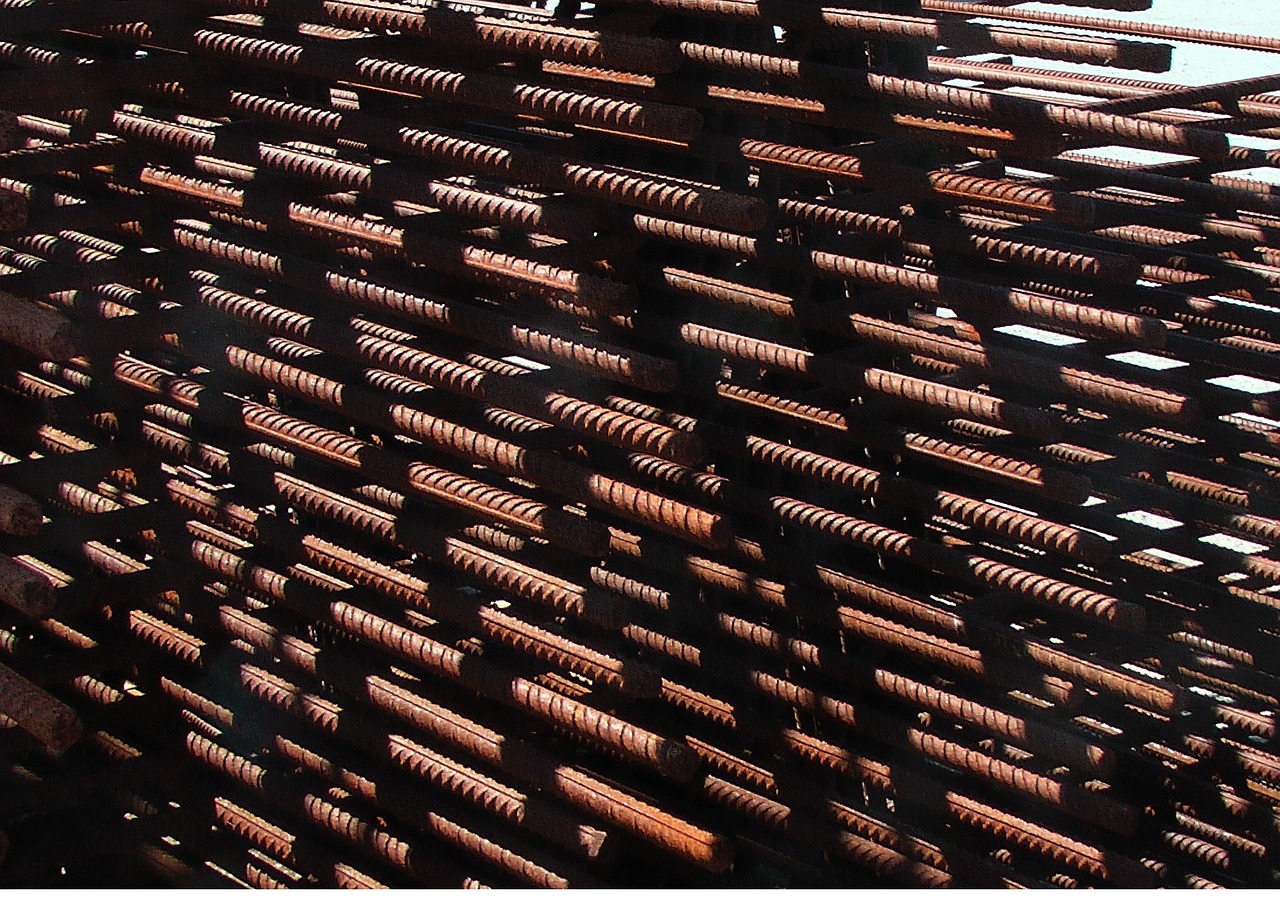
Steel structures form the backbone of modern civil engineering, providing the strength, ductility, and efficiency required for a wide range of applications from bridges and high‑rise buildings to industrial facilities and offshore platforms. In the context of the Certificate in Civil Structural Engineering (Portugal), a precise understanding of the terminology associated with steel design, fabrication, and construction is essential for both academic success and professional competence. The following exposition presents the core vocabulary, accompanied by definitions, practical examples, typical applications, and common challenges encountered in the field. Each term is introduced in a clear manner, and wherever possible, the meaning is reinforced through illustrative scenarios that reflect real‑world engineering practice.
Yield strength – The stress at which a steel material begins to deform plastically. Up to this point, deformation is elastic and the material returns to its original shape when the load is removed. Yield strength is a fundamental property used to determine the allowable stress in design calculations. For example, a structural steel grade S355 has a characteristic yield strength of 355 MPa, which means that in a typical design the engineer may limit the induced stress to a fraction of this value, often 0.6 γ f_y, where γ is the partial safety factor and f_y is the characteristic yield stress. A common challenge is the variability of actual yield strength due to manufacturing tolerances, which necessitates the use of conservative safety factors and material certificates.
Tensile strength – Also known as ultimate strength, this is the maximum stress that steel can sustain before necking and eventual fracture. While design for ordinary service loads rarely approaches tensile strength, it becomes relevant in the analysis of members subjected to high axial forces, such as tension members in a truss. The distinction between yield and tensile strength is critical when assessing the post‑yield behavior of members, especially in seismic design where large plastic deformations are expected.
Elastic modulus – Denoted E, it quantifies the stiffness of steel in the elastic range. Typical values for carbon steel are around 210 GPa. The elastic modulus is employed in calculations of deflection, stress distribution, and buckling. In practice, engineers must consider the effect of temperature on E, as low temperatures can increase stiffness, while high temperatures, such as those encountered in fire scenarios, can reduce it dramatically, influencing the design of fire‑resistant connections.
Section modulus – Symbol Z, this geometric property of a cross‑section relates the bending moment to the resulting stress. It is defined as the ratio of the second moment of area (I) to the distance from the neutral axis to the most extreme fiber (c). For a rectangular section, Z = b h² / 6, where b is the width and h is the depth. Understanding Z is essential when selecting a beam size to resist a given bending moment without exceeding the allowable stress. A frequent design error involves confusing the section modulus with the second moment of area, leading to under‑designed members.
Moment of inertia – Often referred to as the second moment of area (I), this property governs the resistance of a member to bending and deflection. Larger values of I result in stiffer members and reduced deflection under load. In the context of lateral‑torsional buckling, the torsional moment of inertia (J) also becomes relevant. Engineers frequently use tables or software to obtain I for standard shapes such as I‑beams, channels, and angles, but custom sections may require analytical integration.
Profile – The term used to denote the shape of a steel member, for instance, I‑section, H‑section, rectangular hollow section (RHS), circular hollow section (CHS), or angle. Each profile possesses distinct geometric properties that affect its strength, stiffness, and suitability for particular applications. For example, I‑sections are efficient in resisting bending about the strong axis, while CHS are advantageous for torsional loads due to their closed shape. Selecting the appropriate profile is a key step in optimizing material usage and construction cost.
Cold‑formed steel – Steel sections produced by bending thin sheets at ambient temperature. Cold‑formed members, such as Z‑purlins or C‑channels, are lightweight, have high strength‑to‑weight ratios, and are commonly used in low‑rise buildings and residential construction. However, cold‑formed steel exhibits different buckling behavior compared to hot‑rolled sections, requiring the application of specific design rules, such as those found in Eurocode 3 Part 1‑3 for thin‑walled elements. Designers must be vigilant about the susceptibility of cold‑formed members to local buckling and the need for stiffeners.
Hot‑rolled steel – Produced by rolling steel at high temperatures, resulting in sections with larger dimensions and thicker plates. Hot‑rolled profiles are typical in large‑scale structures like skyscrapers and bridges, where high load‑carrying capacity is required. The manufacturing process yields a more uniform microstructure, but the surface finish may be rougher compared to cold‑formed steel. In practice, hot‑rolled sections are often combined with cold‑formed components to achieve both strength and flexibility.
Stiffener – A plate or element added to a thin‑walled member to increase its resistance to local buckling. Stiffeners are commonly welded or bolted to the web or flange of an I‑section. The design of stiffeners follows specific criteria, such as spacing and thickness, to ensure that the overall member meets the required stability limits. A typical challenge is the proper detailing of stiffeners to avoid stress concentrations that could lead to fatigue cracking, especially in connections subjected to cyclic loading.
Welded connection – A joint where steel members are fused together using welding processes such as shielded metal arc welding (SMAW), gas metal arc welding (GMAW), or submerged arc welding (SAW). Welded connections can be designed for moment, shear, or axial forces, and they provide continuity of the material, which is beneficial for structural redundancy. However, weld quality control is critical; defects such as lack of fusion, porosity, or cracks can severely compromise the strength of the connection. Non‑destructive testing (NDT) methods like ultrasonic testing are routinely employed to verify weld integrity.
Bolted connection – A joint where members are joined using high‑strength bolts, typically grade 8.8, 10.9, or 12.9. Bolted connections are favored for their ease of assembly, adjustability, and ability to accommodate tolerances. They can be designed as either slip‑critical (friction type) or bearing type connections. Slip‑critical connections rely on clamping force to develop friction resistance, requiring precise bolt tensioning and surface preparation. Bearing connections depend on the bearing stress between the bolt shank and the hole edge. Engineers must account for bolt slip, hole deformation, and possible bolt failure modes such as shear rupture or tensile failure.
Moment connection – A type of connection capable of transferring bending moments between members, essential in moment‑resisting frames. Common moment connections include extended end plates, flange plates, and welded haunches. The design of moment connections involves ensuring sufficient capacity for both shear and moment, as well as verifying the rotational stiffness required for the intended structural behavior. In seismic regions, moment connections must also satisfy ductility requirements, allowing controlled plastic hinge formation while maintaining overall stability.
Shear connection – A joint designed primarily to transmit shear forces, without significant moment transfer. Shear connections are simpler and more economical than moment connections, often employing simple end plates or direct bolt connections. In a typical portal frame, the beam‑to‑column shear connection permits the column to act as a compression member while the beam resists lateral loads. The primary challenge is ensuring that the connection does not unintentionally develop moment, which could lead to unexpected stresses in adjacent members.
Braced frame – A structural system where diagonal bracing members provide lateral stability to the frame. Braces are usually tension or compression members, often made of tubular steel or angles. In a braced frame, the primary role of the connections is to transfer axial forces, and moment transfer is minimized. Designers must consider the potential for buckling in compression bracing, employing slenderness limits and providing adequate bracing geometry. The placement of bracing influences the overall stiffness and vibration characteristics of the building.
Moment‑resisting frame – A structural system in which the beams and columns are rigidly connected, allowing the frame to resist lateral loads through bending of the members. This system is prevalent in seismic design because it provides a ductile mechanism for energy dissipation. The design of moment‑resisting frames requires careful attention to connection detailing, ensuring that plastic hinges form at predetermined locations (usually beam ends) while preserving the integrity of the rest of the frame. Challenges include controlling drift, preventing excessive story shear, and accommodating architectural constraints.
Stability – The ability of a structural element or system to retain its equilibrium under applied loads without experiencing excessive deformations or buckling. Stability analysis encompasses global buckling of columns, lateral‑torsional buckling of beams, and local buckling of thin‑walled sections. The use of effective length factors (K) in Euler’s buckling formula is a common method to assess column stability, while lateral‑torsional buckling checks involve the calculation of the critical moment based on the member’s torsional rigidity and warping stiffness. In practice, designers often adopt conservative K‑values to account for imperfections and load eccentricities.
Effective length – The length of an equivalent pinned column that would have the same buckling capacity as the actual column, considering its end conditions. Effective length is calculated as K L, where L is the physical length and K is the effective length factor determined by the support conditions (e.g., K = 1.0 for pinned‑pinned, K = 0.7 for fixed‑fixed). Accurate determination of K is vital for preventing underestimation of buckling risk. Misinterpretation of support conditions, such as assuming full fixity where partial fixity exists, can lead to unsafe designs.
Slenderness ratio – The ratio of a member’s effective length to its radius of gyration (r), expressed as λ = K L / r. High slenderness ratios indicate a greater propensity for buckling. Eurocode 3 provides limits for slenderness based on the material class and loading type. For example, a steel column with λ < 100 is considered non‑slender, while λ > 200 may require special buckling reinforcement. Designers must monitor slenderness during the selection of member sizes, especially for long, slender columns in high‑rise structures.
Warping – A deformation mode in which the cross‑section of a beam twists and the plane sections do not remain planar. Warping is significant in thin‑walled, open sections under lateral‑torsional buckling. The warping stiffness (E I_w) quantifies resistance to this deformation, where I_w is the warping constant. In practice, the inclusion of a stiffening plate or a closed section can increase warping resistance and raise the critical moment for lateral‑torsional buckling. Failure to account for warping may result in overly optimistic predictions of beam capacity.
Shear lag – A phenomenon occurring in built‑up members, such as built‑up I‑sections or flanged plates, where the distribution of shear stress is non‑uniform across the flange width. Shear lag reduces the effective shear area and can lower the member’s capacity. Designers often apply a shear lag factor (U) to adjust the calculated stress. For example, in a wide flange beam with a flange width significantly larger than its web depth, the shear lag factor may be as low as 0.7, indicating that only 70 % of the flange area effectively contributes to shear resistance. Recognizing shear lag is essential when designing members with large flange plates or when using composite action with concrete slabs.
Composite construction – The combination of steel and concrete to exploit the advantages of both materials. In a composite beam, a steel section is connected to a concrete slab, typically using shear studs, creating a composite action that increases bending stiffness and reduces deflection. The design of composite sections involves calculating the transformed section properties, including the modular ratio (n = E_s / E_c). Challenges include ensuring adequate shear transfer between steel and concrete, controlling differential shrinkage, and providing fire protection for the steel component.
Fire resistance – The capacity of a steel structure to retain its load‑bearing ability for a specified period when exposed to fire. Steel loses strength rapidly at temperatures above 400 °C; therefore, protective measures such as intumescent coatings, concrete encasement, or gypsum board are employed. The required fire rating (e.g., 60 minutes) is defined by national building codes. Fire design involves calculating the temperature rise in the steel and reducing the material properties accordingly. A common difficulty is balancing fire protection thickness with architectural constraints and cost.
Corrosion protection – Measures taken to prevent or slow down the degradation of steel due to environmental exposure. Typical strategies include hot‑dip galvanizing, zinc‑rich paints, and stainless‑steel cladding. In coastal or industrial environments, the design may require a higher corrosion allowance, adding extra thickness to members to compensate for anticipated material loss over the service life. Proper detailing, such as drainage provisions and avoiding water traps, is crucial to maintain the effectiveness of protective coatings. Failure to address corrosion can lead to premature member weakening and costly repairs.
Fatigue – The progressive and localized structural damage that occurs when a material is subjected to cyclic loading. In steel structures, fatigue is a concern for components such as welded joints, bolted connections, and details with stress concentrations. The design for fatigue involves calculating the stress range, identifying the number of cycles, and applying S‑N curves (stress versus number of cycles) to determine allowable stress limits. A typical application is the design of bridge connections where traffic loads induce millions of load cycles over the structure’s lifetime. Designers must consider factors such as surface finish, residual stresses from welding, and the presence of notches.
Seismic design – The set of principles and practices aimed at ensuring that steel structures can withstand earthquake forces without catastrophic failure. Eurocode 8, complemented by the Portuguese Seismic Code, defines the seismic actions, importance factors, and ductility requirements. Key concepts include capacity design, where the structure is designed such that plastic hinges form in predetermined, ductile regions while other parts remain elastic. Base shear, response spectra, and modal analysis are tools used to determine seismic forces. Practical challenges involve coordinating architectural layouts with structural requirements, ensuring adequate detailing for energy dissipation, and performing dynamic analysis for irregular structures.
Capacity design – A design philosophy that prioritizes the strength of certain members or connections (the “strong” elements) while allowing controlled yielding in others (the “weak” elements). This approach ensures that, during extreme loading, the structure will develop plastic hinges in the intended locations, preserving overall stability. In steel frames, capacity design often leads to the use of stronger column connections and weaker beam connections, allowing the beams to yield first. Implementing capacity design demands meticulous detailing and verification through nonlinear analysis.
Serviceability – The aspect of design that addresses the functional performance of a structure under normal service loads, focusing on deflection, vibration, and crack control rather than ultimate strength. For steel structures, serviceability checks typically involve limits on vertical and lateral deflection, as well as vibration criteria for floors and long‑span beams. For example, a floor system may be required to limit vibration acceleration to 0.5 g for occupant comfort. Addressing serviceability often leads to the selection of stiffer sections or the addition of bracing, which may increase material costs but improve performance.
Deflection – The displacement of a structural member under load. In steel design, deflection limits are expressed as a fraction of the span, such as L/250 for floor beams or L/500 for roof members. Calculating deflection involves integrating the bending moment diagram and applying the flexural formula δ = M L² / (2 E I) for simple cases, or using more sophisticated software for complex geometries. Excessive deflection can cause architectural problems, affect the performance of non‑structural elements, and lead to occupant discomfort.
Vibration – Dynamic response of a structure to transient loads, such as footfall, machinery, or wind. In steel structures, low mass and high stiffness can produce natural frequencies that fall within the range of human perception, leading to perceptible vibrations. The design process includes calculating the natural frequency (f = (1 / 2π) √(k / m)) and ensuring that the frequency is sufficiently separated from excitation frequencies. Damping devices, such as tuned mass dampers, may be incorporated to mitigate vibration. Challenges arise when architectural constraints limit the addition of stiffening elements, requiring careful optimization.
Partial safety factor – A coefficient used in limit‑state design to account for uncertainties in material properties, dimensions, loads, and modeling. In Eurocode 3, the partial safety factor for steel resistance (γ_M0) is typically 1.0 for yield strength, while the factor for loads (γ_F) varies according to the type of load (e.g., 1.35 for permanent loads, 1.5 for variable loads). The combination of these factors yields the design value of resistance (R_d) and design loads (F_d). Misapplication of safety factors can either over‑design a structure, increasing cost, or under‑design it, compromising safety.
Design value – The value obtained after applying partial safety factors to either material resistance or applied loads. For example, the design yield strength f_y,d = f_y / γ_M0. Similarly, the design load F_d = γ_F · F. The concept of design value ensures that the structure is evaluated against a consistent set of criteria, reflecting the worst‑case scenario within the defined reliability levels.
Limit state – The condition beyond which a structure no longer fulfills the relevant design criteria. Eurocode distinguishes between the ultimate limit state (ULS), concerning collapse or loss of load‑bearing capacity, and the serviceability limit state (SLS), concerning deflection, vibration, and durability. Each limit state has its own set of verification procedures and allowable stress values. Properly separating the checks for ULS and SLS ensures that the structure is both safe and functional throughout its intended life.
Ultimate limit state – The design check that ensures the structure can sustain the maximum expected loads without experiencing failure mechanisms such as yielding, buckling, fracture, or excessive plastic deformation. ULS checks typically involve applying load factors (γ_F) and comparing the resulting design loads to the design resistance, often using a strength reduction factor (φ) in some national annexes. In steel design, ULS verification may include checking for plastic moment capacity, shear capacity, and combined axial‑bending interaction.
Serviceability limit state – The design check that guarantees acceptable performance under service loads, focusing on criteria such as deflection limits, vibration limits, and crack widths. While steel does not crack like concrete, the serviceability of steel structures is still governed by deformation limits that affect occupant comfort and the performance of attached non‑structural components. For example, a steel portal frame may be required to limit lateral drift to L/200 to prevent damage to façade panels.
Interaction diagram – A graphical representation of the combined axial and bending capacity of a steel column or beam. The diagram plots axial load (N) on one axis and bending moment (M) on the other, illustrating the envelope of permissible combinations. Interaction diagrams are essential for designing members subjected to simultaneous axial and flexural stresses, such as columns in a frame carrying both vertical loads and bending moments due to lateral forces. Engineers often use software to generate interaction curves for complex sections, but the underlying principle remains based on the plastic stress distribution.
Plastic hinge – A localized region where the moment–curvature relationship becomes perfectly plastic, allowing rotation without additional moment increase. Plastic hinges are the fundamental mechanism by which steel structures dissipate energy during extreme events, such as earthquakes. The formation of a plastic hinge is deliberately designed to occur at specific locations (e.g., beam ends) to control the collapse mechanism. The rotation capacity of a plastic hinge is limited by the strain capacity of the material and the detailing of the connection. Inadequate detailing may lead to brittle failure instead of the desired ductile behavior.
Strain capacity – The maximum strain that a steel material can sustain before fracture, typically expressed as a percentage. For most structural steels, the strain capacity is around 15 % to 20 % in tension. High‑strength steels may have lower strain capacities, requiring careful selection when large deformations are anticipated. Strain capacity directly influences the rotation capacity of plastic hinges and the overall ductility of the structure. Designers must verify that the expected hinge rotations do not exceed the material’s strain limits.
Residual stress – Stresses that remain in a steel component after manufacturing processes such as welding, rolling, or machining. Residual stresses can affect the fatigue performance and stability of members. For welded connections, tensile residual stresses in the heat‑affected zone may reduce the effective strength and promote crack initiation. Stress‑relieving heat treatments or post‑weld mechanical treatments are sometimes applied to mitigate residual stresses. Accurate assessment of residual stresses often requires finite‑element analysis or specialized measurement techniques.
Finite‑element analysis – A numerical method for solving complex structural problems by discretizing a member into smaller elements and applying equilibrium equations. In steel design, finite‑element analysis (FEA) is employed to evaluate stress concentrations, buckling behavior, and dynamic response, especially for irregular geometries and connections. While FEA provides detailed insight, it requires careful modeling assumptions, appropriate element types, and validation against analytical solutions or experimental data. Over‑reliance on software without understanding underlying principles can lead to design errors.
Modal analysis – A technique used to determine the natural frequencies and mode shapes of a structure. In steel frames, modal analysis is crucial for assessing dynamic performance under wind or seismic excitations. The modal frequencies are derived from the mass and stiffness matrices of the structure, often using eigenvalue solvers. Engineers compare the dominant modal frequencies with the dominant excitation frequencies to evaluate resonance risk. For tall steel buildings, additional damping devices may be introduced to shift frequencies away from critical ranges.
Dynamic amplification factor – Also known as the response factor, this coefficient quantifies the increase in structural response due to dynamic effects compared with static analysis. In wind engineering, the dynamic amplification factor (R) may be applied to the static wind pressure to account for vortex shedding and turbulence. In seismic design, the response spectrum inherently includes dynamic amplification. Accurate estimation of R is essential to avoid overly conservative designs that increase cost or unsafe designs that underestimate demand.
Wind load – The pressure exerted on a structure by wind, expressed in terms of velocity pressure and shape coefficients. Eurocode 1 provides methods to calculate wind actions based on terrain category, building height, and exposure. In steel structures, wind load assessment often drives the design of bracing systems and lateral‑torsional buckling checks. Engineers must also consider wind‑induced vibrations, such as vortex shedding on slender steel towers, which may require aerodynamic modifications or tuned mass dampers.
Terrain category – A classification of the ground surface roughness surrounding a structure, influencing wind speed profiles. Categories range from A (open sea) to D (urban). The terrain category affects the calculation of the wind speed profile exponent (α), which in turn influences the design wind pressure. Selecting the correct terrain category is essential for accurate wind load determination; misclassification can lead to under‑ or over‑design of the lateral resistance system.
Load combination – The set of equations that combine different types of loads (permanent, variable, wind, seismic, etc.) with appropriate factors to represent the worst‑case scenario for a particular limit state. In Eurocode, typical combinations for ULS include 1.35 G + 1.5 Q, where G denotes permanent loads and Q variable loads. For SLS, the combination may use reduced factors, such as 1.0 G + 1.0 Q. Understanding load combinations is vital for ensuring that the structure is evaluated under realistic and code‑compliant scenarios.
Partial factor for variable action – Denoted γ_Q, it reflects the uncertainty associated with variable loads such as live loads, wind, and seismic actions. The value of γ_Q varies depending on the load type; for example, live loads may have a factor of 1.5, while wind loads might use 1.5 or 1.35 depending on the national annex. Applying the correct partial factor ensures that the design remains conservative where uncertainties are high.
Design life – The intended service period of a structure, typically expressed in years (e.g., 50 years for residential buildings). The design life influences the selection of corrosion allowances, fatigue assessment, and maintenance planning. In steel structures, a longer design life may require thicker protective coatings or the use of higher‑grade steel to mitigate degradation over time.
Corrosion allowance – Additional thickness added to steel members to compensate for anticipated material loss due to corrosion during the design life. The allowance is calculated based on environmental exposure, protective coating performance, and maintenance intervals. For example, a coastal bridge may incorporate a corrosion allowance of 3 mm, while an interior industrial building may require only 1 mm. Properly accounting for corrosion allowance ensures that the structural capacity remains adequate throughout the service period.
Protective coating – A layer applied to steel surfaces to prevent corrosion, commonly consisting of zinc (galvanizing), paint, or epoxy systems. The performance of protective coatings is evaluated by criteria such as adhesion strength, thickness, and resistance to chemical attack. In practice, the selection of a coating system must consider factors like exposure to salt spray, temperature variations, and ease of inspection. Regular inspection and maintenance of coatings are essential to maintain the intended protection level.
Inspection – The systematic examination of steel components to verify conformity with design specifications, quality standards, and safety requirements. Inspections may be visual, dimensional, or involve non‑destructive testing methods such as ultrasonic testing, radiography, or magnetic particle testing. Inspection schedules are typically defined by the project specifications and may be required at stages such as after fabrication, before erection, and periodically during service. Effective inspection helps detect defects early, reducing the risk of failure.
Non‑destructive testing – Techniques used to evaluate the integrity of steel components without causing damage. Common methods include ultrasonic testing (UT) for internal flaws, radiographic testing (RT) for weld inspection, and magnetic particle testing (MPT) for surface cracks. The choice of NDT method depends on the type of defect being sought, accessibility, and the criticality of the component. Proper application of NDT contributes to the reliability of welded connections and the overall safety of the structure.
Fabrication tolerance – The permissible deviation from nominal dimensions during the manufacturing of steel components. Tolerances are specified for parameters such as length, thickness, and hole position. For example, a typical tolerance for the length of a rolled beam might be ±3 mm, while the tolerance for bolt hole diameter may be +0.2 mm. Understanding fabrication tolerances is important for detailing connections, as excessive deviation can lead to misalignment, increased erection time, and additional on‑site adjustments.
Erection tolerance – The allowable deviation that occurs during the assembly of steel structures on site. Erection tolerances cover aspects such as levelness, plumbness, and alignment of members. For instance, the vertical tolerance for a column may be ±10 mm over a 10‑meter height. Erection tolerances are accounted for in the design of connections, often by providing additional bolt length or using adjustment plates. Failure to respect these tolerances can result in overstressed connections or the need for costly remediation.
Adjustment plate – A steel plate used to correct misalignment between connected members during erection. Adjustment plates are often bolted to the flange or web of a beam to achieve the required geometry before final tightening of the main bolts. While adjustment plates provide flexibility during construction, they must be designed to transfer the same forces as the primary connection and should not create stress concentrations that could reduce fatigue life.
Bolting sequence – The order in which bolts are tightened during the assembly of a connection. Proper bolting sequence ensures uniform clamping force distribution and prevents distortion of the connected members. A typical sequence may involve tightening opposite bolts alternately to a specified torque, followed by a final tightening to the design preload. Inadequate bolting sequence can lead to uneven stress distribution, premature bolt failure, or misalignment of the connection.
Preload – The tensile force applied to a bolt when it is tightened, intended to keep the joint in compression and prevent slip. Preload is calculated based on the bolt’s tensile strength and a recommended percentage (often 70 % of the yield strength for high‑strength bolts). Accurate preload is critical in slip‑critical connections, where the frictional resistance depends directly on the clamping force. Over‑tightening can cause bolt fracture, while under‑tightening reduces friction and may lead to joint slip under service loads.
Slip factor – The coefficient that relates the frictional resistance of a bolted connection to the applied preload. It is denoted µ and depends on the surface condition (e.g., µ = 0.2 for clean steel, µ = 0.1 for painted surfaces). The slip resistance is calculated as µ · preload. In practice, achieving the intended slip factor requires proper surface preparation and consistent bolt tensioning. Failure to achieve the specified slip factor can compromise the connection’s ability to resist shear without yielding.
Shear capacity of a bolt – The maximum shear force that a bolt can sustain before failure. For high‑strength bolts, the shear capacity is often taken as 0.6 γ_M2 · f_u · A_s, where f_u is the ultimate tensile strength, A_s is the stress area, and γ_M2 is the partial safety factor for bolts. Designers must also consider the reduction of shear capacity due to bearing stress on the hole edge, especially when the bolt diameter is close to the hole size. Properly accounting for bolt shear capacity prevents unexpected joint failure under lateral loads.
Bearing stress – The compressive stress exerted on the material surrounding a bolt hole when a load is applied. Bearing stress is calculated as the applied load divided by the projected area of the hole (hole diameter × plate thickness). Eurocode 3 specifies limits for bearing stress based on the material grade and hole geometry. Excessive bearing stress can cause the hole to deform or the plate to tear, leading to connection failure. Designers often provide bearing reinforcement plates to distribute the stress more evenly.
Hole enlargement – The increase in hole diameter that occurs due to drilling tolerances, reaming, or wear. Hole enlargement reduces the effective bearing area and may increase the risk of bolt slip. In design, a standard hole enlargement allowance (e.g., +0.5 mm for drilled holes) is applied to ensure that the connection remains safe even with the worst‑case hole size. Monitoring hole quality during fabrication helps maintain the intended connection performance.
Weld size – The dimension of a weld, typically expressed as the throat thickness (for fillet welds) or leg length. Weld size directly influences the strength of the welded connection. The design of a fillet weld, for example, involves checking that the throat size provides sufficient shear and tensile capacity based on the applied loads. Inadequate weld size can lead to premature failure, while excessive weld size may cause distortion due to heat input. Selecting the appropriate weld size balances strength, cost, and constructability.
Weld quality – The level of integrity and performance of a weld, assessed through visual inspection and NDT. High‑quality welds exhibit full penetration, proper fusion, and absence of defects such as cracks, porosity, or lack of fusion. Welding procedures are governed by standards such as ISO 15614 or AWS D1.1, which define qualification requirements for welders, welding consumables, and inspection methods. Maintaining weld quality is essential for the reliability of connections, especially in seismic zones where ductile behavior is required.
Welding consumable – The filler material used in the welding process, such as electrodes, wires, or rods. The choice of consumable influences the mechanical properties of the weld, including tensile strength, ductility, and corrosion resistance. For structural steel, consumables are selected to match or exceed the base metal’s strength, often achieving a weld tensile strength of 1.0 f_u or higher. Using the wrong consumable can result in a weak weld that fails under load.
Heat‑affected zone – The region of the base metal adjacent to a weld that experiences thermal cycles but does not melt. The HAZ may experience changes in microstructure, hardness, and residual stress, potentially reducing the material’s toughness. In high‑strength steels, the HAZ can be a weak point if not properly controlled. Pre‑heating, controlled cooling, and post‑weld heat treatment are strategies used to mitigate adverse effects in the HAZ.
Post‑weld heat treatment – A process applied after welding to relieve residual stresses, reduce hardness, and improve toughness in the HAZ. Common treatments include stress‑relieving anneals at temperatures around 600 °C. While post‑weld heat treatment can enhance the performance of welded connections, it also introduces additional time and cost, and may affect the dimensional stability of the assembly. Engineers must weigh the benefits against the project schedule and budget.
Structural steel grade – The classification of steel based on its chemical composition, mechanical properties, and intended use. Common grades in Portugal follow the EN 10025 standard, such as S235, S275, S355, and the high‑strength S460. Each grade specifies minimum yield strength, tensile strength, and impact energy values. Selecting the appropriate grade depends on the required strength, ductility, and exposure conditions. For example, S355 is widely used for general construction, while S460 may be chosen for high‑rise frames to reduce member size.
Impact energy – The ability of steel to absorb energy during a rapid loading event, measured in Joules per kilogram (J/kg) using Charpy V‑notch testing. Impact energy values are temperature dependent; at low temperatures, steel may become brittle. The required impact energy for a given grade is specified in the standard and varies with thickness. Ensuring adequate impact energy is crucial for structures operating in cold climates, where brittle fracture risk must be mitigated.
Temperature factor – A coefficient applied to reduce the material strength of steel when designing for elevated temperatures, such as in fire scenarios. Eurocode 3 provides reduction factors for yield strength, tensile strength, and modulus of elasticity as functions of temperature. For example, at 600 °C, the yield strength of S355 may be reduced to approximately 0.25 of its ambient value. Incorporating temperature factors ensures that the structure retains sufficient capacity during fire exposure.
Fire‑resistant design – The approach of ensuring that steel members maintain load‑bearing capacity for a predetermined fire duration. Methods include applying fire‑protective coatings, encasing steel in concrete, or using intumescent paints that expand to insulate the steel. The fire resistance rating is expressed in minutes (e.g., 60 min). Designers must calculate the temperature rise in the steel, apply temperature factors, and verify that the reduced capacities still satisfy the required loads. Balancing fire protection with architectural aesthetics and cost is a common challenge.
Key takeaways
- The following exposition presents the core vocabulary, accompanied by definitions, practical examples, typical applications, and common challenges encountered in the field.
- For example, a structural steel grade S355 has a characteristic yield strength of 355 MPa, which means that in a typical design the engineer may limit the induced stress to a fraction of this value, often 0.
- While design for ordinary service loads rarely approaches tensile strength, it becomes relevant in the analysis of members subjected to high axial forces, such as tension members in a truss.
- The elastic modulus is employed in calculations of deflection, stress distribution, and buckling.
- Section modulus – Symbol Z, this geometric property of a cross‑section relates the bending moment to the resulting stress.
- Engineers frequently use tables or software to obtain I for standard shapes such as I‑beams, channels, and angles, but custom sections may require analytical integration.
- Profile – The term used to denote the shape of a steel member, for instance, I‑section, H‑section, rectangular hollow section (RHS), circular hollow section (CHS), or angle.