
Traffic Signal Design
Traffic Signal Design: Traffic signal design is the process of planning, designing, and implementing traffic signals to regulate traffic flow at intersections. It involves analyzing traffic patterns, considering safety measures, and optimiz…
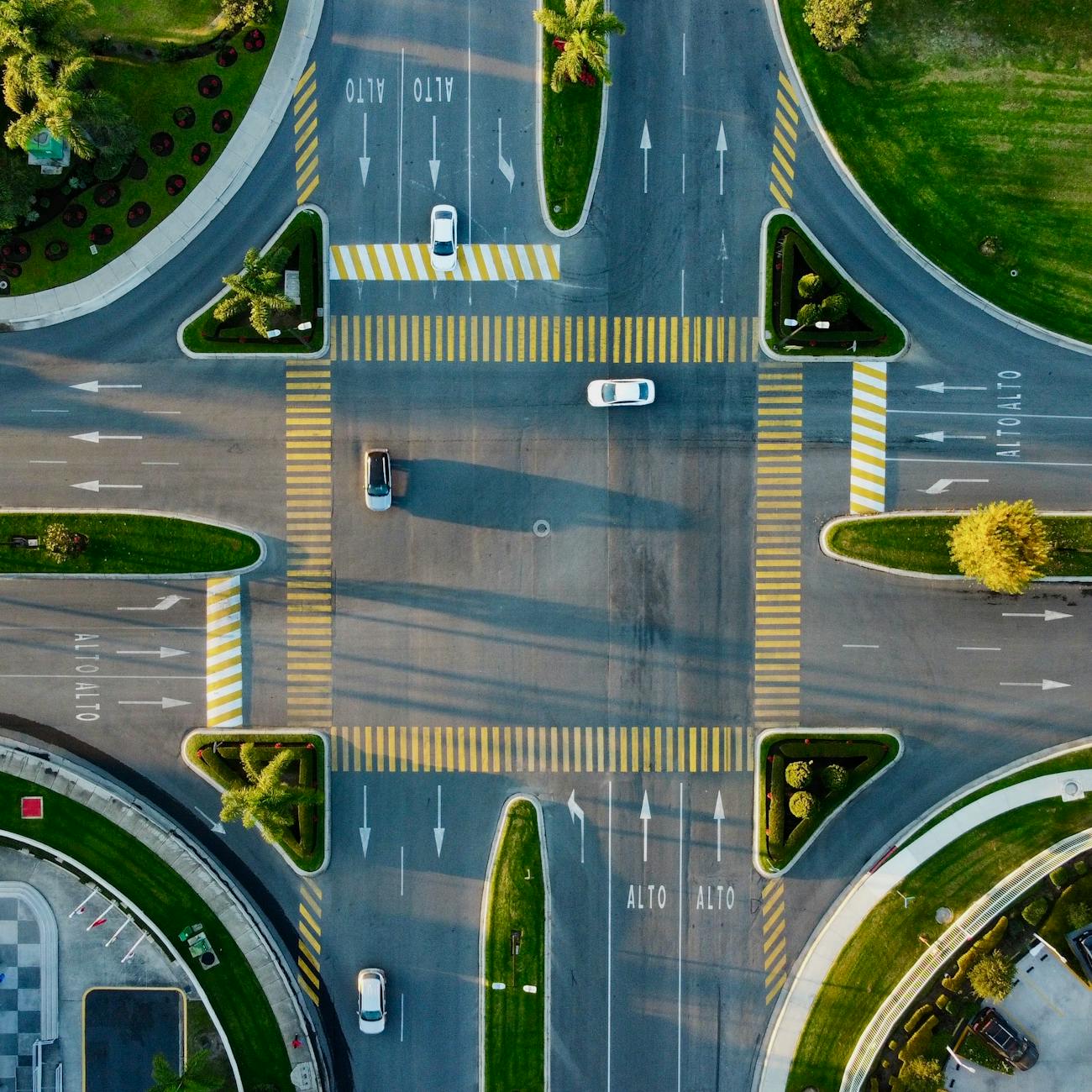
Traffic Signal Design: Traffic signal design is the process of planning, designing, and implementing traffic signals to regulate traffic flow at intersections. It involves analyzing traffic patterns, considering safety measures, and optimizing signal timings to ensure efficient movement of vehicles, pedestrians, and cyclists.
Key Terms and Vocabulary:
1. Intersection: An intersection is the point where two or more roads meet or cross each other. It is a critical location for traffic signal design as conflicts between different streams of traffic must be managed effectively to ensure smooth traffic flow.
2. Signal Phases: Signal phases refer to the different movements allowed by a traffic signal at an intersection. Common signal phases include green for through traffic, left turn, right turn, and pedestrian crossing. Each phase is timed to optimize traffic flow and minimize conflicts.
3. Signal Timing: Signal timing is the process of determining the duration of each signal phase to optimize traffic flow and reduce delays. Factors such as traffic volume, pedestrian activity, and intersection geometry are considered when setting signal timings.
4. Cycle Length: Cycle length is the total time taken for a traffic signal to complete all its phases and return to the beginning of the cycle. It is an important parameter in signal timing as it determines how frequently each phase is repeated.
5. Green Time: Green time is the duration during which a signal phase allows traffic to proceed through the intersection. It is essential to allocate sufficient green time to each movement to prevent congestion and delays.
6. Yellow Time: Yellow time is the interval between the green and red phases of a signal, indicating that the signal is about to change. It provides a warning to drivers to stop or clear the intersection safely before the red phase begins.
7. Red Clearance Interval: The red clearance interval is the time between the red phase of one direction and the green phase of the conflicting direction. It allows vehicles to clear the intersection before conflicting movements are permitted, reducing the risk of collisions.
8. Exclusive Left Turn Lane: An exclusive left turn lane is a dedicated lane at an intersection that allows vehicles to turn left without impeding through traffic. It improves safety and efficiency by separating turning vehicles from other movements.
9. Protected/Permissive Left Turn: A protected left turn allows vehicles to turn left when the signal displays a green arrow, giving them the right of way. A permissive left turn allows vehicles to turn left after yielding to oncoming traffic and pedestrians.
10. Pedestrian Crossings: Pedestrian crossings are designated areas for pedestrians to cross the road safely. Signal design must incorporate pedestrian signals and timings to ensure the safety and convenience of pedestrians at intersections.
11. Bicycle Facilities: Bicycle facilities such as bike lanes, sharrows, and bike boxes are essential considerations in traffic signal design to accommodate cyclists and promote multimodal transportation. Signal timing and phasing should prioritize cyclist safety and mobility.
12. Coordination: Signal coordination involves synchronizing traffic signals along a corridor to create a progression of green lights for efficient traffic flow. Coordinated signals minimize stops and delays, reducing fuel consumption and emissions.
13. Intelligent Transportation Systems (ITS): ITS technologies such as traffic signal controllers, vehicle detectors, and communication systems are used to enhance the performance of traffic signals. ITS enables real-time monitoring and adaptive signal control to respond to changing traffic conditions.
14. Traffic Signal Warrants: Traffic signal warrants are criteria established by transportation agencies to determine when a traffic signal is justified at an intersection. Warrants consider factors such as traffic volume, crash history, pedestrian activity, and delay to assess the need for a signal.
15. Capacity Analysis: Capacity analysis evaluates the ability of an intersection to accommodate traffic volume without excessive delays or congestion. It considers factors such as lane configurations, signal timings, and turning movements to determine the capacity of an intersection.
16. Signalized vs. Unsignalized Intersections: Signalized intersections have traffic signals to control the flow of traffic, while unsignalized intersections rely on stop signs, yield signs, or roundabouts. Signalized intersections are typically used at high-volume or high-speed locations to manage conflicting movements effectively.
17. Left Turn Phasing: Left turn phasing determines how left-turning vehicles are accommodated at an intersection. Options include protected left turns with a separate signal phase, permissive left turns with yielding to oncoming traffic, and split phasing to separate conflicting movements.
18. Traffic Signal Controller: A traffic signal controller is a device that operates traffic signals by controlling the timing and sequencing of signal phases. Modern controllers are often connected to central management systems for remote monitoring and adjustment.
19. Signal Head: A signal head is the physical device that displays traffic signal indications to drivers and pedestrians. Signal heads typically include red, yellow, and green lights, as well as pedestrian symbols and special arrows for turning movements.
20. Conflict Points: Conflict points are locations within an intersection where vehicles or pedestrians may collide if their movements are not properly regulated. Signal design aims to minimize conflict points and manage potential conflicts through signal phasing and geometric design.
21. Split Phasing: Split phasing is a signal timing strategy that separates conflicting movements by assigning different phases to each movement. For example, a split phase may allow through movements to proceed while prohibiting left turns, reducing the risk of conflicts.
22. Minimum Green Time: Minimum green time is the shortest duration that a signal phase must display a green indication to allow vehicles to clear the intersection safely. It ensures that sufficient time is provided for all vehicles to complete their movements before the signal changes.
23. Preemption: Preemption is a feature of traffic signals that gives priority to emergency vehicles, public transportation, or other designated vehicles. Preemption systems can override the normal signal operation to expedite the passage of priority vehicles.
24. Dilemma Zone: The dilemma zone is the area near a signalized intersection where drivers have difficulty deciding whether to stop or proceed through a yellow light. Signal design aims to minimize the dilemma zone by adjusting signal timings and speeds to improve driver decision-making.
25. Signal Coordination Plan: A signal coordination plan outlines the timing and phasing of traffic signals along a corridor to achieve optimal traffic flow and progression. Coordination plans consider factors such as signal spacing, cycle lengths, and offset timings to minimize delays and stops.
26. Pedestrian Actuation: Pedestrian actuation allows pedestrians to request a walk signal by pushing a button or sensor at a crosswalk. Actuated signals improve pedestrian safety by providing a dedicated crossing time only when needed, reducing delays for other traffic movements.
27. Splitter Island: A splitter island is a raised or painted refuge area in the center of an intersection that separates opposing traffic streams and guides turning movements. Splitter islands improve intersection safety by reducing conflicts and providing clear paths for vehicles.
28. Traffic Signal Plan: A traffic signal plan is a detailed drawing that depicts the layout, phasing, and timing of traffic signals at an intersection. Signal plans include signal head locations, signal faces, signal timings, and coordination details for installation and maintenance.
29. Flashing Yellow Arrow: A flashing yellow arrow is a signal indication that allows drivers to turn left after yielding to oncoming traffic and pedestrians. Flashing yellow arrows are used to indicate permissive left turns and are increasingly common in modern signal designs.
30. Right Turn on Red: Right turn on red allows drivers to turn right at a red signal after coming to a complete stop and yielding to pedestrians and oncoming traffic. Signal design must consider the safety implications of right turn on red movements and provide clear guidance to drivers.
31. All-Red Clearance: All-red clearance is a safety feature that provides a brief period of all-red indication at the end of a signal cycle to clear the intersection of any remaining vehicles or pedestrians. All-red clearance reduces the risk of conflicts between conflicting movements.
32. Queue Length: Queue length is the number of vehicles waiting in a line at a signalized intersection. Signal design aims to minimize queue lengths by optimizing signal timings, phasing, and lane configurations to reduce delays and congestion.
33. Adaptive Signal Control: Adaptive signal control systems use real-time data and algorithms to adjust signal timings based on traffic conditions. Adaptive signals can respond dynamically to changes in traffic volume, congestion, and incidents to optimize traffic flow and reduce delays.
34. Signal Retiming: Signal retiming involves adjusting the timing and phasing of traffic signals to improve traffic flow, reduce delays, and enhance safety. Signal retiming is a cost-effective way to optimize existing signal operations without major infrastructure changes.
35. Pedestrian Scramble: A pedestrian scramble is a signal phase that stops all vehicle movements and allows pedestrians to cross an intersection in all directions, including diagonally. Pedestrian scrambles improve pedestrian safety and convenience at high-pedestrian locations.
36. Leading Pedestrian Interval: A leading pedestrian interval is a signal timing strategy that gives pedestrians a head start to enter the crosswalk before vehicles receive a green light. Leading pedestrian intervals enhance pedestrian visibility and safety by prioritizing pedestrian movements.
37. Signal Synchronization: Signal synchronization involves coordinating traffic signals along a corridor to create a continuous flow of traffic without unnecessary stops. Synchronized signals improve traffic progression, reduce delays, and enhance the efficiency of the transportation network.
38. Traffic Signal Layout: A traffic signal layout is a diagram that shows the physical arrangement of signal heads, poles, detectors, and signage at an intersection. Signal layouts provide detailed instructions for signal installation, maintenance, and operation.
39. Offset Timing: Offset timing adjusts the signal timings at consecutive intersections along a corridor to create a wave of green lights for coordinated traffic flow. Offset timings account for the distance between intersections and the desired speed for optimal signal progression.
40. Signal Detection: Signal detection systems use sensors, cameras, or loops to detect vehicles, bicycles, and pedestrians at intersections. Detection data informs signal operation, timing adjustments, and priority treatments for different modes of transportation.
41. Traffic Signal Backplate: A traffic signal backplate is a reflective or contrasting background behind a signal head to enhance visibility and legibility for drivers. Backplates improve signal recognition and reduce confusion, especially in low-light conditions or complex intersections.
42. Signal Phasing Diagram: A signal phasing diagram illustrates the sequence and timing of signal phases at an intersection. Phasing diagrams show the allocation of green, yellow, and red times for each movement to ensure safe and efficient traffic operations.
43. Signal Coordination Strategy: A signal coordination strategy outlines the principles and objectives for coordinating traffic signals along a corridor. Coordination strategies consider factors such as traffic volume, signal spacing, cycle lengths, and offset timings to achieve optimal traffic flow.
44. Traffic Signal Design Software: Traffic signal design software is specialized computer programs used by traffic engineers to simulate, analyze, and optimize signal timings and phasing. Design software helps engineers model different scenarios, evaluate performance measures, and develop effective signal plans.
45. Traffic Signal Plan Review: Traffic signal plan review is the process of evaluating and approving signal plans for installation or modification. Reviews consider factors such as compliance with standards, safety requirements, coordination with other signals, and impacts on traffic operations.
46. Signal Coordination Benefits: Signal coordination benefits include reduced travel times, fuel consumption, emissions, and vehicle delays along a corridor. Coordinated signals improve traffic flow, safety, and efficiency by minimizing stops, conflicts, and congestion for all road users.
47. Traffic Signal Maintenance: Traffic signal maintenance involves regular inspections, repairs, and upgrades to ensure the proper functioning of signal equipment. Maintenance activities include cleaning signal heads, replacing bulbs, calibrating controllers, and upgrading technology for optimal performance.
48. Signalized Intersection Capacity: Signalized intersection capacity is the maximum volume of traffic that can pass through an intersection under ideal conditions. Capacity analyses consider factors such as lane configurations, signal timings, turning movements, and geometric design to determine intersection capacity.
49. Traffic Signal Phasing Configuration: Traffic signal phasing configuration defines the sequence and timing of signal phases at an intersection to accommodate different movements safely and efficiently. Phasing configurations vary based on traffic patterns, pedestrian activity, turning volumes, and geometric constraints.
50. Signalized Intersection Design Guidelines: Signalized intersection design guidelines provide standards and recommendations for designing safe and efficient signalized intersections. Guidelines cover aspects such as signal spacing, signal head placement, lane markings, pedestrian facilities, and geometric layout to ensure optimal intersection operations.
51. Signal Timing Optimization: Signal timing optimization involves adjusting signal timings to maximize traffic flow, minimize delays, and improve safety at intersections. Optimization techniques consider factors such as traffic volume, cycle lengths, green times, pedestrian crossings, and coordination strategies to enhance intersection performance.
52. Traffic Signal Design Challenges: Traffic signal design challenges include balancing the needs of different road users, adapting to changing traffic patterns, addressing pedestrian safety, optimizing signal timings, and coordinating signals along corridors. Challenges require innovative solutions, data-driven analyses, and stakeholder engagement to achieve successful outcomes.
53. Signalized Intersection Safety: Signalized intersection safety focuses on reducing the risk of crashes, conflicts, and injuries at signalized intersections. Safety measures include clear signal indications, adequate signage, pedestrian facilities, visibility improvements, speed management, and geometric enhancements to enhance intersection safety for all users.
54. Pedestrian Signal Timing: Pedestrian signal timing determines the duration of pedestrian crossing intervals at signalized intersections. Signal timings consider pedestrian walking speeds, crossing distances, signal phasing, button activation, and clearance times to provide safe and efficient crossing opportunities for pedestrians.
55. Traffic Signal Design Standards: Traffic signal design standards establish criteria and guidelines for designing, installing, and operating traffic signals. Standards cover aspects such as signal layouts, signal timings, signal heads, signal warrants, pedestrian crossings, detection systems, and coordination strategies to ensure uniformity and compliance with best practices.
56. Traffic Signal Simulation: Traffic signal simulation uses computer models to analyze and predict the performance of traffic signals under different scenarios. Simulation tools help engineers evaluate signal timings, phasing options, coordination strategies, and traffic impacts to optimize signal operations and intersection efficiency.
57. Signalized Intersection Evaluation: Signalized intersection evaluation assesses the performance, safety, and efficiency of signalized intersections through field observations, data collection, traffic analyses, crash investigations, pedestrian counts, signal operation reviews, and stakeholder feedback. Evaluations inform signal design improvements, maintenance activities, and policy decisions to enhance intersection operations.
58. Traffic Signal Design Principles: Traffic signal design principles emphasize safety, efficiency, sustainability, multimodal access, equity, and stakeholder engagement in designing signalized intersections. Principles guide engineers in developing solutions that prioritize user needs, traffic operations, community goals, and transportation system performance for successful signal design projects.
59. Signalized Intersection Geometric Design: Signalized intersection geometric design includes lane configurations, turning radii, crosswalk placements, island designs, sight distances, signal pole locations, and signage arrangements to facilitate safe and efficient traffic movements at intersections. Geometric design considerations address vehicle turning paths, pedestrian crossings, signal visibility, and intersection capacity to enhance intersection operations and safety.
60. Traffic Signal Design Best Practices: Traffic signal design best practices encompass evidence-based approaches, innovative solutions, data-driven analyses, stakeholder engagement, performance monitoring, continuous improvement, and knowledge sharing in designing effective signalized intersections. Best practices promote safety, efficiency, sustainability, and equity in signal design projects to achieve positive outcomes for all road users and communities.
By understanding and applying these key terms and vocabulary in traffic signal design, traffic engineers can effectively plan, design, and implement signalized intersections that improve traffic flow, enhance safety, and optimize transportation operations for all road users.
Key takeaways
- It involves analyzing traffic patterns, considering safety measures, and optimizing signal timings to ensure efficient movement of vehicles, pedestrians, and cyclists.
- It is a critical location for traffic signal design as conflicts between different streams of traffic must be managed effectively to ensure smooth traffic flow.
- Signal Phases: Signal phases refer to the different movements allowed by a traffic signal at an intersection.
- Signal Timing: Signal timing is the process of determining the duration of each signal phase to optimize traffic flow and reduce delays.
- Cycle Length: Cycle length is the total time taken for a traffic signal to complete all its phases and return to the beginning of the cycle.
- Green Time: Green time is the duration during which a signal phase allows traffic to proceed through the intersection.
- Yellow Time: Yellow time is the interval between the green and red phases of a signal, indicating that the signal is about to change.