
Dry Dock Operations
Expert-defined terms from the Dry Dock Management course at LearnUNI. Free to read, free to share, paired with a professional course.
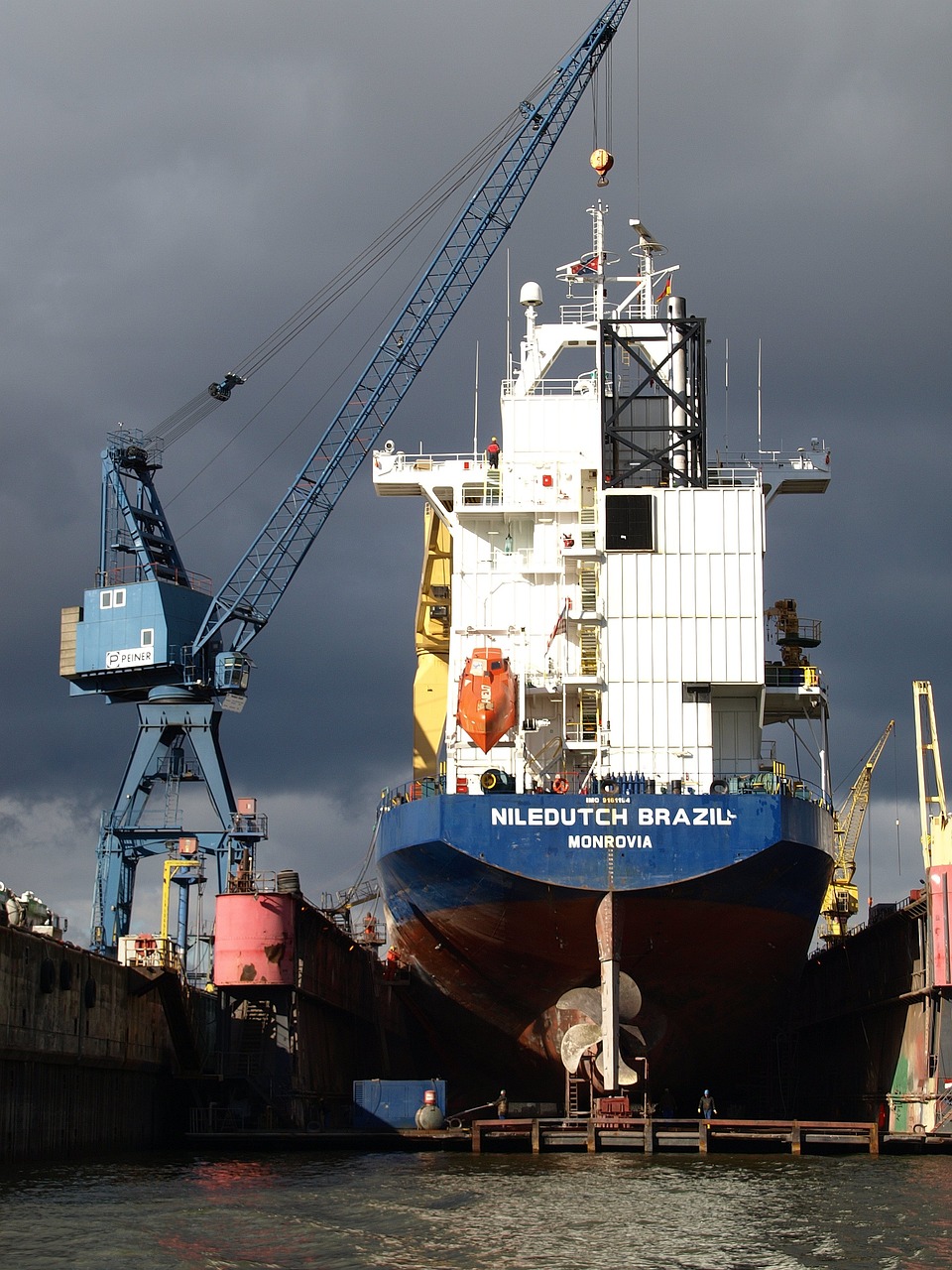
Abaft #
refers to a location or direction towards the rear of a ship, away from the bow. In dry dock operations, it is essential to understand the terminology used to describe the various parts of a ship to ensure effective communication and safe working practices. For example, when performing maintenance tasks, workers may need to access areas abft the ship's superstructure.
Acceleration #
is the rate of change of velocity of an object. In dry dock operations, understanding acceleration is crucial when dealing with heavy equipment and cranes to ensure safe and controlled movements. For instance, when lifting a large propeller, the acceleration of the crane's hoisting gear must be carefully controlled to avoid sudden jerks or swings that could cause damage or injury.
Access #
refers to the ability to enter or approach a specific area or location. In dry dock operations, access is critical for workers to perform maintenance and repair tasks. For example, safe access to the ship's hull and superstructure is essential for workers to inspect and repair damage or wear and tear.
Accommodation #
refers to the living quarters or facilities provided for crew members or workers on a ship. In dry dock operations, accommodation is essential for workers who may need to stay on site for extended periods. For example, on-site accommodation can improve worker productivity and safety by reducing the need for commuting and providing easy access to facilities and equipment.
Aerial #
refers to something related to the air or atmosphere. In dry dock operations, aerial equipment such as cranes and hoists are used to lift and move heavy equipment and components. For example, aerial lifts can be used to access high areas of the ship's superstructure for maintenance and repair tasks.
Aggregate #
refers to a collection or combination of things. In dry dock operations, aggregate materials such as sand and gravel are used in concrete and asphalt repairs. For example, aggregate materials can be used to repair damaged areas of the ship's hull or superstructure.
AIS #
stands for Automatic Identification System, a navigation aid used to track and identify ships. In dry dock operations, AIS is used to track the movement of ships in and out of the dry dock. For example, AIS can be used to monitor the position and speed of a ship as it enters or leaves the dry dock.
Alarm #
refers to a warning or signal that indicates a potential hazard or problem. In dry dock operations, alarms are used to warn workers of potential dangers such as gas leaks or electrical faults. For example, alarm systems can be installed to detect high levels of noise or vibration that could indicate a problem with the ship's engines or propulsion system.
Ambient #
refers to the surrounding environment or conditions. In dry dock operations, ambient conditions such as temperature and humidity can affect the quality and durability of repair work. For example, high temperatures and humidity can cause rust and corrosion on metal surfaces, which can compromise the integrity of repairs.
Anchor #
refers to a device used to secure a ship to the seabed or shore. In dry dock operations, anchors are used to stabilize the ship and prevent movement during repair work. For example, anchors can be used to hold the ship in place while divers inspect or repair the hull or propeller.
Anode #
refers to a metal device used to protect other metals from corrosion. In dry dock operations, anodes are used to protect the ship's hull and propeller from corrosion caused by seawater. For example, anodes can be installed on the ship's hull to sacrifice themselves and prevent corrosion of the steel or aluminum surfaces.
Anti #
fouling: refers to the coating or treatment applied to a ship's hull to prevent the growth of marine organisms. In dry dock operations, anti-fouling coatings are applied to the ship's hull to reduce drag and improve fuel efficiency. For example, anti-fouling coatings can be applied to the ship's hull to prevent the growth of barnacles and other marine organisms that can cause drag and reduce the ship's speed.
API #
stands for Application Programming Interface, a set of rules and protocols used to integrate different software systems. In dry dock operations, API is used to integrate different software systems used for management and control of dry dock operations. For example, API can be used to integrate the dry dock's management system with the ship's navigation system to track the ship's position and status.
Assembly #
refers to the process of combining different components or parts to form a complete system or structure. In dry dock operations, assembly is used to construct or repair complex systems such as engines or propulsion systems. For example, assembly of a ship's propeller may involve combining different components such as the hub, blades, and shaft.
AWS #
stands for American Welding Society, a organization that sets standards for welding and joining processes. In dry dock operations, AWS standards are used to ensure the quality and safety of welding and joining processes used to repair or construct ships. For example, AWS standards can be used to specify the type of welding process to be used for a particular application, such as shielded metal arc welding (SMAW) or gas metal arc welding (GMAW).
Ballast #
refers to the weight or material used to stabilize a ship and maintain its balance. In dry dock operations, ballast is used to stabilize the ship during repair work and prevent movement or tilting. For example, ballast tanks can be used to adjust the ship's buoyancy and stability during repair work.
Barge #
refers to a flat-bottomed vessel used to transport goods or equipment. In dry dock operations, barges are used to transport equipment and materials to and from the dry dock. For example, barges can be used to transport heavy equipment such as cranes or bulldozers to the dry dock.
Bearing #
refers to a machine component that supports a rotating shaft or axle. In dry dock operations, bearings are used in various applications such as propulsion systems and gearboxes. For example, bearings can be used to support the propeller shaft and reduce friction and wear on the shaft and propeller.
Berth #
refers to a location or position where a ship is moored or anchored. In dry dock operations, berths are used to position ships for repair work and maintenance. For example, berths can be used to position a ship for dry docking or launching.
Block #
refers to a solid or compact mass of material used to support or stabilize a ship. In dry dock operations, blocks are used to support the ship's hull and keel during repair work. For example, blocks can be used to support the ship's hull while repairs are made to the keel or propeller.
Bow #
refers to the front or forward part of a ship. In dry dock operations, the bow is often repaired or maintained separately from the rest of the ship. For example, the bow may require specialized coatings or treatments to protect it from corrosion or damage.
Buoyancy #
refers to the ability of an object to float or rise in a fluid such as water. In dry dock operations, buoyancy is used to stabilize the ship and maintain its balance during repair work. For example, buoyancy tanks can be used to adjust the ship's buoyancy and stability during repair work.
Cable #
refers to a length of wire or fiber used to transmit signals or power. In dry dock operations, cables are used to connect equipment and systems used for repair work. For example, cables can be used to connect the ship's propulsion system to the dry dock's power supply.
Caisson #
refers to a waterproof chamber or container used to enclose a ship's hull or keel during repair work. In dry dock operations, caissons are used to dry out the ship's hull and keel for repair work. For example, caissons can be used to enclose the ship's hull and keel to allow for repairs to be made to the propeller or rudder.
Cathodic #
refers to the process of protecting a metal surface from corrosion by applying an electric current. In dry dock operations, cathodic protection is used to protect the ship's hull and propeller from corrosion caused by seawater. For example, cathodic protection can be used to protect the ship's hull and propeller from corrosion by applying an electric current to the metal surface.
Certification #
refers to the process of verifying that a ship or equipment meets safety and regulatory standards. In dry dock operations, certification is used to ensure that ships and equipment meet safety and regulatory standards. For example, certification can be used to verify that a ship's propulsion system meets safety and regulatory standards for emissions and efficiency.
Chain #
refers to a series of linked metal rings used to lift or pull heavy objects. In dry dock operations, chains are used to lift or pull heavy equipment such as cranes or propellers. For example, chains can be used to lift a ship's propeller for repair or replacement.
Coating #
refers to a layer of material applied to a surface to protect it from corrosion or wear. In dry dock operations, coatings are used to protect the ship's hull and superstructure from corrosion and wear. For example, coatings can be applied to the ship's hull to protect it from corrosion caused by seawater.
Condition #
refers to the state or status of a ship or equipment. In dry dock operations, condition is used to assess the state or status of a ship or equipment to determine if it is safe for operation. For example, the condition of a ship's propeller can be assessed to determine if it needs to be repaired or replaced.
Console #
refers to a control panel or station used to operate and monitor equipment. In dry dock operations, consoles are used to operate and monitor equipment such as cranes and pumps. For example, a console can be used to control the movement of a crane or pump during repair work.
Container #
refers to a box or vessel used to store or transport goods or equipment. In dry dock operations, containers are used to store or transport goods and equipment such as tools and spare parts. For example, containers can be used to store hazardous materials such as paints and solvents.
Control #
refers to the ability to regulate or direct the movement or operation of a ship or equipment. In dry dock operations, control is used to regulate the movement or operation of equipment such as cranes and pumps. For example, control systems can be used to regulate the movement of a crane or pump during repair work.
Crew #
refers to the people who operate and maintain a ship. In dry dock operations, the crew is responsible for operating and maintaining the ship during repair work. For example, the crew can be responsible for operating the ship's propulsion system during repair work.
Crane #
refers to a machine used to lift or move heavy objects. In dry dock operations, cranes are used to lift or move heavy equipment such as propellers or engines. For example, cranes can be used to lift a ship's propeller for repair or replacement.
Damage #
refers to harm or injury caused to a ship or equipment. In dry dock operations, damage can occur due to accidents or neglect. For example, damage can occur to a ship's hull or propeller due to collision or grounding.
Deck #
refers to a flat or level surface on a ship. In dry dock operations, decks are used to support equipment and personnel during repair work. For example, decks can be used to support cranes or pumps during repair work.
Derrick #
refers to a machine used to lift or move heavy objects. In dry dock operations, derricks are used to lift or move heavy equipment such as propellers or engines. For example, derricks can be used to lift a ship's propeller for repair or replacement.
Displacement #
refers to the weight or volume of water displaced by a ship. In dry dock operations, displacement is used to calculate the weight or volume of water displaced by a ship. For example, displacement can be used to calculate the weight of ballast needed to stabilize a ship during repair work.
Dock #
refers to a structure or facility used to support and maintain ships. In dry dock operations, docks are used to support and maintain ships during repair work. For example, docks can be used to support a ship's hull and keel during repair work.
Draft #
refers to the depth of water required to float a ship. In dry dock operations, draft is used to calculate the depth of water required to float a ship. For example, draft can be used to calculate the depth of water required to float a ship during repair work.
Drain #
refers to a pipe or channel used to remove water or fluids from a ship. In dry dock operations, drains are used to remove water or fluids from a ship during repair work. For example, drains can be used to remove water from a ship's hull or hold during repair work.
Dry #
refers to the absence of water or moisture. In dry dock operations, dry conditions are used to repair and maintain ships. For example, dry conditions can be used to repair a ship's hull or propeller without the presence of water or moisture.
Eddy #
refers to a current or swirl of water that flows in a direction opposite to the main current. In dry dock operations, eddies can occur during repair work and can affect the stability of a ship. For example, eddies can occur during pumping operations and can affect the stability of a ship.
Efficiency #
refers to the ability to achieve a goal or objective with a minimum of waste or excess. In dry dock operations, efficiency is used to optimize repair work and reduce costs. For example, efficiency can be used to optimize the use of resources such as labor and materials during repair work.
Electric #
refers to a form of energy used to power equipment and systems. In dry dock operations, electric power is used to operate equipment such as cranes and pumps. For example, electric power can be used to operate a crane or pump during repair work.
Engine #
refers to a machine used to generate power or propulsion. In dry dock operations, engines are used to power ships and equipment during repair work. For example, engines can be used to power a ship's propulsion system during repair work.
Equipment #
refers to the tools and machines used to perform a task or operation. In dry dock operations, equipment such as cranes and pumps are used to perform repair work. For example, equipment such as welding machines and cutting tools are used to repair a ship's hull or propeller.
Fabrication #
refers to the process of creating or constructing something. In dry dock operations, fabrication is used to create or construct new components or parts for a ship. For example, fabrication can be used to create a new propeller or rudder for a ship.
Fender #
refers to a device used to absorb or distribute the force of a collision. In dry dock operations, fenders are used to protect a ship from damage during repair work. For example, fenders can be used to protect a ship's hull from damage during docking or undocking operations.
Fire #
refers to a chemical reaction that releases heat and light. In dry dock operations, fire can be a hazard during repair work. For example, fire can occur during welding or cutting operations and can damage a ship or injure personnel.
Fluid #
refers to a substance that flows and has no fixed shape. In dry dock operations, fluids such as water and oil are used in various applications such as cooling and lubrication. For example, fluids can be used to cool a ship's engines or transmission during repair work.
Frame #
refers to a structure or framework used to support a ship's hull or superstructure. In dry dock operations, frames are used to support a ship's hull or superstructure during repair work. For example, frames can be used to support a ship's hull during repair or replacement of the propeller or rudder.
Fuel #
refers to a substance used to generate energy or power. In dry dock operations, fuel is used to power ships and equipment during repair work. For example, fuel can be used to power a ship's engines or generators during repair work.
Gantry #
refers to a structure or framework used to support a crane or hoist. In dry dock operations, gantries are used to support cranes or hoists during repair work. For example, gantries can be used to support a crane or hoist during repair or replacement of a ship's propeller or rudder.
Gear #
refers to a toothed wheel or mechanism used to transmit power or motion. In dry dock operations, gears are used in various applications such as propulsion systems and transmissions. For example, gears can be used to transmit power from a ship's engines to its propeller during repair work.
Hatch #
refers to an opening in a ship's deck or hull used to access a hold or compartment. In dry dock operations, hatches are used to access a ship's holds or compartments during repair work. For example, hatches can be used to access a ship's engine room or cargo hold during repair work.
Haul #
refers to the act of pulling or dragging something. In dry dock operations, hauling is used to move or position a ship during repair work. For example, hauling can