
Predictive Analytics in Dental Care
Predictive Analytics in Dental Care
Predictive Analytics in Dental Care
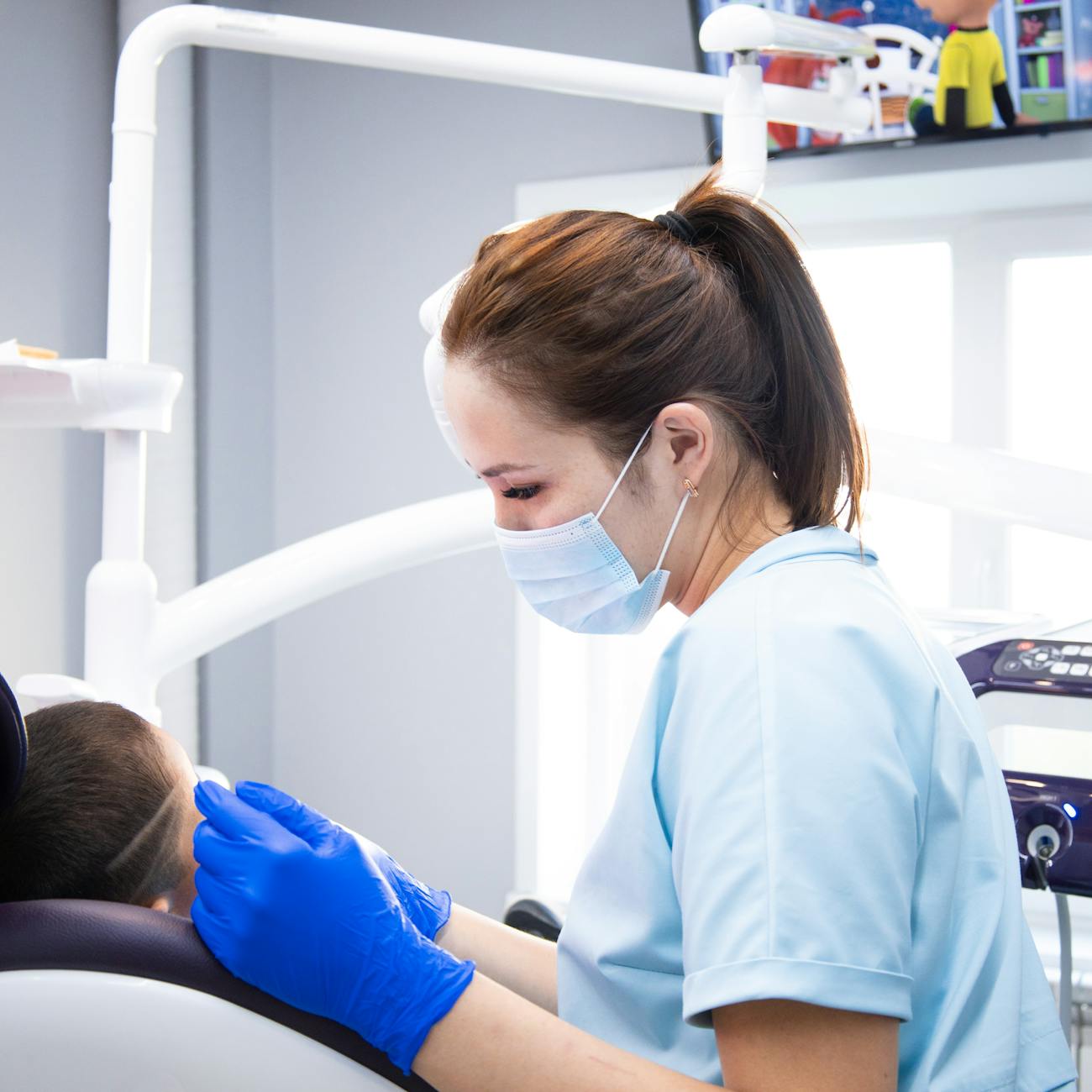
Predictive analytics in dental care refers to the use of advanced statistical algorithms and machine learning techniques to analyze historical data and predict future outcomes in the field of dentistry. This approach helps dentists and dental professionals make informed decisions, improve patient outcomes, and optimize operational efficiencies.
Key Terms and Vocabulary
Predictive Modeling: Predictive modeling is the process of using statistical algorithms and machine learning techniques to create a model that predicts future outcomes based on historical data. In dental care, predictive modeling can be used to forecast patient outcomes, identify high-risk patients, and optimize treatment plans.
Machine Learning: Machine learning is a subset of artificial intelligence that enables computers to learn from data without being explicitly programmed. In dental care, machine learning algorithms can analyze patient data to identify patterns, make predictions, and improve diagnostic accuracy.
Big Data: Big data refers to large volumes of structured and unstructured data that can be analyzed to reveal patterns, trends, and associations. In dental care, big data can include patient records, treatment histories, imaging data, and other relevant information that can be used for predictive analytics.
Feature Engineering: Feature engineering is the process of selecting, transforming, and extracting relevant features from raw data to improve the performance of machine learning models. In dental care, feature engineering can involve selecting the most informative patient variables to predict treatment outcomes.
Classification: Classification is a machine learning task that involves categorizing input data into distinct classes or categories. In dental care, classification algorithms can be used to predict whether a patient is at risk of developing a specific oral health condition or disease.
Regression: Regression is a statistical technique used to model the relationship between a dependent variable and one or more independent variables. In dental care, regression analysis can be used to predict the progression of a disease or the response to a particular treatment.
Clustering: Clustering is a machine learning technique that groups similar data points together based on their characteristics. In dental care, clustering algorithms can be used to identify patient subgroups with similar oral health profiles or treatment responses.
Decision Trees: Decision trees are a type of machine learning algorithm that uses a tree-like structure to make decisions based on input features. In dental care, decision trees can be used to predict treatment outcomes or recommend personalized treatment plans for patients.
Random Forest: Random forest is an ensemble learning technique that combines multiple decision trees to improve predictive accuracy. In dental care, random forest algorithms can be used to analyze complex patient data and make more accurate predictions.
Deep Learning: Deep learning is a subset of machine learning that uses artificial neural networks to model complex patterns in data. In dental care, deep learning algorithms can analyze large volumes of imaging data to assist in diagnosis, treatment planning, and outcome prediction.
Overfitting: Overfitting occurs when a machine learning model performs well on training data but fails to generalize to new, unseen data. In dental care, overfitting can lead to inaccurate predictions and poor treatment outcomes if not properly addressed.
Underfitting: Underfitting occurs when a machine learning model is too simple to capture the underlying patterns in the data. In dental care, underfitting can result in suboptimal predictions and limited insights into patient outcomes.
Cross-Validation: Cross-validation is a technique used to assess the performance of machine learning models by splitting the data into training and testing sets multiple times. In dental care, cross-validation can help evaluate the generalization ability of predictive models and prevent overfitting.
Hyperparameter Tuning: Hyperparameter tuning involves optimizing the parameters of a machine learning model to improve its performance. In dental care, hyperparameter tuning can help fine-tune predictive models and enhance their accuracy in predicting patient outcomes.
Confusion Matrix: A confusion matrix is a table that summarizes the performance of a classification model by comparing predicted and actual class labels. In dental care, confusion matrices can help evaluate the accuracy, precision, recall, and F1 score of predictive models.
Receiver Operating Characteristic (ROC) Curve: The ROC curve is a graphical representation of the trade-off between the true positive rate and false positive rate of a binary classification model. In dental care, ROC curves can help assess the performance of predictive models in distinguishing between different oral health conditions or treatment outcomes.
Area Under the Curve (AUC): The AUC is a metric that quantifies the overall performance of a classification model based on the ROC curve. In dental care, a higher AUC value indicates a more accurate predictive model for evaluating patient outcomes or treatment responses.
Feature Importance: Feature importance measures the contribution of each input variable to the predictive performance of a machine learning model. In dental care, understanding feature importance can help identify key factors that influence patient outcomes and treatment effectiveness.
Ensemble Learning: Ensemble learning is a machine learning technique that combines multiple models to improve predictive accuracy and robustness. In dental care, ensemble learning methods such as bagging, boosting, and stacking can enhance the performance of predictive analytics models.
Challenges in Predictive Analytics in Dental Care
Despite the potential benefits of predictive analytics in dental care, several challenges must be addressed to ensure successful implementation and utilization of predictive models:
1. Data Quality: Ensuring the quality, consistency, and completeness of patient data is crucial for developing accurate predictive models in dental care. Poor data quality can lead to biased predictions, inaccurate outcomes, and suboptimal treatment decisions.
2. Privacy and Security: Protecting patient privacy and maintaining data security are paramount concerns in predictive analytics in dental care. Compliance with regulations such as HIPAA is essential to safeguard patient information and prevent unauthorized access or data breaches.
3. Interpretability: Interpreting and explaining the decisions made by predictive models is essential for gaining the trust of healthcare providers and patients. Ensuring the transparency and explainability of predictive analytics results can help increase acceptance and adoption in dental care settings.
4. Model Validation: Validating predictive models using independent datasets and rigorous evaluation metrics is essential to assess their generalization ability and performance. Proper model validation can help identify potential biases, errors, or limitations in predictive analytics approaches.
5. Integration with Clinical Workflow: Integrating predictive analytics tools into the existing clinical workflow of dental practices can be challenging due to differences in data formats, system compatibility, and user acceptance. Seamless integration and user-friendly interfaces are essential for enhancing the usability and adoption of predictive models in dental care.
6. Ethical Considerations: Addressing ethical considerations such as fairness, accountability, and transparency in predictive analytics is essential to ensure the responsible use of data and algorithms in dental care. Monitoring and mitigating potential biases or unintended consequences of predictive models are critical for maintaining ethical standards and patient trust.
7. Scalability and Resource Constraints: Scalability and resource constraints can limit the widespread adoption and implementation of predictive analytics in dental care, especially in small practices or underserved communities. Identifying cost-effective solutions, leveraging cloud-based services, and collaborating with healthcare partners can help overcome scalability and resource challenges in predictive analytics initiatives.
Overall, understanding key terms and concepts in predictive analytics, addressing challenges, and leveraging advanced algorithms and techniques can empower dental professionals to harness the power of data-driven insights and improve patient care in the field of dentistry.
Key takeaways
- Predictive analytics in dental care refers to the use of advanced statistical algorithms and machine learning techniques to analyze historical data and predict future outcomes in the field of dentistry.
- Predictive Modeling: Predictive modeling is the process of using statistical algorithms and machine learning techniques to create a model that predicts future outcomes based on historical data.
- Machine Learning: Machine learning is a subset of artificial intelligence that enables computers to learn from data without being explicitly programmed.
- In dental care, big data can include patient records, treatment histories, imaging data, and other relevant information that can be used for predictive analytics.
- Feature Engineering: Feature engineering is the process of selecting, transforming, and extracting relevant features from raw data to improve the performance of machine learning models.
- In dental care, classification algorithms can be used to predict whether a patient is at risk of developing a specific oral health condition or disease.
- Regression: Regression is a statistical technique used to model the relationship between a dependent variable and one or more independent variables.