
AI-driven Decision Support in Ophthalmology
Artificial Intelligence (AI) refers to the simulation of human intelligence in machines that are programmed to think like humans and mimic their actions. The terms "artificial intelligence" and "machine learning" are often used interchangea…
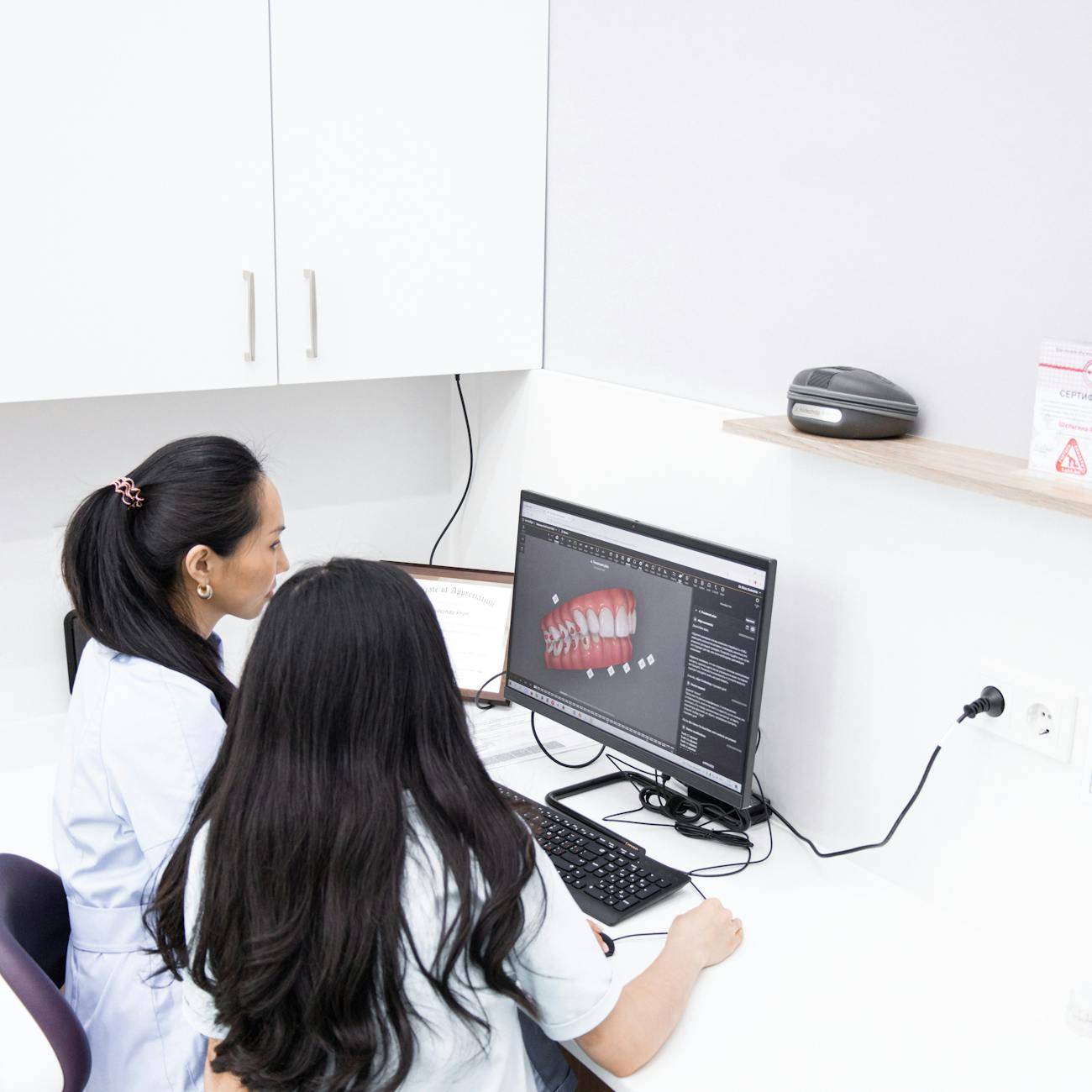
Artificial Intelligence (AI) refers to the simulation of human intelligence in machines that are programmed to think like humans and mimic their actions. The terms "artificial intelligence" and "machine learning" are often used interchangeably, but they do have different meanings. AI is the broader concept of machines being able to carry out tasks in a way that we would consider "smart", while machine learning is a subset of AI that involves the practice of using algorithms to parse data, learn from it, and then make a determination or prediction about something.
In the context of ophthalmology, AI-driven decision support systems can be used to analyze medical images, such as those taken during eye exams, and assist doctors in diagnosing and treating various eye conditions. These systems are trained using large datasets of medical images and corresponding diagnoses, allowing them to learn to recognize the visual patterns associated with different conditions.
Some key terms and concepts related to AI-driven decision support in ophthalmology include:
* **Deep learning:** A type of machine learning that uses artificial neural networks with many layers (also known as "deep" networks) to learn and make decisions. Deep learning models are able to automatically learn hierarchical feature representations from large datasets, making them particularly well-suited for image analysis tasks. * **Convolutional neural networks (CNNs):** A type of deep learning model that is commonly used for image analysis tasks. CNNs are designed to automatically and adaptively learn spatial hierarchies of features from images. They have been widely used in ophthalmology for tasks such as detecting diabetic retinopathy and age-related macular degeneration in fundus images. * **Transfer learning:** A machine learning technique in which a pre-trained model is used as the starting point for a new model. Transfer learning can be used to leverage the knowledge gained from large datasets in one domain and apply it to a related problem in another domain. For example, a CNN that has been pre-trained on a large dataset of natural images can be fine-tuned on a smaller dataset of medical images to recognize specific patterns associated with eye diseases. * **Data augmentation:** A technique used to increase the size and diversity of a training dataset by applying random transformations to the existing data. For example, data augmentation can be used to generate additional training examples for a CNN by randomly rotating, flipping, or zooming in or out on the input images. This can help the model learn to be more robust to variations in the data and improve its performance on new, unseen images. * **Model interpretability:** The ability to understand and explain the decisions made by a machine learning model. Model interpretability is important in ophthalmology because it allows doctors to trust and understand the recommendations made by AI-driven decision support systems. There are various techniques for improving model interpretability, such as using simpler models, visualizing the features learned by the model, and providing explanations for individual predictions. * **Evaluation metrics:** Measures used to assess the performance of a machine learning model. In ophthalmology, common evaluation metrics for AI-driven decision support systems include accuracy, sensitivity, specificity, and the area under the receiver operating characteristic curve (AUC-ROC). These metrics can be used to compare the performance of different models and determine which one is best suited for a particular task.
There are many practical applications for AI-driven decision support systems in ophthalmology. For example, these systems can be used to:
* **Screen patients for eye diseases:** AI-driven systems can analyze medical images, such as fundus photos or optical coherence tomography (OCT) scans, to detect the presence of eye diseases, such as diabetic retinopathy, age-related macular degeneration, and glaucoma. These systems can be used to triage patients and prioritize those who need further evaluation by a doctor. * **Assist in diagnosis:** AI-driven systems can provide doctors with additional information and insights that can help them make more accurate diagnoses. For example, a system might highlight suspicious regions in an image or provide a probability score for the presence of a particular condition. * **Monitor disease progression:** AI-driven systems can be used to track the progression of eye diseases over time and alert doctors to any significant changes. This can help doctors tailor treatment plans and make more informed decisions about when to intervene. * **Predict treatment response:** AI-driven systems can be used to predict how well a patient is likely to respond to a particular treatment based on their medical history and the characteristics of their disease. This can help doctors choose the most effective treatment for each patient and avoid unnecessary procedures or medications.
There are also challenges and limitations to using AI-driven decision support systems in ophthalmology. Some of these include:
* **Data availability and quality:** AI-driven systems require large amounts of high-quality data to train and evaluate. In ophthalmology, obtaining access to diverse and representative datasets can be difficult due to privacy concerns, regulatory restrictions, and the cost and logistics of data collection. * **Model bias and fairness:** AI-driven systems can inadvertently learn and perpetuate biases present in the training data, leading to unfair or inaccurate predictions for certain groups of patients. It is important to carefully evaluate and mitigate any potential sources of bias in order to ensure that the system is fair and equitable for all patients. * **Model explainability and trust:** Doctors need to be able to understand and trust the decisions made by AI-driven systems in order to use them effectively. However, many machine learning models, particularly deep learning models, can be difficult to interpret and explain. Improving model interpretability is an active area of research in order to build trust and confidence in AI-driven decision support systems. * **Regulatory and legal considerations:** AI-driven systems are subject to various regulations and legal requirements, such as those related to data privacy, medical device approval, and liability. It is important to ensure that these systems comply with all relevant laws and regulations in order to protect patients and providers.
In summary, AI-driven decision support systems have the potential to transform ophthalmology by providing doctors with valuable insights and assistance in diagnosing and treating eye conditions. Key terms and concepts related to these systems include deep learning, convolutional neural networks, transfer learning, data augmentation, model interpretability, and evaluation metrics. There are many practical applications for these systems in ophthalmology, including disease screening, diagnosis, monitoring, and treatment prediction. However, there are also challenges and limitations to using AI-driven systems, such as data availability and quality, model bias and fairness, model explainability and trust, and regulatory and legal considerations. It is important to carefully consider these factors when implementing AI-driven decision support systems in ophthalmology in order to ensure their safe and effective use.
Key takeaways
- Artificial Intelligence (AI) refers to the simulation of human intelligence in machines that are programmed to think like humans and mimic their actions.
- In the context of ophthalmology, AI-driven decision support systems can be used to analyze medical images, such as those taken during eye exams, and assist doctors in diagnosing and treating various eye conditions.
- In ophthalmology, common evaluation metrics for AI-driven decision support systems include accuracy, sensitivity, specificity, and the area under the receiver operating characteristic curve (AUC-ROC).
- There are many practical applications for AI-driven decision support systems in ophthalmology.
- * **Predict treatment response:** AI-driven systems can be used to predict how well a patient is likely to respond to a particular treatment based on their medical history and the characteristics of their disease.
- There are also challenges and limitations to using AI-driven decision support systems in ophthalmology.
- * **Model bias and fairness:** AI-driven systems can inadvertently learn and perpetuate biases present in the training data, leading to unfair or inaccurate predictions for certain groups of patients.