
Computer Vision for Marine Applications
In this explanation, we will cover key terms and vocabulary related to Computer Vision for Marine Applications in the Professional Certificate in AI for Marine Engineering. We will discuss concepts, provide examples and practical applicatio…
In this explanation, we will cover key terms and vocabulary related to Computer Vision for Marine Applications in the Professional Certificate in AI for Marine Engineering. We will discuss concepts, provide examples and practical applications, and challenge the reader to deepen their understanding.
1. Computer Vision Computer vision is a field of artificial intelligence (AI) that trains computers to interpret and understand the visual world. By using digital images from cameras and videos and deep learning models, computers can accurately identify and classify objects and then react to what they "see." 2. Digital Image A digital image is a numerical representation of a 2D image or a 2D picture that is stored in a computer as a grid of pixels, where each pixel is a small dot that has a specific color value. 3. Pixel A pixel is the smallest unit of a digital image. A pixel is a single point in a raster image, and it has a specific color value. 4. Convolutional Neural Network (CNN) A Convolutional Neural Network (CNN) is a type of deep learning neural network designed for image processing and computer vision tasks. CNNs are designed to automatically and adaptively learn spatial hierarchies of features from tasks with grid-like topology, such as an image. 5. Object Detection Object detection is a computer vision task that involves identifying and locating objects in images or videos. Object detection involves drawing bounding boxes around objects in an image and classifying them. 6. Instance Segmentation Instance segmentation is a computer vision task that involves identifying and segmenting individual objects in an image. Instance segmentation not only draws bounding boxes around objects in an image but also generates a pixel-wise mask for each object. 7. Semantic Segmentation Semantic segmentation is a computer vision task that involves classifying each pixel in an image into a specific class. Semantic segmentation does not differentiate between instances of the same class. 8. Transfer Learning Transfer learning is a machine learning technique that leverages pre-trained models for new tasks. Transfer learning allows computer vision models to benefit from the knowledge gained from large-scale image datasets, reducing the need for large amounts of labeled data for new tasks. 9. Image Augmentation Image augmentation is a technique used to increase the size of an image dataset by applying random transformations to the images. Image augmentation can include rotations, translations, scaling, and flipping of images, which can improve the robustness of computer vision models. 10. Bounding Box A bounding box is a rectangle that encloses an object in an image. Bounding boxes are used in object detection tasks to locate and classify objects in images. 11. Intersection over Union (IoU) Intersection over Union (IoU) is a metric used to evaluate the accuracy of object detection models. IoU measures the overlap between the predicted bounding box and the ground truth bounding box, divided by the total area of both boxes. 12. Non-max Suppression Non-max suppression is a technique used to eliminate duplicate detections in object detection tasks. Non-max suppression selects the bounding box with the highest confidence score and suppresses overlapping bounding boxes. 13. Region Proposal Network (RPN) A Region Proposal Network (RPN) is a neural network that generates region proposals for object detection tasks. RPNs generate bounding boxes around potential objects in an image, and these bounding boxes are then classified by the object detection network. 14. Feature Extraction Feature extraction is the process of extracting meaningful features from images that can be used for computer vision tasks. Feature extraction can include color histograms, texture features, and edge detection. 15. SIFT Scale-Invariant Feature Transform (SIFT) is a feature extraction algorithm that identifies and describes local features in images that are invariant to image scale, orientation, and affine distortion. 16. SURF Speeded Up Robust Features (SURF) is a feature extraction algorithm that is similar to SIFT but faster. SURF uses integral images to speed up the feature detection process. 17. HOG Histogram of Oriented Gradients (HOG) is a feature extraction algorithm that counts occurrences of gradient orientation in localized portions of an image. 18. Deep Learning Deep learning is a subset of machine learning that uses artificial neural networks with many layers to learn from large datasets. Deep learning models can learn complex patterns in data and have been successful in many computer vision tasks. 19. Object Recognition Object recognition is the process of identifying objects in images or videos. Object recognition involves drawing bounding boxes around objects in an image and classifying them. 20. Marine Applications Marine applications of computer vision include ship detection, marine debris detection, and ocean exploration. Computer vision can be used to monitor shipping lanes, detect illegal fishing, and map the ocean floor.
Examples and Practical Applications -----------------------------------
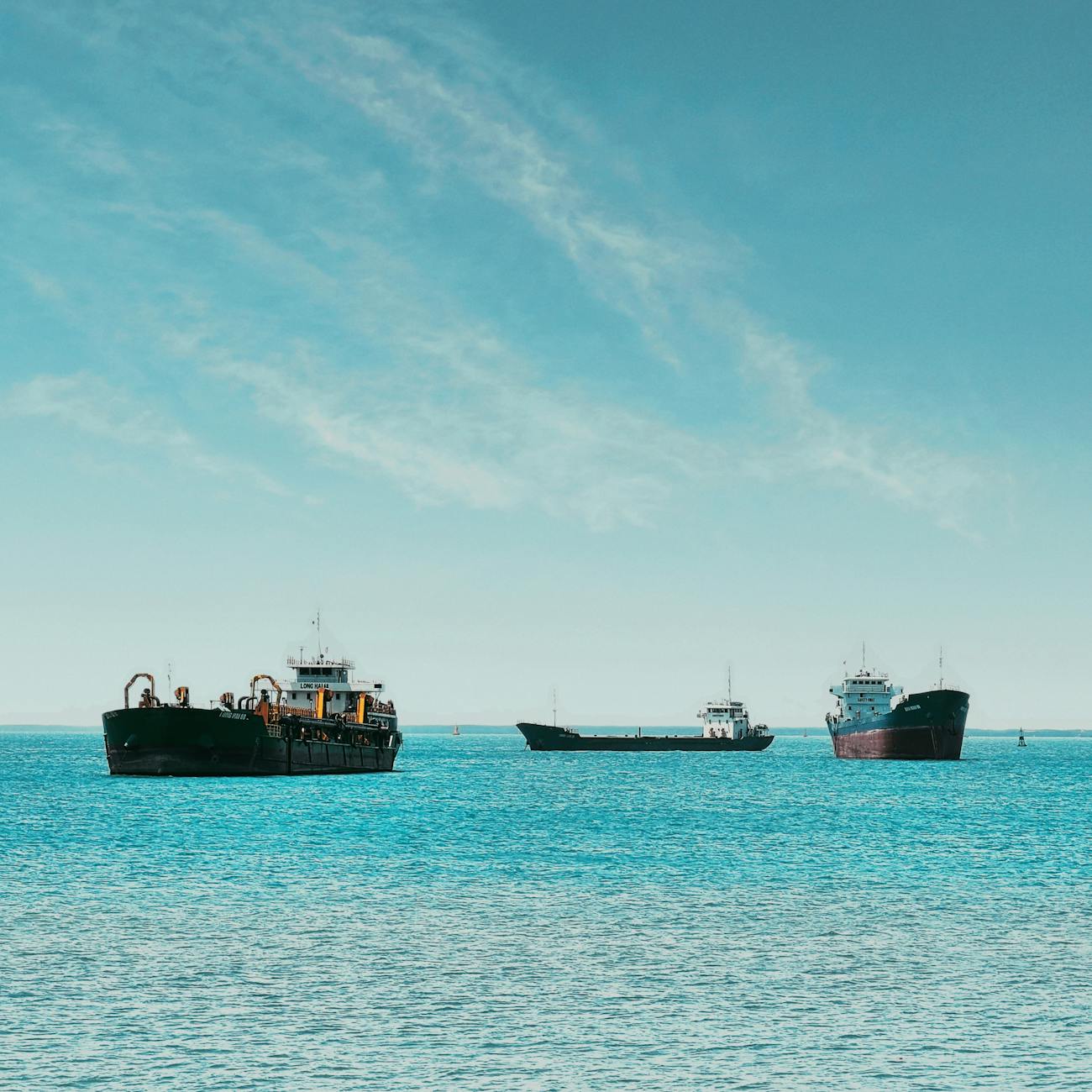
Computer vision has many practical applications in marine engineering. For example, computer vision can be used to detect ships in satellite imagery, which can be useful for monitoring shipping lanes and detecting illegal fishing. Computer vision can also be used to detect marine debris in ocean waters, which can help clean up the ocean and protect marine life.
Computer vision can also be used for ocean exploration. By using underwater cameras and computer vision models, researchers can map the ocean floor and identify underwater features such as coral reefs and shipwrecks.
Challenges ----------
One of the challenges of using computer vision in marine applications is the variability in lighting conditions and water clarity. Underwater images can be distorted by suspended particles and changing light conditions, making it difficult for computer vision models to accurately identify objects.
Another challenge is the large amount of data required for training computer vision models. Marine applications often require large datasets of underwater images, which can be time-consuming and expensive to collect.
Conclusion ----------
In this explanation, we have covered key terms and vocabulary related to Computer Vision for Marine Applications in the Professional Certificate in AI for Marine Engineering. We have discussed concepts, provided examples and practical applications, and challenged the reader to deepen their understanding. Computer vision has many practical applications in marine engineering, and with the continued advancement of deep learning models, we can expect to see even more innovative uses of computer vision in the future.
Key takeaways
- In this explanation, we will cover key terms and vocabulary related to Computer Vision for Marine Applications in the Professional Certificate in AI for Marine Engineering.
- SIFT Scale-Invariant Feature Transform (SIFT) is a feature extraction algorithm that identifies and describes local features in images that are invariant to image scale, orientation, and affine distortion.
- For example, computer vision can be used to detect ships in satellite imagery, which can be useful for monitoring shipping lanes and detecting illegal fishing.
- By using underwater cameras and computer vision models, researchers can map the ocean floor and identify underwater features such as coral reefs and shipwrecks.
- Underwater images can be distorted by suspended particles and changing light conditions, making it difficult for computer vision models to accurately identify objects.
- Marine applications often require large datasets of underwater images, which can be time-consuming and expensive to collect.
- Computer vision has many practical applications in marine engineering, and with the continued advancement of deep learning models, we can expect to see even more innovative uses of computer vision in the future.