
Digital Signal Processing
Digital Signal Processing (DSP) is the discipline that deals with the representation, manipulation, and analysis of signals that have been converted from analog to digital form. In instrumentation engineering, DSP techniques are applied to …
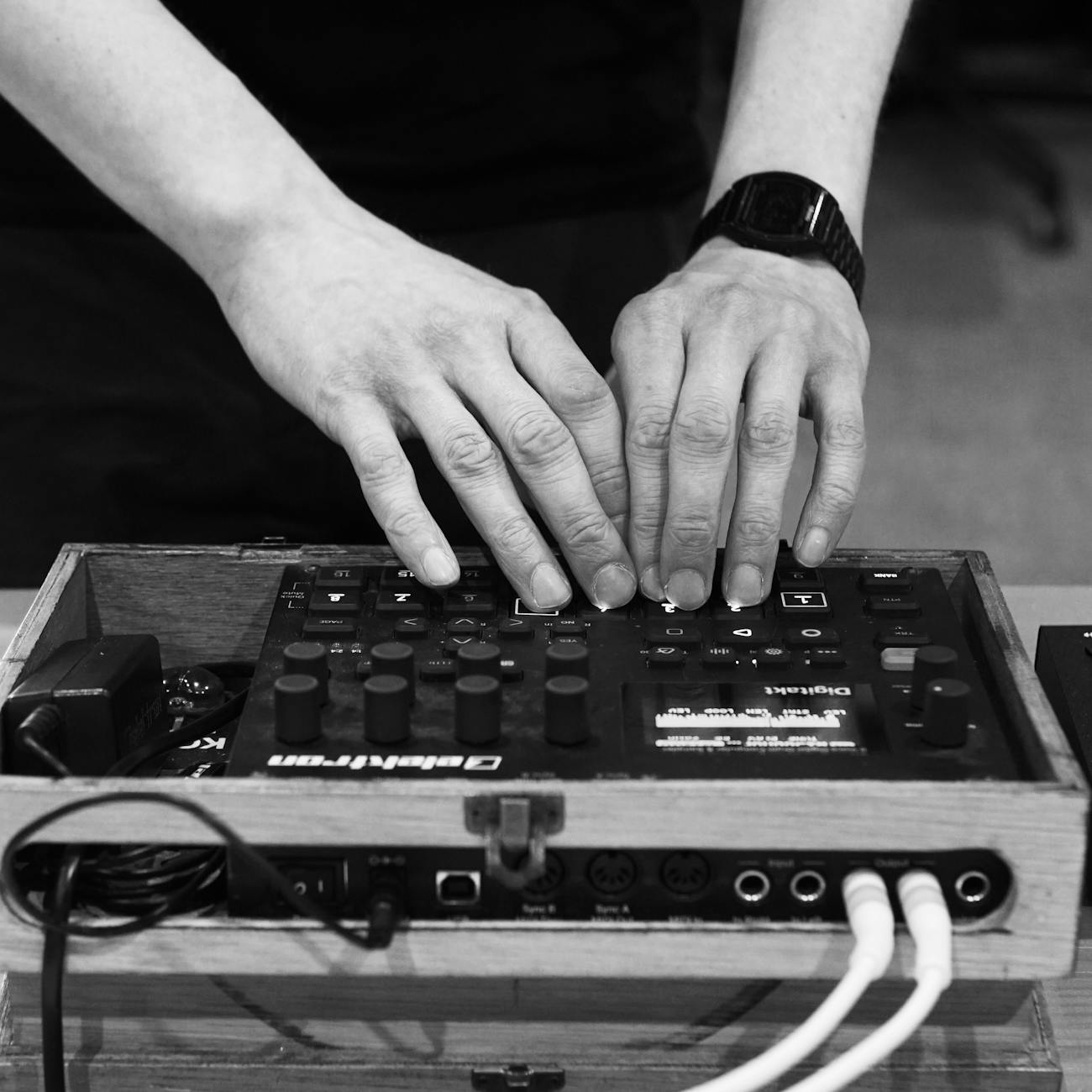
Digital Signal Processing (DSP) is the discipline that deals with the representation, manipulation, and analysis of signals that have been converted from analog to digital form. In instrumentation engineering, DSP techniques are applied to improve measurement accuracy, extract useful information, and enable real‑time control. The following terminology forms the foundation for any professional working with DSP in modern instrumentation systems.
Sampling is the process of converting a continuous‑time signal into a discrete‑time sequence by measuring the signal’s amplitude at regular intervals called sampling instants. The interval between samples is the sampling period (T_s) and its reciprocal is the sampling frequency (f_s). For example, a temperature sensor that outputs a voltage proportional to temperature may be sampled every 10 ms, giving a sampling frequency of 100 Hz. The choice of f_s directly influences the fidelity of the digital representation.
Nyquist rate is the minimum sampling frequency required to capture all the information in a band‑limited signal without introducing ambiguity. It is equal to twice the highest frequency component (f_max) present in the analog signal, i.e., f_s ≥ 2 f_max. If a vibration signal contains components up to 5 kHz, the Nyquist rate dictates a sampling frequency of at least 10 kHz. Sampling below this threshold leads to the phenomenon of aliasing.
Aliasing occurs when higher‑frequency components of a signal are indistinguishably mapped into lower frequencies due to insufficient sampling. The aliased components appear as false signals, corrupting the digital data. In practice, an anti‑aliasing low‑pass filter is placed before the analog‑to‑digital converter (ADC) to attenuate frequencies above f_s/2. For instance, a 12‑kHz component in a signal sampled at 8 kHz would fold back and appear as a 4‑kHz component, misleading any subsequent analysis.
Quantization is the process of mapping the continuous amplitude values obtained during sampling to a finite set of discrete levels. The number of levels is determined by the ADC’s resolution, commonly expressed in bits. An 8‑bit ADC provides 2⁸ = 256 distinct levels, while a 16‑bit ADC offers 65,536 levels. The step size between adjacent levels is called the quantization interval (Δ). The smaller Δ, the finer the amplitude resolution.
Quantization error or quantization noise is the difference between the actual analog value and its quantized representation. This error is typically modeled as a uniformly distributed random variable with zero mean and variance Δ²/12. The presence of quantization noise reduces the signal‑to‑noise ratio (SNR). For a full‑scale sine wave, the theoretical SNR in decibels can be approximated by 6.02 N + 1.76 dB, where N is the number of bits. Thus, a 12‑bit ADC yields an SNR of roughly 74 dB.
Signal‑to‑noise ratio (SNR) quantifies the proportion of useful signal power to the power of unwanted noise. In instrumentation, a high SNR is essential for accurate measurements. Noise sources include thermal noise, quantization noise, and electromagnetic interference. Engineers often improve SNR by employing filtering, increasing the ADC resolution, or averaging multiple samples.
Analog‑to‑digital converter (ADC) is the hardware element that performs sampling and quantization. ADCs differ in architecture (e.g., successive approximation, sigma‑delta, flash) and performance metrics such as sampling rate, resolution, and input bandwidth. A sigma‑delta ADC, for instance, oversamples the input signal at a rate many times higher than the Nyquist frequency and then uses digital filtering to achieve high resolution with relatively low analog complexity.
Digital‑to‑analog converter (DAC) performs the inverse operation, reconstructing a continuous‑time signal from a digital sequence. DACs output a stepped approximation of the original waveform, which is typically smoothed by an analog low‑pass filter to remove high‑frequency components introduced by the reconstruction process. In control loops, DACs drive actuators based on digital control signals computed by a microcontroller or DSP processor.
Discrete‑time signal is a sequence of numbers indexed by an integer n, representing the value of a continuous signal at specific sampling instants. It is often denoted as x[n] or x(k). The notation emphasizes that the signal exists only at integer points in time, unlike a continuous‑time signal x(t) which is defined for all real values of t.
Continuous‑time signal (or analog signal) varies smoothly over time and is defined for every instant t. In instrumentation, many physical quantities such as pressure, temperature, and flow are naturally continuous‑time signals that must be sampled for digital processing.
Time‑domain analysis examines a signal directly as a function of time (or sample index). It is useful for observing transient behavior, step responses, and temporal patterns. For example, the rise time of a temperature sensor’s output after a step change in temperature is a time‑domain characteristic.
Frequency‑domain analysis transforms a time‑domain signal into its constituent frequency components using transforms such as the Fourier Transform. This representation reveals periodicities, spectral content, and resonances that may be hidden in the time domain. In vibration monitoring, frequency‑domain analysis helps identify specific mechanical fault frequencies.
Fourier Transform (FT) is a mathematical operation that decomposes a continuous‑time signal into a continuous spectrum of sinusoidal components. The FT of a signal x(t) is denoted X(jω) and provides magnitude and phase information as a function of angular frequency ω. For finite, non‑periodic signals, the FT yields a continuous spectrum.
Discrete Fourier Transform (DFT) is the counterpart of the FT for discrete‑time, finite‑length sequences. For a sequence of N samples x[n], the DFT produces N complex coefficients X[k] that represent the amplitude and phase of discrete frequency bins. The DFT is defined by the formula X[k] = ∑_{n=0}^{N‑1} x[n] e^{‑j2πkn/N}. The DFT is fundamental for spectral analysis, filter design, and many DSP algorithms.
Fast Fourier Transform (FFT) is an efficient algorithm for computing the DFT with a computational complexity of O(N log N) instead of O(N²). The FFT enables real‑time spectral processing on modest hardware. In instrumentation, FFTs are used in condition monitoring systems to continuously analyze sensor data streams.
Z‑transform extends the concept of the Laplace Transform to discrete‑time signals. It maps a sequence x[n] into a complex function X(z) defined on the complex plane. The Z‑transform is especially useful for analyzing the stability and frequency response of digital filters, as poles and zeros are expressed in terms of the variable z.
Impulse response h[n] describes a linear time‑invariant (LTI) system’s output when the input is a unit impulse δ[n]. Knowing h[n] fully characterizes the system, because any input can be expressed as a weighted sum of shifted impulses. In practice, the impulse response of a sensor’s conditioning circuit can be measured experimentally to assess its dynamic behavior.
Step response is the system’s output to a unit step input u[n]. It provides insight into the system’s transient and steady‑state performance, such as rise time, overshoot, and settling time. Engineers often use step response data to tune PID controllers in process instrumentation.
Convolution is the mathematical operation that combines two sequences to produce a third sequence, representing the output of an LTI system when one sequence is the input and the other is the system’s impulse response. The discrete convolution sum is y[n] = ∑_{k=‑∞}^{∞} x[k] h[n‑k]. Convolution can be implemented directly in the time domain or efficiently via the FFT using the convolution theorem.
Correlation measures the similarity between two signals as a function of a time shift. The cross‑correlation r_{xy}[m] = ∑_{n} x[n] y[n + m] is used for signal alignment, time delay estimation, and pattern detection. In instrumentation, correlation techniques help synchronize data from multiple sensors.
Filter is a system that selectively attenuates or amplifies certain frequency components of a signal. Filters are classified by their frequency response shape: low‑pass (passes low frequencies, attenuates high), high‑pass (passes high frequencies, attenuates low), band‑pass (passes a specific band), and band‑stop (rejects a specific band). Filters can be implemented in analog hardware or digitally in software.
Finite‑Impulse‑Response (FIR) filters have an impulse response that is of finite duration, meaning h[n] becomes exactly zero after a certain number of samples. FIR filters are inherently stable and can be designed to have linear phase, which preserves the waveform shape of signals. A typical FIR design uses the window method, where an ideal infinite impulse response is multiplied by a finite window function (e.g., Hamming or Blackman) to limit its length.
Infinite‑Impulse‑Response (IIR) filters have feedback paths that cause the impulse response to continue indefinitely. IIR filters can achieve a given frequency response with fewer coefficients than FIR filters, making them computationally efficient. However, they may exhibit non‑linear phase and require careful analysis to ensure stability. Common IIR structures include the Butterworth, Chebyshev, and elliptic filters.
Stability of a digital filter refers to the boundedness of its output for any bounded input. In the Z‑domain, stability is guaranteed if all poles of the transfer function lie inside the unit circle (|z| < 1). Unstable filters can cause runaway outputs, which is unacceptable in measurement and control systems.
Linearity means that the system obeys the principle of superposition: the response to a sum of inputs equals the sum of the responses to each input individually. Linear systems are predictable and easier to analyze, which is why most DSP algorithms assume linearity.
Time‑invariance indicates that the system’s behavior does not change over time; a time shift in the input produces an identical time shift in the output. This property simplifies analysis because the system can be fully described by its impulse response.
Transfer function H(z) is the ratio of the output’s Z‑transform to the input’s Z‑transform for an LTI system, assuming zero initial conditions. It is expressed as a rational function of z, H(z) = ∑_{k=0}^{M} b_k z^{‑k} / ∑_{k=0}^{N} a_k z^{‑k}, where b_k are feed‑forward coefficients and a_k are feedback coefficients. The poles and zeros of H(z) determine the filter’s frequency response and stability.
Pole is a value of z that makes the denominator of H(z) zero, causing the magnitude of the transfer function to approach infinity. Poles close to the unit circle create sharp resonance peaks in the frequency response. In instrumentation, resonant filter poles are sometimes used to amplify a narrow band of frequencies associated with a physical phenomenon, such as a specific vibration mode.
Zero is a value of z that makes the numerator of H(z) zero, causing the transfer function magnitude to drop to zero at that frequency. Zeros are used to create notches in the frequency response, for example to suppress power‑line interference at 50 Hz or 60 Hz.
Bilinear transform is a method for converting an analog filter design (specified in the s‑domain) to a digital filter (specified in the z‑domain) while preserving the frequency response shape. The substitution s = (2/T)·(z‑1)/(z+1) maps the entire left‑half s‑plane onto the interior of the unit circle, guaranteeing stability. Frequency warping must be compensated by pre‑warping the critical frequencies.
Windowing refers to multiplying a finite‑length data segment by a window function before performing a Fourier Transform. Windows reduce spectral leakage caused by the implicit assumption of periodicity in the DFT. Common windows include Hamming, Hann, Blackman, and Kaiser. The choice of window balances main‑lobe width (frequency resolution) against side‑lobe level (leakage suppression).
Spectral leakage occurs when a signal’s frequency components do not align with the DFT’s discrete frequency bins, causing energy to spread into adjacent bins. Leakage distorts the measured amplitude of spectral lines, making accurate frequency estimation difficult. Proper windowing and zero‑padding can mitigate leakage.
Zero‑padding adds extra zeros to a finite data record before applying the FFT. While it does not increase the actual information content, zero‑padding interpolates the frequency spectrum, giving a smoother visual representation and finer apparent frequency resolution. In instrumentation dashboards, zero‑padding helps to display spectra with more points for easier interpretation.
Resolution bandwidth in a spectral analysis context is the width of each frequency bin after an FFT, equal to f_s/N, where N is the number of points. Higher N yields finer resolution, enabling the detection of closely spaced frequency components, such as harmonics in a motor vibration signal.
Dynamic range is the ratio between the largest and smallest signal amplitudes that a system can accurately process. In ADC specifications, dynamic range is often expressed in decibels and is limited by quantization noise and other non‑idealities. A high‑dynamic‑range ADC is crucial for applications like seismic monitoring, where both weak and strong signals coexist.
Oversampling involves sampling a signal at a rate significantly higher than the Nyquist rate. Oversampling spreads quantization noise over a wider frequency range, allowing subsequent digital filtering to reduce in‑band noise. Sigma‑delta ADCs rely on oversampling to achieve high resolution with relatively simple analog front‑ends.
Decimation reduces the sampling rate of a signal by retaining only every D‑th sample after low‑pass filtering. Decimation is often paired with oversampling: a high‑rate, high‑resolution signal is filtered and then down‑sampled to a lower rate suitable for further processing or storage. Care must be taken to avoid aliasing during decimation.
Interpolation increases the sampling rate by inserting new samples between existing ones. This is typically performed by up‑sampling (inserting zeros) followed by low‑pass filtering to reconstruct the missing information. Interpolation is useful when a higher sampling rate is required for subsequent processing stages, such as in digital audio playback.
Digital filter design can be performed using several methods: the window method for FIR filters, the Parks‑McClellan algorithm for optimal FIR design, and analog prototype transformation for IIR filters. Design tools calculate the required coefficients to meet specifications such as passband ripple, stopband attenuation, and transition width.
Passband ripple quantifies the variation in gain within the filter’s passband. For a low‑pass filter, the ripple specifies how flat the response is up to the cutoff frequency. Excessive ripple may introduce measurement errors in a sensor signal that is expected to be constant within the passband.
Stopband attenuation measures how effectively a filter suppresses unwanted frequencies. It is expressed in decibels (dB) and is a critical parameter for rejecting interference, such as electromagnetic noise from power lines. Higher stopband attenuation improves the signal‑to‑interference ratio.
Transition width is the frequency interval between the passband edge and the stopband edge. Narrow transition widths require higher‑order filters (more coefficients) and increase computational load. In real‑time instrumentation, designers balance transition width against processor capability and latency constraints.
Latency is the time delay introduced by a digital processing block between input acquisition and output generation. FIR filters exhibit a deterministic latency equal to half the filter length (for linear‑phase designs). In control loops, excessive latency can destabilize the system, so latency budgeting is essential.
Coefficient quantization arises when filter coefficients, which are theoretically real numbers, must be represented with finite precision in hardware or software. Quantization can shift pole and zero locations, potentially affecting stability and frequency response. Fixed‑point arithmetic is common in embedded DSP, and designers must analyze coefficient sensitivity.
Fixed‑point arithmetic uses a predetermined number of bits for integer and fractional parts, enabling efficient implementation on microcontrollers without floating‑point units. While fixed‑point reduces power consumption and execution time, it imposes limits on dynamic range and precision. Proper scaling and saturation handling are required to avoid overflow.
Floating‑point arithmetic provides a wide dynamic range by representing numbers with a mantissa and exponent. Modern DSP processors often include hardware floating‑point units, simplifying algorithm development. However, floating‑point operations consume more power and may be overkill for low‑cost sensor nodes.
Real‑time processing refers to the ability to analyze and act upon data within a strict time deadline, often dictated by the physical process being monitored. In instrumentation, real‑time requirements may be on the order of milliseconds for temperature control or microseconds for high‑speed vibration analysis. Real‑time constraints influence algorithm choice, processor selection, and software architecture.
Batch processing handles data after it has been collected, without immediate timing constraints. Batch processing is suitable for offline analysis, such as trend detection over weeks of sensor data, where computational intensity is less critical.
Signal conditioning encompasses amplification, filtering, and level shifting before an ADC. Proper conditioning ensures that the signal occupies the optimal range of the ADC, maximizes SNR, and removes out‑of‑band noise. For example, a thermocouple’s millivolt output is amplified by a low‑noise instrumentation amplifier before digitization.
Noise shaping is a technique used in sigma‑delta converters where quantization noise is pushed to higher frequencies using feedback. The subsequent digital filter removes the high‑frequency noise, leaving a low‑noise baseband. Noise shaping enables high resolution without requiring extremely precise analog components.
Dynamic signal processing involves adapting filter parameters in response to changing signal characteristics. Adaptive filters, such as the Least‑Mean‑Squares (LMS) algorithm, adjust coefficients to minimize error between a desired and actual output. Adaptive filtering is employed for echo cancellation, vibration isolation, and online calibration of sensor drift.
Least‑Mean‑Squares algorithm updates filter coefficients iteratively based on the error e[n] = d[n] ‑ y[n] and the input vector x[n], using the rule w[n+1] = w[n] + μ e[n] x[n], where μ is the step size. Convergence speed and stability depend on μ and the input signal’s eigenvalue spread. LMS is computationally simple, making it attractive for embedded instrumentation.
Recursive algorithms compute current output values based on previous outputs, typical of IIR filters and adaptive filters. Recursion reduces the number of required multiplications compared to FIR structures but introduces sensitivity to numerical errors and stability concerns.
Non‑recursive algorithms compute outputs solely from current and past inputs, as in FIR filters. Non‑recursive designs are robust against round‑off errors and guarantee stability, at the cost of higher computational effort for sharp frequency selectivity.
Multirate processing combines sampling rate changes (oversampling, decimation, interpolation) with filter design to efficiently handle signals that have widely varying bandwidths. In a sensor network, low‑frequency environmental data may be processed at a low rate, while high‑frequency fault detection data are processed at a higher rate.
Polyphase decomposition breaks a filter into multiple sub‑filters that operate on interleaved input samples, enabling efficient implementation of multirate systems. Polyphase structures reduce the number of multiplications required for interpolation and decimation, which is valuable for resource‑constrained instrumentation devices.
Digital signal processor (DSP) is a specialized microprocessor optimized for arithmetic-intensive operations such as multiply‑accumulate (MAC). DSPs often feature parallel execution units, circular buffers, and hardware support for FFTs. In instrumentation, a DSP may handle real‑time filtering, spectral analysis, and communication tasks on a single platform.
Microcontroller integrates a CPU, memory, and peripherals on a single chip. Modern microcontrollers may include DSP extensions, allowing them to perform moderate‑complexity signal processing while also managing I/O, networking, and power management. Choosing between a dedicated DSP and a microcontroller depends on performance requirements and cost considerations.
Embedded software for DSP must be written with attention to memory constraints, deterministic execution time, and interrupt handling. Real‑time operating systems (RTOS) provide task scheduling, priority management, and inter‑process communication, which are essential for complex instrumentation that simultaneously samples, processes, and transmits data.
Data acquisition system (DAQ) combines hardware (sensors, signal conditioning, ADCs) and software to collect, digitize, and store measurements. A DAQ may include multiple channels, each with its own sampling rate and resolution. In laboratory automation, DAQ systems are programmed to trigger measurements, perform on‑board processing, and log results for later analysis.
Calibration is the process of adjusting a measurement system to produce accurate results, often by comparing its output against a known reference. Digital calibration may involve applying a scaling factor and offset to raw ADC codes, or using lookup tables to correct non‑linearities. Periodic calibration is mandatory for compliance with standards in industrial instrumentation.
Temperature compensation corrects for the temperature dependence of electronic components, such as the drift of an op‑amp’s offset voltage. Compensation may be performed in hardware (using temperature‑stable components) or digitally, by measuring temperature and applying a correction algorithm. Accurate temperature compensation improves long‑term stability of sensor readings.
Signal averaging reduces random noise by computing the mean of multiple consecutive samples. Since noise components tend to cancel out while the underlying signal remains, averaging improves SNR proportionally to the square root of the number of samples. Averaging is widely used in low‑frequency measurements where rapid response is not critical.
Moving‑average filter is a simple FIR filter that computes the average of a sliding window of recent samples. Its impulse response consists of equal coefficients, and it provides low‑pass filtering with minimal computational effort. However, the moving‑average filter introduces a modest amount of ripple in the passband and a relatively wide transition region.
Spectral estimation involves determining the power distribution of a signal over frequency. Techniques include periodogram, Welch’s method (averaged periodograms), and parametric methods such as autoregressive (AR) modeling. Spectral estimation is essential for identifying characteristic frequencies of rotating machinery, acoustic emissions, or physiological signals.
Autoregressive model represents a signal as a linear combination of its past values plus a white‑noise term. The model order determines how many past samples influence the current value. AR models can provide high‑resolution spectral estimates with fewer data points than non‑parametric methods, making them useful for short‑duration fault detection.
Wavelet transform offers time‑frequency analysis by decomposing a signal into localized basis functions called wavelets. Unlike the Fourier Transform, which provides global frequency information, wavelets can capture transient events and singularities. In instrumentation, wavelet analysis assists in detecting abrupt changes, such as pressure spikes or fault onset.
Digital control uses DSP algorithms to compute control actions based on measured process variables. PID (proportional‑integral‑derivative) controllers are implemented digitally by discretizing the continuous‑time equations using methods like Tustin’s approximation. Digital control enables flexible tuning, automatic gain scheduling, and integration with communication networks.
Discrete‑time controller operates on sampled data and must account for the effects of sampling, such as phase lag and delay. The design of discrete controllers often involves converting a continuous‑time controller to a digital equivalent, ensuring that stability and performance specifications are preserved.
Dead‑time compensation addresses the delay between a control command and the observable effect on the process. Techniques such as Smith predictors model the dead‑time and compensate for it within the controller algorithm, improving response speed and reducing overshoot.
Sensor fusion combines data from multiple sensors to produce a more accurate or robust estimate of a physical quantity. Kalman filters are a common tool for sensor fusion, integrating measurements with a dynamic model to produce optimal estimates in the presence of noise. Sensor fusion is used in navigation, process monitoring, and condition‑based maintenance.
Kalman filter is a recursive estimator that predicts the system state, updates the prediction with new measurements, and computes the optimal gain to minimize estimation error covariance. The algorithm consists of a predict step (state propagation) and an update step (measurement incorporation). Implementing a Kalman filter in instrumentation requires careful modeling of process and measurement noise statistics.
Extended Kalman filter (EKF) linearizes non‑linear system models around the current estimate, allowing the Kalman framework to be applied to non‑linear processes. EKFs are employed in applications such as temperature estimation with non‑linear sensor characteristics or attitude estimation for inertial measurement units.
Particle filter (sequential Monte Carlo) represents the probability distribution of the state using a set of random samples (particles). Particle filters handle highly non‑linear, non‑Gaussian problems at the cost of increased computational load. In high‑precision instrumentation, particle filters may be used for complex multi‑sensor data fusion.
Embedded networking enables instruments to transmit processed data to supervisory systems. Protocols such as Modbus, CAN, and Ethernet/IP are commonly used in industrial environments. Digital signal processing can be performed locally, reducing bandwidth requirements by sending only relevant features (e.g., RMS value, fault frequency) rather than raw data streams.
Power management is critical for remote or battery‑operated instrumentation. DSP algorithms must be optimized for low power consumption, using techniques like duty‑cycling, low‑power sleep modes, and selecting algorithms with minimal arithmetic intensity. For example, a moving‑average filter consumes less power than an FFT‑based spectral analysis when only trend monitoring is required.
Hardware‑in‑the‑loop (HIL) simulation tests DSP algorithms against a virtual plant model before deployment. HIL allows engineers to verify stability, timing, and performance under realistic conditions without risking actual equipment. In instrumentation, HIL can simulate sensor faults, noise bursts, or extreme temperatures to evaluate robustness.
Software‑in‑the‑loop (SIL) testing validates the correctness of DSP code by comparing its output against a reference model. Unit tests, regression tests, and code coverage analysis are part of a rigorous SIL process, ensuring that algorithmic changes do not introduce regressions.
Floating‑point precision issues arise when converting algorithms from high‑precision simulation environments (e.g., MATLAB) to fixed‑point embedded implementations. Rounding errors, overflow, and underflow can degrade filter performance. Designers use scaling strategies, saturation logic, and error analysis to mitigate these effects.
Signal integrity concerns the preservation of signal quality throughout the acquisition chain. PCB layout, shielding, grounding, and proper termination are essential to avoid reflections, crosstalk, and electromagnetic interference that can corrupt sensor data before it reaches the ADC.
Electromagnetic compatibility (EMC) standards dictate how electronic devices must behave in the presence of external electromagnetic fields and how much emissions they may generate. Instrumentation devices often include filters and shielding to meet EMC requirements, ensuring reliable operation in industrial environments with heavy machinery.
Clock jitter is the short‑term variation of the sampling instant due to imperfections in the clock source. Jitter introduces timing uncertainty, which manifests as phase noise in the sampled signal. High‑precision instrumentation may employ low‑jitter crystal oscillators or phase‑locked loops to minimize this effect.
Thermal noise (Johnson‑Nyquist noise) is generated by the random motion of charge carriers in resistive elements. Its power spectral density is proportional to temperature and resistance. Designing low‑noise front‑ends involves selecting low‑resistance, low‑temperature components and minimizing bandwidth to reduce integrated thermal noise.
Shot noise arises from the discrete nature of electric charge flow, particularly in semiconductor devices such as photodiodes. Shot noise is proportional to the square root of the average current. For low‑current sensors, shot noise can dominate the noise floor and must be considered in the overall SNR budget.
Flicker noise (1/f noise) dominates at low frequencies and is characteristic of many semiconductor devices. Mitigation strategies include using chopper stabilization, selecting devices with low flicker noise specifications, and employing high‑pass filtering to move the measurement band away from the low‑frequency region.
Dynamic signal conditioning adapts the gain and filter parameters in real time based on the measured signal amplitude or frequency content. Automatic gain control (AGC) is a common technique that prevents ADC saturation while maintaining adequate resolution for low‑level signals. AGC loops must be carefully designed to avoid instability and excessive response time.
Phase‑locked loop (PLL) is a control system that synchronizes an output oscillator to the phase of an input signal. PLLs are used in frequency synthesis, clock recovery, and demodulation. In DSP, a digital PLL can track the frequency of a periodic sensor output, enabling precise measurement of rotating machinery speed.
Digital down‑conversion (DDC) translates a high‑frequency band‑limited signal to baseband by mixing with a digital local oscillator and applying low‑pass filtering. DDC reduces the sampling rate required for further processing, making it suitable for radar, communication receivers, and high‑frequency sensor interfaces.
Digital up‑conversion (DUC) performs the inverse operation, shifting a baseband signal to a higher frequency for transmission. DUC includes interpolation, digital mixing, and filtering stages. In instrumentation, DUC may be used to generate carrier signals for ultrasonic testing or to modulate sensor interrogation tones.
Modulation techniques encode information onto a carrier wave. Common digital modulation schemes include amplitude shift keying (ASK), frequency shift keying (FSK), and phase shift keying (PSK). Understanding modulation is essential for designing instrumentation that communicates over wireless or wired links, especially when bandwidth is limited.
Demodulation extracts the original information from a modulated carrier. Digital demodulators implement algorithms such as coherent detection, envelope detection, or correlation‑based methods. Accurate demodulation requires synchronization with the carrier’s phase and frequency, which may be achieved using a PLL or training sequence.
Data compression reduces the amount of data that must be stored or transmitted. Lossless compression (e.g., Huffman coding) preserves all information, while lossy compression (e.g., JPEG, MP3) discards perceptually irrelevant components. In instrumentation, lossless compression is typically preferred to ensure measurement integrity, though lossy schemes may be acceptable for visual data like images.
Lossless entropy coding assigns variable‑length codes to symbols based on their probability, achieving compression without information loss. Techniques such as run‑length encoding (RLE) are simple and effective for signals with long periods of constant values, such as static temperature readings.
Event‑driven processing triggers DSP operations only when specific conditions are met, such as a threshold crossing or a detected fault frequency. Event‑driven architectures conserve power and processing resources by avoiding continuous computation on idle data.
Batch‑mode analysis aggregates data over extended periods for statistical evaluation, trend detection, and predictive maintenance. Batch processing can employ sophisticated algorithms that would be too computationally intensive for real‑time execution, such as principal component analysis (PCA) or machine‑learning classifiers.
Machine learning in instrumentation leverages statistical models to classify, predict, or detect anomalies in sensor data. Supervised learning requires labeled datasets, while unsupervised learning discovers patterns without explicit labels. Algorithms such as support vector machines, decision trees, and neural networks can be trained on features extracted by DSP (e.g., spectral peaks, RMS values).
Neural networks consist of layers of interconnected nodes that perform weighted summations and nonlinear activation functions. Convolutional neural networks (CNNs) can process raw time‑series data or spectrogram images to identify fault signatures directly, reducing the need for handcrafted feature extraction.
Feature extraction reduces raw data to a set of informative parameters (features) that capture the essential characteristics of the signal. Common features include peak amplitude, RMS value, crest factor, spectral centroid, and band‑energy ratios. Feature extraction is a critical step before feeding data into machine‑learning classifiers.
Real‑world constraints such as temperature extremes, vibration, and limited space influence the selection of DSP hardware and algorithms. Components must be qualified for the operating environment, and algorithms must be robust against disturbances that are inevitable in industrial settings.
Robustness refers to the ability of a DSP system to maintain performance despite variations in input signal, noise levels, or hardware imperfections. Techniques to improve robustness include designing filters with margin, employing adaptive algorithms, and adding redundancy in sensor deployment.
Validation involves testing the DSP implementation against known reference signals and standards to confirm that it meets accuracy, latency, and reliability requirements. Validation procedures may include injecting synthetic test signals, performing statistical analysis of measurement error, and conducting long‑duration stability tests.
Regulatory compliance ensures that instrumentation devices meet national and international standards such as IEC 60730 for safety, ISO 9001 for quality management, and specific industry‑related directives (e.g., ATEX for explosive atmospheres). Compliance often mandates documentation of DSP algorithms, calibration procedures, and risk assessments.
Documentation of DSP algorithms includes flowcharts, mathematical derivations, code listings, and test reports. Clear documentation facilitates maintenance, troubleshooting, and certification audits. It also serves as a knowledge transfer tool for engineers who inherit the system.
Version control systems (e.g., Git) track changes to DSP code, enabling rollback to previous stable releases and collaborative development. In instrumentation projects, version control is essential for managing firmware updates across multiple devices and ensuring traceability of changes.
Firmware upgrade mechanisms allow remote updating of DSP software, providing a pathway for bug fixes, performance enhancements, and new features. Secure boot and authentication are critical to prevent unauthorized modifications that could compromise measurement integrity.
Security considerations include protecting data integrity, confidentiality, and availability. Encryption, authentication, and intrusion detection mechanisms must be integrated into the communication stack of instrumented devices, especially when they are connected to broader industrial networks.
Latency budgeting allocates permissible delays to each processing stage (sampling, filtering, decision making, actuation) to guarantee overall system response within required limits. Accurate budgeting requires profiling the execution time of DSP kernels on the target hardware.
Parallel processing exploits multiple cores or dedicated hardware accelerators (e.g., DSP blocks, GPUs) to distribute computational load. Parallelism is advantageous for
Key takeaways
- Digital Signal Processing (DSP) is the discipline that deals with the representation, manipulation, and analysis of signals that have been converted from analog to digital form.
- Sampling is the process of converting a continuous‑time signal into a discrete‑time sequence by measuring the signal’s amplitude at regular intervals called sampling instants.
- Nyquist rate is the minimum sampling frequency required to capture all the information in a band‑limited signal without introducing ambiguity.
- Aliasing occurs when higher‑frequency components of a signal are indistinguishably mapped into lower frequencies due to insufficient sampling.
- Quantization is the process of mapping the continuous amplitude values obtained during sampling to a finite set of discrete levels.
- Quantization error or quantization noise is the difference between the actual analog value and its quantized representation.
- Engineers often improve SNR by employing filtering, increasing the ADC resolution, or averaging multiple samples.