
Orbital Mechanics for High‑Energy Missions
Orbital mechanics is a fundamental aspect of astrophysical engineering, and understanding its key terms and vocabulary is essential for high-energy missions. The study of orbital mechanics involves the analysis of the motion of celestial bo…
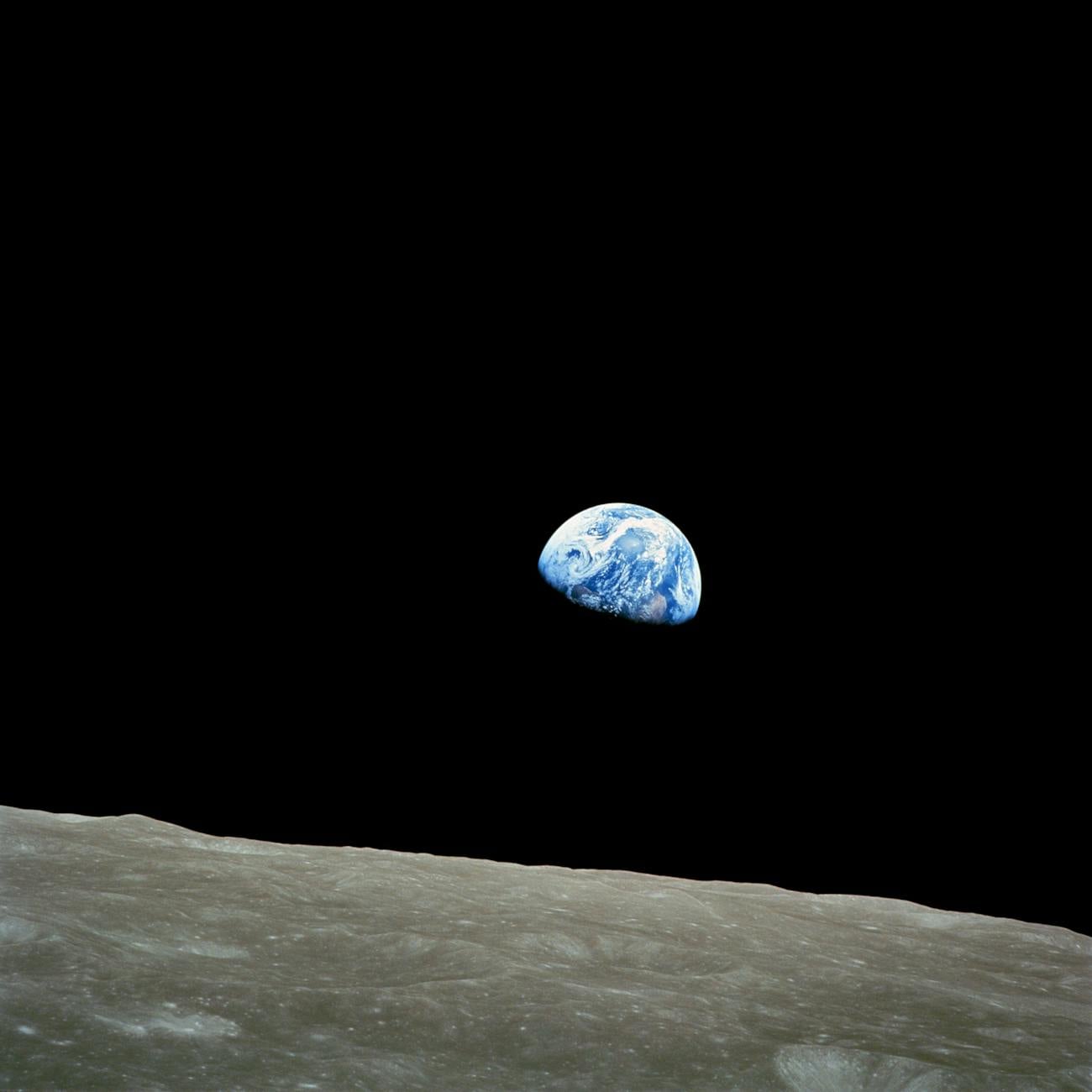
Orbital mechanics is a fundamental aspect of astrophysical engineering, and understanding its key terms and vocabulary is essential for high-energy missions. The study of orbital mechanics involves the analysis of the motion of celestial bodies, such as planets, moons, asteroids, and comets, as well as artificial satellites and spacecraft. One of the primary concepts in orbital mechanics is the idea of orbit, which refers to the path that an object follows as it revolves around a larger body, such as a planet or moon.
The shape and size of an orbit are determined by the object's velocity and distance from the central body. There are several types of orbits, including circular, elliptical, and hyperbolic orbits. Circular orbits are characterized by a constant radius and velocity, while elliptical orbits have a varying distance from the central body. Hyperbolic orbits, on the other hand, are characterized by a high velocity and a trajectory that takes the object away from the central body.
In addition to the shape and size of an orbit, the orientation of the orbit is also important. The inclination of an orbit refers to the angle between the orbit and the equatorial plane of the central body. The eccentricity of an orbit refers to the degree to which the orbit is elliptical, with higher eccentricity values indicating more elongated orbits. The semi-major axis of an orbit is the average distance of the object from the central body, and is used to calculate the period of the orbit.
The period of an orbit is the time it takes for the object to complete one revolution around the central body. The period is determined by the semi-major axis of the orbit and the mass of the central body. The velocity of an object in orbit is also determined by the semi-major axis and the mass of the central body. The velocity of an object in a circular orbit is constant, while the velocity of an object in an elliptical orbit varies as it moves closer to and farther from the central body.
Another important concept in orbital mechanics is the idea of escape velocity. The escape velocity is the minimum velocity required for an object to break free from the gravitational pull of a central body and travel to infinity. The escape velocity is determined by the mass of the central body and the distance of the object from the central body. For example, the escape velocity from the surface of the Earth is approximately 11.2 Kilometers per second.
In addition to the escape velocity, the orbital velocity is also an important concept in orbital mechanics. The orbital velocity is the velocity required for an object to maintain a stable orbit around a central body. The orbital velocity is determined by the semi-major axis of the orbit and the mass of the central body. For example, the orbital velocity of a satellite in a circular orbit around the Earth is approximately 7.8 Kilometers per second.
The study of orbital mechanics is crucial for the design and operation of spacecraft and satellites. For example, the launch window for a spacecraft is determined by the orbital mechanics of the spacecraft and the central body. The launch window is the time period during which a spacecraft can be launched into a specific orbit around a central body. The launch window is determined by the position of the central body and the velocity of the spacecraft.
The trajectory of a spacecraft is also determined by the orbital mechanics of the spacecraft and the central body. The trajectory is the path that the spacecraft follows as it travels through space. The trajectory is determined by the velocity and direction of the spacecraft, as well as the gravity of the central body. For example, the trajectory of a spacecraft traveling to Mars is determined by the velocity and direction of the spacecraft, as well as the gravity of the Earth and Mars.
The propulsion system of a spacecraft is also an important aspect of orbital mechanics. The propulsion system is responsible for generating the thrust required to propel the spacecraft through space. The propulsion system can be either chemical or electric, depending on the type of propellant used. For example, the propulsion system of a spacecraft traveling to Mars may use a chemical propellant, such as liquid fuel, to generate the thrust required to escape the Earth's gravity and travel to Mars.
The mission design of a spacecraft is also an important aspect of orbital mechanics. The mission design involves determining the trajectory of the spacecraft, as well as the propulsion system and communication system required to complete the mission. The mission design must take into account the orbital mechanics of the spacecraft and the central body, as well as the resources available to the spacecraft. For example, the mission design of a spacecraft traveling to Mars must take into account the distance between the Earth and Mars, as well as the amount of propellant available to the spacecraft.
The navigation system of a spacecraft is also an important aspect of orbital mechanics. The navigation system is responsible for determining the position and velocity of the spacecraft, as well as the attitude of the spacecraft. The navigation system can use a variety of techniques, such as star tracking and inertial measurement, to determine the position and velocity of the spacecraft. For example, the navigation system of a spacecraft traveling to Mars may use star tracking to determine the position of the spacecraft, as well as inertial measurement to determine the velocity of the spacecraft.
The communication system of a spacecraft is also an important aspect of orbital mechanics. The communication system is responsible for transmitting data between the spacecraft and the ground station. The communication system can use a variety of techniques, such as radio communication and optical communication, to transmit data between the spacecraft and the ground station. For example, the communication system of a spacecraft traveling to Mars may use radio communication to transmit data between the spacecraft and the ground station.
The power system of a spacecraft is also an important aspect of orbital mechanics. The power system is responsible for generating the power required to operate the spacecraft's systems. The power system can use a variety of techniques, such as solar panels and nuclear reactors, to generate the power required to operate the spacecraft's systems. For example, the power system of a spacecraft traveling to Mars may use solar panels to generate the power required to operate the spacecraft's systems.
The thermal control system of a spacecraft is also an important aspect of orbital mechanics. The thermal control system is responsible for maintaining the temperature of the spacecraft's systems within a safe range. The thermal control system can use a variety of techniques, such as radiators and insulation, to maintain the temperature of the spacecraft's systems. For example, the thermal control system of a spacecraft traveling to Mars may use radiators to dissipate heat from the spacecraft's systems, as well as insulation to maintain the temperature of the spacecraft's systems.
The structural system of a spacecraft is also an important aspect of orbital mechanics. The structural system is responsible for maintaining the integrity of the spacecraft's structure. The structural system can use a variety of techniques, such as aluminum and composite materials, to maintain the integrity of the spacecraft's structure. For example, the structural system of a spacecraft traveling to Mars may use aluminum to maintain the integrity of the spacecraft's structure, as well as composite materials to reduce the mass of the spacecraft.
In addition to the structural system, the life support system of a spacecraft is also an important aspect of orbital mechanics. The life support system is responsible for maintaining the health and safety of the spacecraft's crew. The life support system can use a variety of techniques, such as air and water recycling, to maintain the health and safety of the spacecraft's crew. For example, the life support system of a spacecraft traveling to Mars may use air and water recycling to maintain the health and safety of the spacecraft's crew.
The guidance system of a spacecraft is also an important aspect of orbital mechanics. The guidance system is responsible for determining the trajectory of the spacecraft and making any necessary corrections. The guidance system can use a variety of techniques, such as GPS and inertial measurement, to determine the trajectory of the spacecraft and make any necessary corrections. For example, the guidance system of a spacecraft traveling to Mars may use GPS to determine the position of the spacecraft, as well as inertial measurement to determine the velocity of the spacecraft.
The control system of a spacecraft is also an important aspect of orbital mechanics. The control system is responsible for maintaining the stability and control of the spacecraft. The control system can use a variety of techniques, such as thrusters and reaction wheels, to maintain the stability and control of the spacecraft. For example, the control system of a spacecraft traveling to Mars may use thrusters to maintain the attitude of the spacecraft, as well as reaction wheels to maintain the stability of the spacecraft.
In addition to the control system, the communication system of a spacecraft is also an important aspect of orbital mechanics.
The navigation system is responsible for determining the position and velocity of the spacecraft.
The orbital mechanics of a spacecraft are also affected by the gravity of other celestial bodies. For example, the gravity of the Moon can affect the orbital mechanics of a spacecraft traveling to Mars. The gravity of the Moon can cause the spacecraft to deviate from its intended trajectory, and the spacecraft may need to use thrusters to correct its trajectory. Similarly, the gravity of the Sun can also affect the orbital mechanics of a spacecraft traveling to Mars. The gravity of the Sun can cause the spacecraft to deviate from its intended trajectory, and the spacecraft may need to use thrusters to correct its trajectory.
In addition to the gravity of other celestial bodies, the orbital mechanics of a spacecraft can also be affected by the atmospheric drag of a planet or moon. The atmospheric drag can cause the spacecraft to slow down and deviate from its intended trajectory. For example, the atmospheric drag of the Earth's atmosphere can cause a spacecraft to slow down and deviate from its intended trajectory as it enters the Earth's atmosphere. Similarly, the atmospheric drag of the Martian atmosphere can cause a spacecraft to slow down and deviate from its intended trajectory as it enters the Martian atmosphere.
The orbital mechanics of a spacecraft can also be affected by the solar radiation of the Sun. The solar radiation can cause the spacecraft to heat up and deviate from its intended trajectory. For example, the solar radiation can cause the spacecraft's electronics to overheat and fail. Similarly, the solar radiation can also cause the spacecraft's propulsion system to malfunction and fail.
In addition to the solar radiation, the orbital mechanics of a spacecraft can also be affected by the cosmic radiation of deep space. The cosmic radiation can cause the spacecraft's electronics to fail and malfunction. For example, the cosmic radiation can cause the spacecraft's computer to crash and fail. Similarly, the cosmic radiation can also cause the spacecraft's communication system to fail and malfunction.
The orbital mechanics of a spacecraft are also affected by the orbital perturbations caused by the gravity of other celestial bodies. The orbital perturbations can cause the spacecraft to deviate from its intended trajectory and fail to reach its intended destination. For example, the orbital perturbations caused by the gravity of the Moon can cause a spacecraft traveling to Mars to deviate from its intended trajectory and fail to reach its intended destination.
In addition to the orbital perturbations, the orbital mechanics of a spacecraft can also be affected by the orbital maneuvers required to change the spacecraft's trajectory. The orbital maneuvers can cause the spacecraft to use up its propellant and fail to reach its intended destination. For example, the orbital maneuvers required to change the spacecraft's trajectory and enter into orbit around Mars can cause the spacecraft to use up its propellant and fail to reach its intended destination.
The orbital mechanics of a spacecraft are also affected by the launch window and the launch vehicle used to launch the spacecraft into space. The launch vehicle is the vehicle used to launch the spacecraft into space, and it can affect the orbital mechanics of the spacecraft by determining the velocity and direction of the spacecraft as it enters into space.
In addition to the launch window and the launch vehicle, the orbital mechanics of a spacecraft can also be affected by the mission requirements and the payload of the spacecraft. The mission requirements are the specific objectives and constraints of the mission, and they can affect the orbital mechanics of the spacecraft by determining the trajectory and velocity of the spacecraft. The payload of the spacecraft is the cargo or passengers that the spacecraft is carrying, and it can affect the orbital mechanics of the spacecraft by determining the mass and balance of the spacecraft.
The orbital mechanics of a spacecraft are a complex and challenging field of study, and they require a deep understanding of physics, mathematics, and engineering. The orbital mechanics of a spacecraft are affected by a wide range of variables and constraints, and they require careful planning and execution to ensure the success of a space mission.
Key takeaways
- One of the primary concepts in orbital mechanics is the idea of orbit, which refers to the path that an object follows as it revolves around a larger body, such as a planet or moon.
- Circular orbits are characterized by a constant radius and velocity, while elliptical orbits have a varying distance from the central body.
- The eccentricity of an orbit refers to the degree to which the orbit is elliptical, with higher eccentricity values indicating more elongated orbits.
- The velocity of an object in a circular orbit is constant, while the velocity of an object in an elliptical orbit varies as it moves closer to and farther from the central body.
- The escape velocity is the minimum velocity required for an object to break free from the gravitational pull of a central body and travel to infinity.
- The orbital velocity is determined by the semi-major axis of the orbit and the mass of the central body.
- For example, the launch window for a spacecraft is determined by the orbital mechanics of the spacecraft and the central body.