
Advanced Remote Sensing and Instrumentation
Advanced remote sensing and instrumentation are crucial components of astrophysical engineering, enabling scientists to study celestial objects and phenomena from a distance. Remote sensing involves collecting data about an object or enviro…
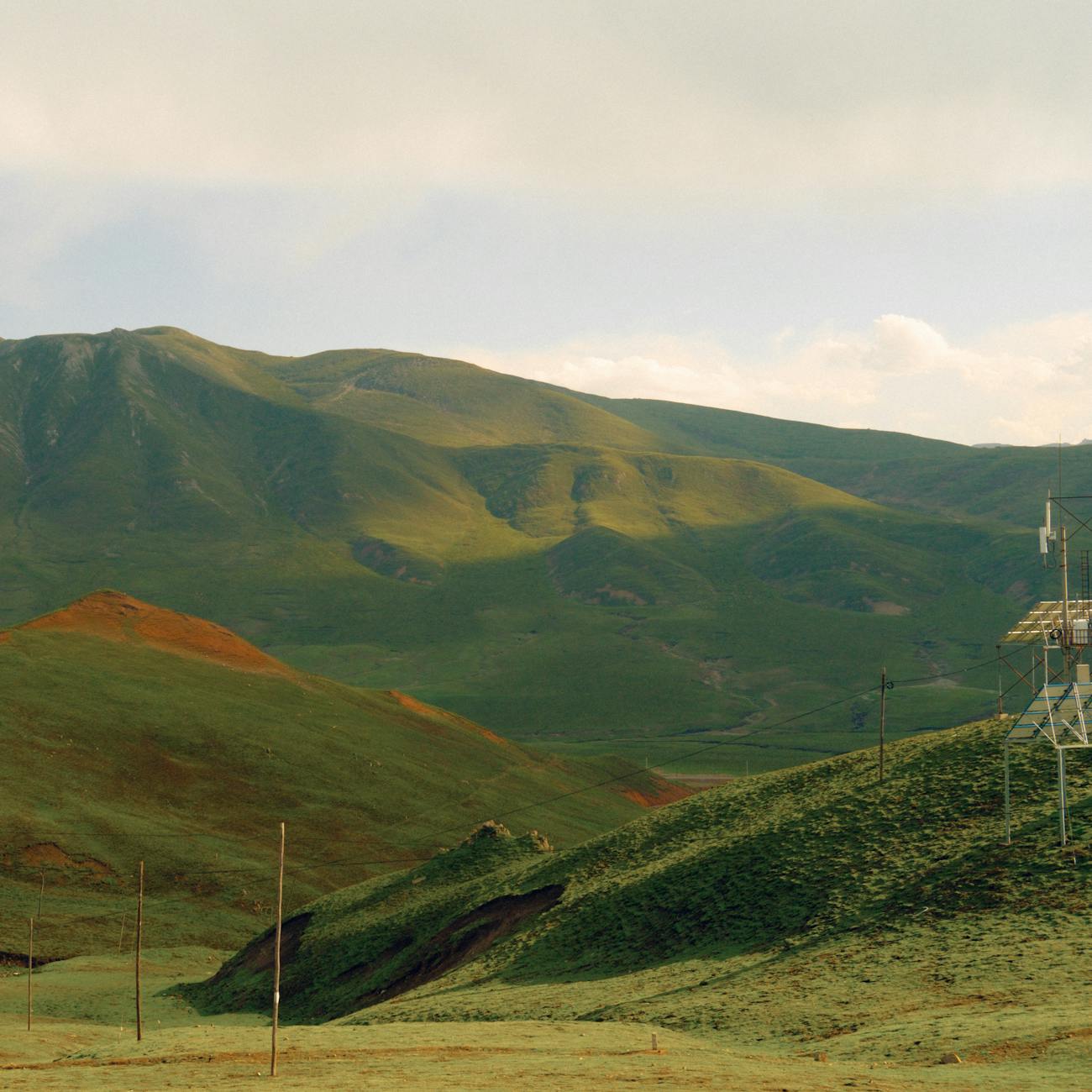
Advanced remote sensing and instrumentation are crucial components of astrophysical engineering, enabling scientists to study celestial objects and phenomena from a distance. Remote sensing involves collecting data about an object or environment without being in physical contact with it, while instrumentation refers to the tools and devices used to collect and analyze this data. In the context of astrophysical engineering, remote sensing and instrumentation are used to study a wide range of phenomena, from the formation of stars and galaxies to the detection of exoplanets and the analysis of asteroids.
One of the key challenges in remote sensing and instrumentation is the development of sensors that can detect and measure the faint signals emitted by celestial objects. These sensors must be highly sensitive and able to distinguish between different types of signals, such as optical, infrared, and radio waves. The development of these sensors requires a deep understanding of the underlying physics and engineering principles, as well as the ability to design and build complex systems that can operate in a variety of environments.
In addition to sensors, remote sensing and instrumentation also rely on telescopes and other optical systems to collect and focus light from celestial objects. These systems must be designed to minimize aberrations and maximize resolution, allowing scientists to study the fine details of celestial objects and phenomena. The development of space-based telescopes, such as the Hubble Space Telescope, has revolutionized the field of astrophysical engineering, enabling scientists to study the universe in unprecedented detail.
Another key area of research in remote sensing and instrumentation is the development of signal processing techniques and algorithms that can be used to analyze and interpret the data collected by sensors and telescopes. These techniques and algorithms must be able to handle large amounts of data and extract meaningful information from it, often in real-time. The development of machine learning and artificial intelligence techniques has been particularly important in this area, enabling scientists to automate the analysis of large datasets and identify patterns and trends that may not be apparent to human analysts.
The application of remote sensing and instrumentation in astrophysical engineering is incredibly diverse, ranging from the study of stars and galaxies to the detection of exoplanets and the analysis of asteroids. One of the most significant challenges in this area is the detection of dark matter and dark energy, which are thought to make up a large proportion of the universe's mass-energy budget. Remote sensing and instrumentation are playing a crucial role in this effort, with scientists using a variety of techniques, including gravitational lensing and weak lensing, to study the distribution of mass and energy in the universe.
In addition to the study of celestial objects and phenomena, remote sensing and instrumentation are also being used to study the Earth and its environment. This includes the use of satellites and other space-based systems to monitor climate change, track weather patterns, and study the oceans and other ecosystems. The development of hyperspectral and multispectral imaging systems has been particularly important in this area, enabling scientists to study the Earth's surface and atmosphere in unprecedented detail.
The development of remote sensing and instrumentation is also driven by advances in technology, including the development of new materials and manufacturing techniques. The use of nanotechnology and microelectromechanical systems (MEMS) is enabling the development of smaller, more portable sensors and instruments, while advances in computing and data storage are enabling scientists to analyze and interpret large datasets more quickly and efficiently.
Despite the many advances that have been made in remote sensing and instrumentation, there are still many challenges to be overcome. One of the biggest challenges is the cost of developing and launching space-based systems, which can be prohibitively expensive. The development of small satellites and other low-cost systems is helping to address this challenge, but more work needs to be done to make remote sensing and instrumentation more accessible to a wider range of scientists and researchers.
Another challenge is the complexity of the data collected by remote sensing and instrumentation systems. The development of machine learning and artificial intelligence techniques is helping to address this challenge, but more work needs to be done to develop user-friendly interfaces and data analysis tools that can be used by scientists and researchers who are not experts in remote sensing and instrumentation.
In terms of applications, remote sensing and instrumentation are being used in a wide range of fields, from astronomy and astrophysics to Earth science and environmental monitoring. The development of precision agriculture and precision medicine are also being driven by advances in remote sensing and instrumentation, with scientists using hyperspectral and multispectral imaging systems to study crops and diseases in unprecedented detail.
The use of remote sensing and instrumentation in space exploration is also becoming increasingly important, with scientists using space-based systems to study the Moon, Mars, and other planets in our solar system. The development of rover and lander systems is enabling scientists to study the surface of these planets and moons in unprecedented detail, while the use of orbiter systems is enabling scientists to study the atmospheres and magnetic fields of these planets and moons.
In addition to the study of planets and moons, remote sensing and instrumentation are also being used to study asteroids and comets. The development of space-based systems such as the NEAR Shoemaker and Dawn missions has enabled scientists to study these asteroids and comets in unprecedented detail, while the use of ground-based systems such as the Arecibo Observatory is enabling scientists to study the composition and structure of these asteroids and comets.
The study of black holes and neutron stars is also an area of active research in remote sensing and instrumentation. The development of space-based systems such as the Chandra X-ray Observatory and the Swift Gamma-Ray Burst Mission has enabled scientists to study these black holes and neutron stars in unprecedented detail, while the use of ground-based systems such as the Very Large Array (VLA) is enabling scientists to study the environment and evolution of these black holes and neutron stars.
The use of remote sensing and instrumentation in the study of cosmology is also becoming increasingly important, with scientists using space-based systems such as the Planck satellite and the Hubble Space Telescope to study the universe on large scales. The development of machine learning and artificial intelligence techniques is enabling scientists to analyze and interpret large datasets from these space-based systems, while the use of ground-based systems such as the Sloan Digital Sky Survey (SDSS) is enabling scientists to study the distribution and evolution of galaxies and clusters of galaxies.
In terms of future directions, remote sensing and instrumentation are likely to play an increasingly important role in the study of the universe and the environment. The development of new technologies such as quantum computing and artificial intelligence is likely to enable scientists to analyze and interpret large datasets more quickly and efficiently, while the use of space-based systems such as the James Webb Space Telescope and the Euclid mission will enable scientists to study the universe in unprecedented detail.
The use of remote sensing and instrumentation in the study of exoplanets is also likely to become increasingly important, with scientists using space-based systems such as the Kepler space telescope and the Transiting Exoplanet Survey Satellite (TESS) to study the atmospheres and composition of these exoplanets. The development of machine learning and artificial intelligence techniques is enabling scientists to analyze and interpret large datasets from these space-based systems, while the use of ground-based systems such as the Atacama Large Millimeter/submillimeter Array (ALMA) is enabling scientists to study the formation and evolution of planetary systems.
The study of asteroids and comets is also likely to become increasingly important, with scientists using space-based systems such as the OSIRIS-REx and Hayabusa2 missions to study the composition and structure of these asteroids and comets. The development of machine learning and artificial intelligence techniques is enabling scientists to analyze and interpret large datasets from these space-based systems, while the use of ground-based systems such as the Arecibo Observatory is enabling scientists to study the environment and evolution of these asteroids and comets.
In terms of challenges, remote sensing and instrumentation are likely to face a number of challenges in the coming years, including the cost of developing and launching space-based systems, the complexity of the data collected by these systems, and the need for international cooperation and collaboration to achieve common goals and objectives. The development of new technologies such as quantum computing and artificial intelligence is likely to help address some of these challenges, while the use of ground-based systems such as the Very Large Array (VLA) and the Atacama Large Millimeter/submillimeter Array (ALMA) is likely to continue to play an important role in the study of the universe and the environment.
The use of remote sensing and instrumentation in the study of climate change is also likely to become increasingly important, with scientists using space-based systems such as the Landsat and MODIS satellites to study the Earth and its environment. The development of machine learning and artificial intelligence techniques is enabling scientists to analyze and interpret large datasets from these space-based systems, while the use of ground-based systems such as the AmericaView network is enabling scientists to study the environment and ecosystems in unprecedented detail.
The use of remote sensing and instrumentation in the study of natural hazards such as earthquakes, volcanic eruptions, and floods is also becoming increasingly important, with scientists using space-based systems such as the Landsat and MODIS satellites to study the Earth and its environment. The development of machine learning and artificial intelligence techniques is enabling scientists to analyze and interpret large datasets from these space-based systems, while the use of ground-based systems such as the Global Seismographic Network (GSN) is enabling scientists to study the environment and ecosystems in unprecedented detail.
Key takeaways
- Remote sensing involves collecting data about an object or environment without being in physical contact with it, while instrumentation refers to the tools and devices used to collect and analyze this data.
- One of the key challenges in remote sensing and instrumentation is the development of sensors that can detect and measure the faint signals emitted by celestial objects.
- The development of space-based telescopes, such as the Hubble Space Telescope, has revolutionized the field of astrophysical engineering, enabling scientists to study the universe in unprecedented detail.
- Another key area of research in remote sensing and instrumentation is the development of signal processing techniques and algorithms that can be used to analyze and interpret the data collected by sensors and telescopes.
- The application of remote sensing and instrumentation in astrophysical engineering is incredibly diverse, ranging from the study of stars and galaxies to the detection of exoplanets and the analysis of asteroids.
- The development of hyperspectral and multispectral imaging systems has been particularly important in this area, enabling scientists to study the Earth's surface and atmosphere in unprecedented detail.
- The development of remote sensing and instrumentation is also driven by advances in technology, including the development of new materials and manufacturing techniques.