
Computer Vision for Cultural Heritage Preservation
Computer Vision is a field of artificial intelligence that enables computers to interpret and understand the visual world. It involves the development of algorithms and techniques that allow machines to extract meaningful information from i…
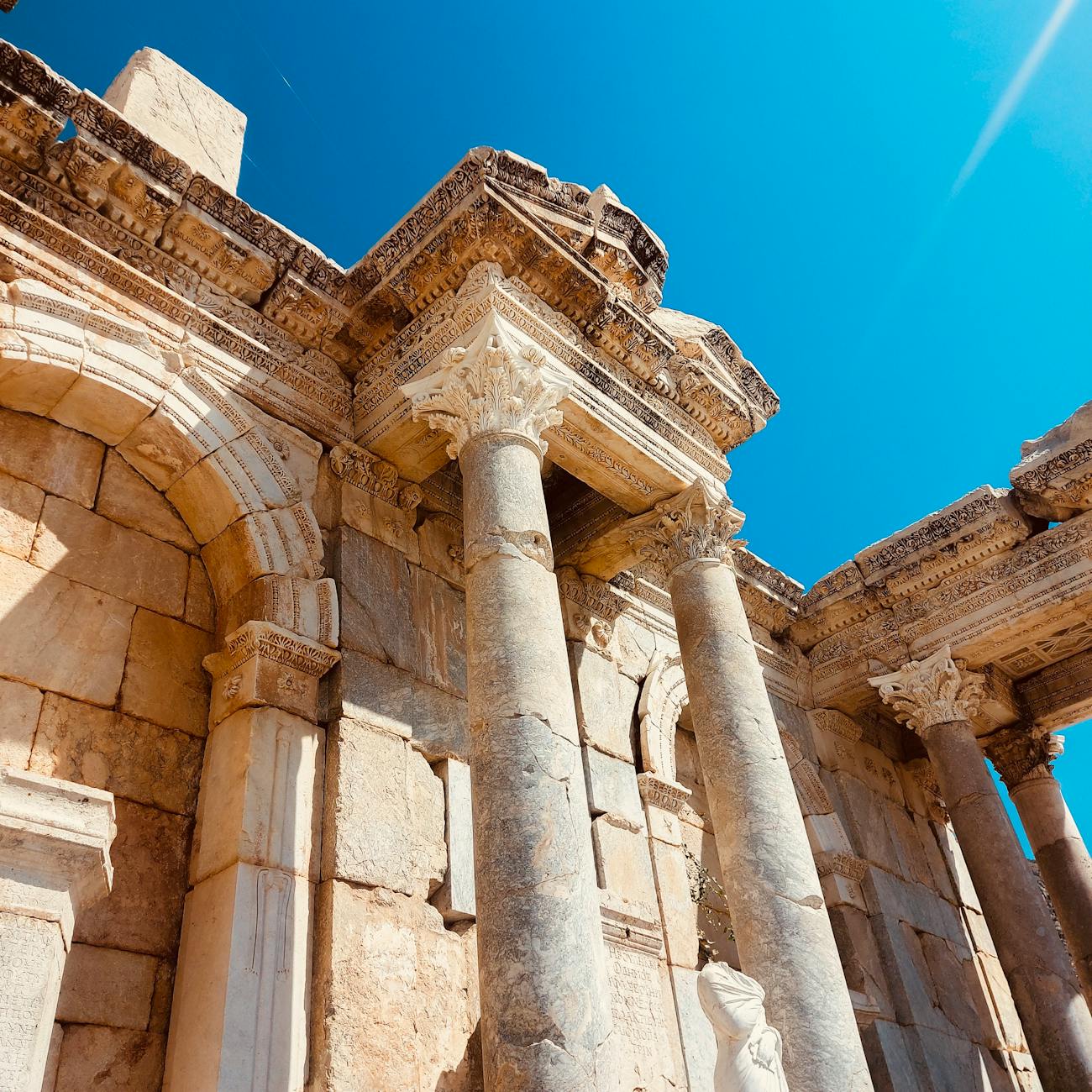
Computer Vision is a field of artificial intelligence that enables computers to interpret and understand the visual world. It involves the development of algorithms and techniques that allow machines to extract meaningful information from images or videos.
Cultural Heritage Preservation refers to the protection, conservation, and restoration of cultural artifacts, sites, and traditions for future generations. It involves various disciplines such as archaeology, history, art, and architecture.
Professional Certificate in AI for Cultural Heritage Protection is a specialized program designed to equip individuals with the knowledge and skills needed to apply artificial intelligence techniques for the preservation of cultural heritage.
Key Terms and Vocabulary for Computer Vision in Cultural Heritage Preservation
1. Image Processing: The manipulation and analysis of digital images to improve their quality or extract useful information. It involves techniques such as filtering, edge detection, and segmentation.
2. Feature Extraction: The process of identifying and capturing relevant information from an image to represent its key characteristics. Features can include shapes, textures, colors, or patterns.
3. Object Detection: The task of identifying and locating specific objects or patterns within an image. It involves techniques such as bounding box detection and object localization.
4. Object Recognition: The ability of a computer system to identify and classify objects within an image. It can involve categorizing objects into predefined classes or categories.
5. Image Segmentation: The process of dividing an image into multiple segments or regions based on similarities in color, texture, or intensity. It is useful for separating objects of interest from the background.
6. Pattern Recognition: The process of identifying patterns or structures within data, such as images, to make sense of the information. It involves techniques like clustering, classification, and regression.
7. Deep Learning: A subset of machine learning that uses neural networks with multiple layers to learn complex patterns and features from data. It is widely used in computer vision tasks.
8. Convolutional Neural Networks (CNNs): A type of deep neural network designed for processing structured grid-like data, such as images. CNNs use convolutional layers to extract features from input images.
9. Image Classification: The task of assigning a label or category to an input image based on its content. It is a fundamental problem in computer vision and can be solved using techniques like CNNs.
10. Image Restoration: The process of enhancing or recovering the original appearance of an image by removing noise, artifacts, or other imperfections. It aims to improve the visual quality of images.
11. Texture Analysis: The study of patterns or textures within an image to characterize and classify different regions based on their texture properties. It is used in tasks like image segmentation and object recognition.
12. Image Registration: The process of aligning multiple images of the same scene or object to create a composite image. It is useful for image fusion, panoramic stitching, and change detection.
13. Homography: A transformation that maps points from one image to another in a projective space. It is used in tasks like image stitching, object tracking, and augmented reality.
14. Feature Matching: The process of identifying corresponding features or keypoints between two or more images. It is essential for tasks like image alignment, object tracking, and image retrieval.
15. Camera Calibration: The process of estimating the intrinsic and extrinsic parameters of a camera to relate 3D world coordinates to 2D image coordinates. It is crucial for tasks like 3D reconstruction and camera pose estimation.
16. 3D Reconstruction: The process of creating a three-dimensional model of an object or scene from a set of 2D images. It involves techniques like structure from motion, stereo vision, and point cloud processing.
17. Virtual Reality (VR): An immersive technology that simulates a realistic environment through computer-generated images and sounds. It is used for virtual tours, interactive exhibits, and digital preservation of cultural heritage.
18. Augmented Reality (AR): A technology that overlays digital information or images on the real world through a camera view. It is used for enhancing visitor experiences, interactive storytelling, and cultural heritage visualization.
19. Image-Based Modeling: The process of creating a 3D model of an object or scene using a set of 2D images. It is useful for digital reconstruction, visualization, and analysis of cultural artifacts.
20. Heritage Documentation: The process of recording, documenting, and archiving cultural heritage objects or sites for preservation and research purposes. It involves techniques like photogrammetry, laser scanning, and image-based modeling.
21. Digital Preservation: The process of storing and archiving digital data, including images, videos, and documents, for long-term access and retrieval. It ensures the conservation of cultural heritage in a digital format.
22. Metadata: Descriptive information about a digital asset, such as its author, creation date, location, and copyright status. Metadata is essential for organizing and managing digital collections in cultural heritage preservation.
23. Machine Learning: A branch of artificial intelligence that enables systems to learn from data and make predictions or decisions without explicit programming. It is used in various computer vision tasks for cultural heritage protection.
24. Data Annotation: The process of labeling or tagging data with metadata or annotations to make it understandable for machines. It is essential for training machine learning models for tasks like image classification and object detection.
25. Transfer Learning: A machine learning technique that leverages pre-trained models on a large dataset to solve a similar task with a smaller dataset. It is useful for fine-tuning models for specific cultural heritage preservation tasks.
26. OpenCV: An open-source computer vision library with various functions and algorithms for image processing, object detection, and machine learning. It is widely used in research and applications for cultural heritage protection.
27. PyTorch: An open-source machine learning library that provides tools and modules for building and training neural networks. It is popular for developing deep learning models for computer vision tasks.
28. TensorFlow: An open-source machine learning framework developed by Google for building and deploying deep learning models. It is widely used in research and industry for computer vision applications.
29. Geospatial Analysis: The study of geographic data and spatial relationships to analyze and visualize patterns in cultural heritage sites or landscapes. It involves techniques like GIS, remote sensing, and spatial statistics.
30. Drone Imaging: The use of unmanned aerial vehicles (drones) equipped with cameras to capture high-resolution aerial images of cultural heritage sites. It is useful for mapping, monitoring, and documentation.
31. LiDAR Scanning: Light Detection and Ranging (LiDAR) technology that uses laser pulses to create a 3D representation of objects or landscapes. It is used for high-precision mapping, 3D modeling, and conservation.
32. Holographic Display: A display technology that creates three-dimensional images or holograms that appear to float in space. It is used for interactive exhibits, virtual reconstructions, and immersive experiences in cultural heritage preservation.
33. Metadata Standards: Guidelines and protocols for describing and managing digital assets in cultural heritage preservation. Standards like Dublin Core, METS, and PREMIS ensure interoperability and long-term access to digital collections.
34. Artificial Intelligence (AI): The simulation of human intelligence processes by machines, including learning, reasoning, and problem-solving. AI techniques like machine learning and computer vision are used in cultural heritage protection.
35. Robotics: The design and development of robots or automated systems to perform tasks in cultural heritage preservation, such as excavation, cleaning, or monitoring. Robotics can enhance efficiency and safety in archaeological sites.
36. Interactive Technologies: Digital tools and interfaces that engage users in exploring and interacting with cultural heritage objects or sites. Technologies like touchscreens, VR, and AR enhance visitor experiences and education.
37. Digital Humanities: The application of digital technologies and computational methods to study, preserve, and communicate cultural heritage. It combines disciplines like history, archaeology, and computer science for innovative research and interpretation.
38. Crowdsourcing: The practice of engaging a large group of people (crowd) to contribute ideas, data, or efforts to a cultural heritage project. Crowdsourcing can involve tasks like image tagging, transcription, or data collection.
39. Machine Vision: A subfield of computer vision that focuses on the capabilities of machines to see, interpret, and understand visual information. Machine vision is used in industrial automation, quality control, and robotics.
40. Document Image Analysis: The study of digitized documents or manuscripts to extract text, structure, or metadata. It involves techniques like OCR (Optical Character Recognition), layout analysis, and handwriting recognition.
41. Natural Language Processing (NLP): A branch of artificial intelligence that focuses on the interaction between computers and human language. NLP techniques are used in tasks like text mining, translation, and sentiment analysis.
42. Human-Computer Interaction (HCI): The study of how people interact with computers and technology. HCI principles are essential for designing user-friendly interfaces and experiences in cultural heritage applications.
43. Biometric Identification: The use of unique physical or behavioral traits to identify individuals, such as fingerprints, facial features, or iris patterns. Biometric technologies can enhance security and access control in cultural heritage sites.
44. Image Privacy: The protection of personal or sensitive information in images to respect privacy and confidentiality. Techniques like image anonymization, blurring, and encryption are used to safeguard privacy in cultural heritage images.
45. Image Forensics: The analysis of digital images to detect tampering, forgery, or manipulation. Image forensics techniques are used to verify the authenticity and integrity of cultural heritage images and documents.
46. Image Quality Assessment: The evaluation of visual quality in images to measure factors like sharpness, noise, color accuracy, and compression artifacts. It ensures the reliability and fidelity of digital images in cultural heritage preservation.
47. Visual Search: The process of searching for similar images or visual content based on a query image. Visual search engines use computer vision algorithms to match features and patterns in images for retrieval and recommendation.
48. Image Annotation: The process of adding metadata or labels to images to provide context and information for search and analysis. Image annotations can include object labels, region boundaries, or descriptive tags.
49. Image Retrieval: The task of searching and retrieving images from a large database based on visual similarity or content. It involves techniques like feature extraction, indexing, and similarity matching.
50. Computational Photography: The fusion of digital imaging techniques with computational algorithms to enhance image quality, resolution, or visual effects. It is used for creating artistic, scientific, or documentary images in cultural heritage preservation.
Key takeaways
- It involves the development of algorithms and techniques that allow machines to extract meaningful information from images or videos.
- Cultural Heritage Preservation refers to the protection, conservation, and restoration of cultural artifacts, sites, and traditions for future generations.
- Image Processing: The manipulation and analysis of digital images to improve their quality or extract useful information.
- Feature Extraction: The process of identifying and capturing relevant information from an image to represent its key characteristics.
- Object Detection: The task of identifying and locating specific objects or patterns within an image.
- Object Recognition: The ability of a computer system to identify and classify objects within an image.
- Image Segmentation: The process of dividing an image into multiple segments or regions based on similarities in color, texture, or intensity.