
Deep Learning for Predictive Maintenance in Railways
Deep Learning for Predictive Maintenance in Railways is a critical aspect of modern railway engineering that leverages advanced artificial intelligence techniques to predict and prevent potential failures in railway systems. This Profession…
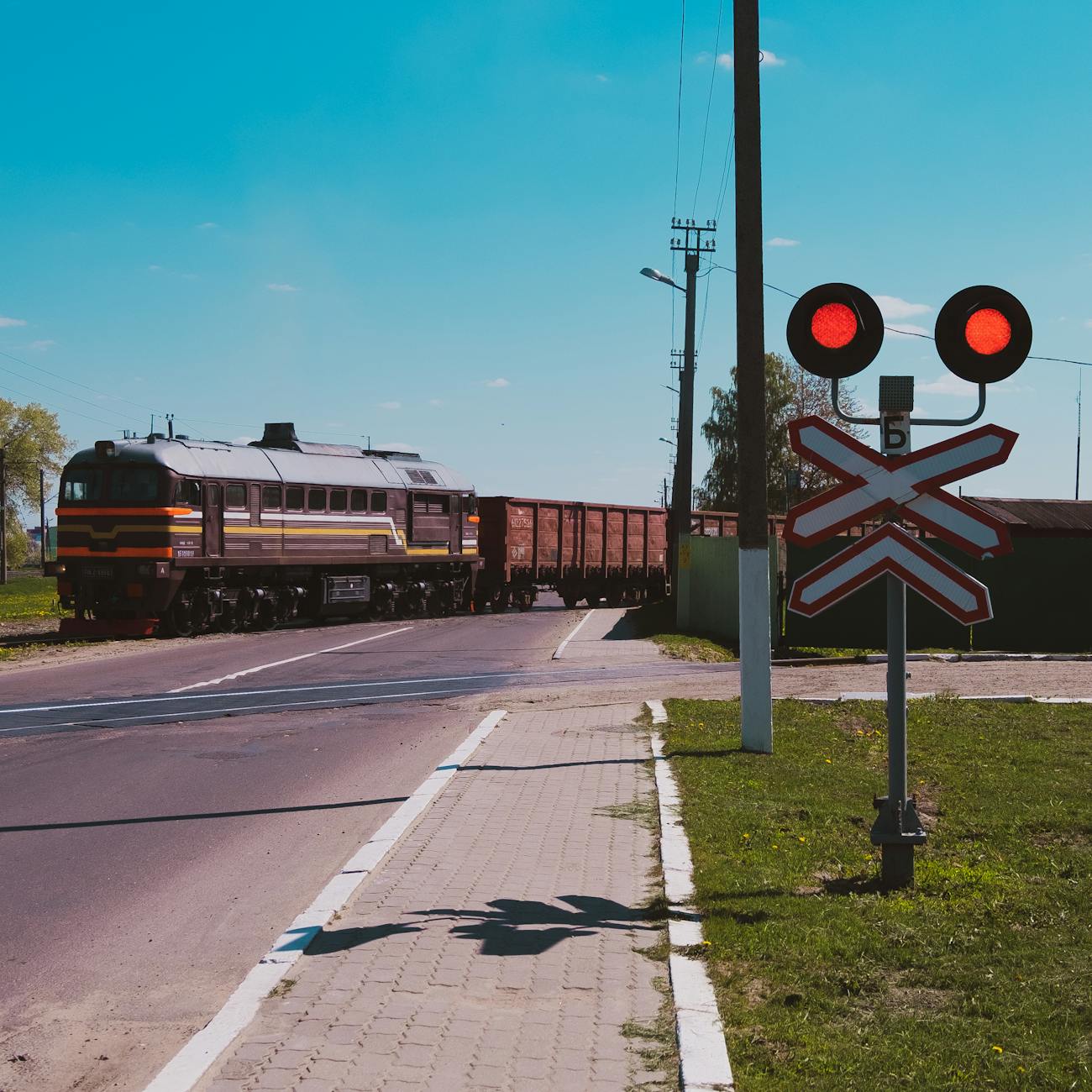
Deep Learning for Predictive Maintenance in Railways is a critical aspect of modern railway engineering that leverages advanced artificial intelligence techniques to predict and prevent potential failures in railway systems. This Professional Certificate course introduces key terms and vocabulary essential for understanding and implementing Deep Learning for Predictive Maintenance in Railways.
1. **Deep Learning**: Deep Learning is a subset of artificial intelligence and machine learning that focuses on building and training neural networks to learn from data. Deep Learning algorithms can automatically discover and extract intricate patterns and features from large datasets, making them well-suited for predictive maintenance tasks in railways.
2. **Predictive Maintenance**: Predictive Maintenance is a proactive maintenance strategy that uses data analysis, machine learning, and artificial intelligence to predict when equipment is likely to fail. By identifying potential issues before they occur, predictive maintenance helps prevent costly downtime and improve operational efficiency.
3. **Railway Engineering**: Railway Engineering involves the design, construction, operation, and maintenance of railway systems. It encompasses various disciplines such as civil engineering, mechanical engineering, electrical engineering, and computer science to ensure the safe and efficient operation of railways.
4. **Artificial Intelligence**: Artificial Intelligence (AI) refers to the simulation of human intelligence processes by machines, particularly computer systems. AI techniques like machine learning, deep learning, and natural language processing are used in railway engineering to optimize operations, improve safety, and enhance passenger experience.
5. **Neural Networks**: Neural Networks are a key component of Deep Learning models. They are computational models inspired by the structure and function of the human brain, consisting of interconnected nodes (neurons) that process and transmit information. Neural networks are trained on data to make predictions and decisions.
6. **Supervised Learning**: Supervised Learning is a machine learning paradigm where the model is trained on labeled data, meaning the input data is paired with the correct output. In the context of predictive maintenance in railways, supervised learning algorithms can be used to predict equipment failures based on historical maintenance records.
7. **Unsupervised Learning**: Unsupervised Learning is a machine learning approach where the model learns from unlabeled data, identifying patterns and relationships without explicit guidance. Unsupervised learning techniques can be applied in railway engineering to discover hidden insights in maintenance data and improve predictive maintenance strategies.
8. **Recurrent Neural Networks (RNN)**: Recurrent Neural Networks (RNN) are a type of neural network designed to handle sequential data, making them suitable for time-series analysis in predictive maintenance. RNNs can capture temporal dependencies in maintenance records and predict future equipment failures based on historical patterns.
9. **Long Short-Term Memory (LSTM)**: Long Short-Term Memory (LSTM) is a variant of RNNs that addresses the vanishing gradient problem, allowing the network to learn long-term dependencies in sequential data. LSTMs are commonly used in predictive maintenance applications to model complex relationships and predict equipment failures accurately.
10. **Convolutional Neural Networks (CNN)**: Convolutional Neural Networks (CNN) are specialized neural networks designed for processing grid-like data, such as images and sensor data. In railway engineering, CNNs can be used to analyze sensor data from trains and track systems, detecting anomalies and predicting maintenance needs.
11. **Feature Engineering**: Feature Engineering involves selecting, extracting, and transforming relevant features from raw data to improve the performance of machine learning models. In the context of predictive maintenance in railways, feature engineering plays a crucial role in identifying predictive indicators of equipment failures.
12. **Fault Detection**: Fault Detection is the process of identifying deviations or anomalies in system behavior that may indicate potential equipment failures. Deep Learning models can be trained to detect faults in railway systems by analyzing sensor data, maintenance logs, and historical performance records.
13. **Anomaly Detection**: Anomaly Detection is a technique used to identify outliers or unusual patterns in data that do not conform to normal behavior. Deep Learning algorithms for anomaly detection can help railway engineers detect irregularities in equipment operation and predict maintenance requirements proactively.
14. **Data Preprocessing**: Data Preprocessing involves cleaning, transforming, and preparing raw data for analysis and modeling. In the context of Deep Learning for Predictive Maintenance in Railways, data preprocessing techniques such as normalization, scaling, and imputation are essential for improving model accuracy and performance.
15. **Hyperparameter Tuning**: Hyperparameter Tuning is the process of optimizing the hyperparameters of a machine learning model to improve its performance. In Deep Learning for Predictive Maintenance, hyperparameter tuning techniques like grid search and random search can be used to fine-tune neural network architectures and improve predictive accuracy.
16. **Model Evaluation**: Model Evaluation involves assessing the performance of machine learning models using metrics like accuracy, precision, recall, and F1 score. In the context of predictive maintenance in railways, model evaluation helps measure the effectiveness of Deep Learning algorithms in predicting equipment failures and guiding maintenance decisions.
17. **Cross-Validation**: Cross-Validation is a technique used to evaluate the generalization performance of machine learning models by splitting the data into multiple subsets for training and testing. Cross-validation is essential in Deep Learning for Predictive Maintenance to validate model robustness and ensure reliable predictions.
18. **Time-Series Forecasting**: Time-Series Forecasting is a predictive modeling technique that involves predicting future values based on historical time-stamped data. In railway engineering, time-series forecasting using Deep Learning models can help anticipate equipment failures, schedule maintenance activities, and optimize operational efficiency.
19. **Feature Importance**: Feature Importance analysis helps identify the most influential variables or features in a machine learning model. Deep Learning models for predictive maintenance in railways can benefit from feature importance analysis to prioritize maintenance tasks, allocate resources efficiently, and enhance system reliability.
20. **Transfer Learning**: Transfer Learning is a machine learning technique that leverages pre-trained models to solve new tasks or domains efficiently. In the context of Deep Learning for Predictive Maintenance in Railways, transfer learning can accelerate model training, improve predictive accuracy, and adapt to diverse maintenance scenarios.
21. **Model Deployment**: Model Deployment involves implementing machine learning models in production environments to make real-time predictions and recommendations. In railway engineering, deploying Deep Learning models for predictive maintenance enables timely intervention, proactive maintenance planning, and cost-effective asset management.
22. **Challenges in Deep Learning for Predictive Maintenance**: Despite its potential benefits, Deep Learning for Predictive Maintenance in Railways faces several challenges, including data quality issues, model interpretability, scalability, computational complexity, and integration with existing maintenance systems. Overcoming these challenges requires interdisciplinary collaboration, domain expertise, and continuous innovation in AI technologies.
23. **Real-World Applications**: Deep Learning for Predictive Maintenance in Railways has numerous real-world applications, such as predicting track failures, detecting wheel defects, optimizing maintenance schedules, monitoring train performance, and enhancing passenger safety. By harnessing the power of AI, railway operators can improve operational efficiency, reduce downtime, and ensure reliable transportation services.
In conclusion, mastering the key terms and vocabulary associated with Deep Learning for Predictive Maintenance in Railways is essential for railway engineers, data scientists, and AI practitioners seeking to enhance maintenance practices, optimize asset management, and advance the future of railway transportation. By leveraging advanced AI techniques, neural networks, and predictive analytics, railway operators can revolutionize maintenance strategies, minimize disruptions, and deliver exceptional service to passengers worldwide.
Key takeaways
- Deep Learning for Predictive Maintenance in Railways is a critical aspect of modern railway engineering that leverages advanced artificial intelligence techniques to predict and prevent potential failures in railway systems.
- Deep Learning algorithms can automatically discover and extract intricate patterns and features from large datasets, making them well-suited for predictive maintenance tasks in railways.
- **Predictive Maintenance**: Predictive Maintenance is a proactive maintenance strategy that uses data analysis, machine learning, and artificial intelligence to predict when equipment is likely to fail.
- It encompasses various disciplines such as civil engineering, mechanical engineering, electrical engineering, and computer science to ensure the safe and efficient operation of railways.
- AI techniques like machine learning, deep learning, and natural language processing are used in railway engineering to optimize operations, improve safety, and enhance passenger experience.
- They are computational models inspired by the structure and function of the human brain, consisting of interconnected nodes (neurons) that process and transmit information.
- **Supervised Learning**: Supervised Learning is a machine learning paradigm where the model is trained on labeled data, meaning the input data is paired with the correct output.