
Optimization Techniques for Railway Scheduling
Optimization Techniques for Railway Scheduling involves the application of various methods and algorithms to efficiently manage and schedule trains on railway networks. This field is crucial in ensuring the smooth operation of railways, max…
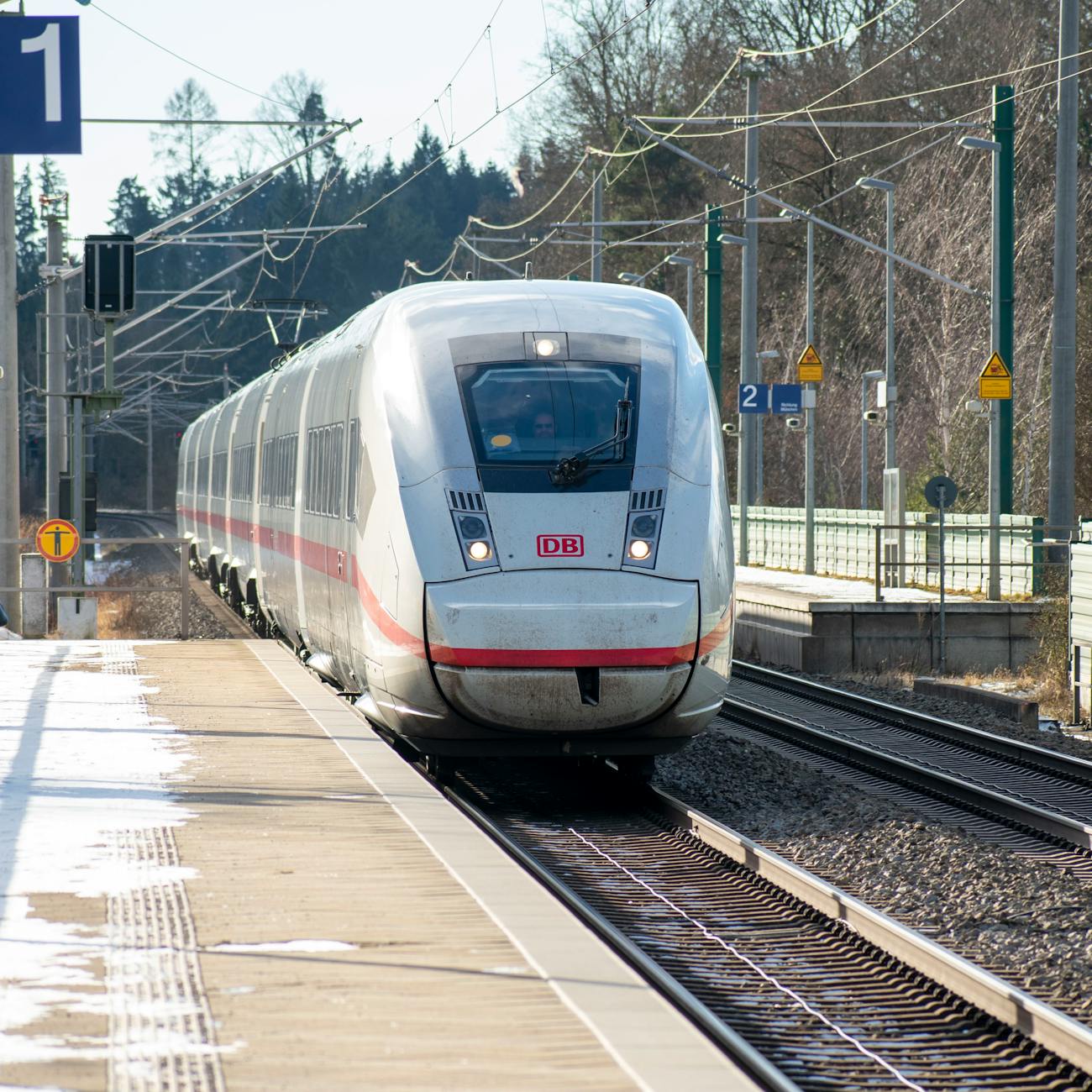
Optimization Techniques for Railway Scheduling involves the application of various methods and algorithms to efficiently manage and schedule trains on railway networks. This field is crucial in ensuring the smooth operation of railways, maximizing capacity utilization, minimizing delays, and improving overall system performance. In this course, we will explore a range of optimization techniques used in railway scheduling, including linear programming, integer programming, heuristics, metaheuristics, and simulation.
**Key Terms and Vocabulary:**
1. **Railway Scheduling:** The process of determining the timetable for trains on a railway network, taking into account factors such as train routes, frequencies, and constraints.
2. **Optimization:** The process of finding the best solution to a problem from a set of possible solutions, considering specific objectives and constraints.
3. **Linear Programming:** A mathematical method for determining a way to achieve the best outcome (such as maximum profit or lowest cost) in a given mathematical model for a set of linear relationships.
4. **Integer Programming:** A mathematical optimization or feasibility program in which some or all variables are required to be integers.
5. **Heuristics:** A problem-solving approach that uses rules of thumb, intuition, and experience to find good solutions efficiently, though not necessarily optimal solutions.
6. **Metaheuristics:** Higher-level strategies that guide heuristic methods to efficiently explore the solution space to find optimal or near-optimal solutions.
7. **Simulation:** The process of creating a computer model to imitate the operation of a system or process over time, allowing for the analysis and optimization of complex systems.
8. **Capacity Utilization:** The measure of how effectively resources are used to meet demand, in this case, how effectively railway capacity is used to run trains.
9. **Delays:** The amount of time by which a train arrives or departs later than planned, which can negatively impact the efficiency and reliability of the railway system.
10. **System Performance:** The overall effectiveness and efficiency of a railway system in meeting its objectives, such as providing reliable and timely transportation services.
**Linear Programming:**
Linear programming is a powerful mathematical technique used in optimization problems, including railway scheduling. It involves optimizing a linear objective function subject to a set of linear constraints. In the context of railway scheduling, linear programming can be used to allocate resources, such as tracks and platforms, in the most efficient way possible.
For example, suppose we have a railway network with multiple trains traveling between different stations. The goal is to minimize the total travel time while ensuring that each train reaches its destination on time. By formulating this problem as a linear programming model, we can find the optimal schedule that minimizes delays and maximizes capacity utilization.
**Integer Programming:**
Integer programming is an extension of linear programming where some or all decision variables are required to take integer values. In railway scheduling, integer programming is often used to model discrete decisions, such as the number of trains running on a particular route or the assignment of trains to specific time slots.
For instance, consider a scenario where we need to decide the departure times of trains from a station to maximize the number of passengers served. By formulating this problem as an integer programming model, we can determine the optimal schedule that balances passenger demand with available resources, such as train capacity and infrastructure constraints.
**Heuristics:**
Heuristics are problem-solving methods that rely on practical experience and intuition to find good solutions quickly, even if they are not guaranteed to be optimal. In railway scheduling, heuristics can be valuable for tackling complex problems with limited computational resources.
One common heuristic used in railway scheduling is the "earliest arrival time" rule, where trains are scheduled to arrive at their destinations as early as possible. While this may not always result in the most efficient schedule, it can be a useful starting point for further optimization using more rigorous methods.
**Metaheuristics:**
Metaheuristics are higher-level strategies that guide heuristic methods to efficiently explore the solution space and find optimal or near-optimal solutions. In railway scheduling, metaheuristics are essential for handling large and complex optimization problems that cannot be solved using exact methods.
One popular metaheuristic used in railway scheduling is genetic algorithms, which mimic the process of natural selection to evolve a population of potential solutions towards the optimal schedule. By iteratively applying genetic operators such as mutation and crossover, genetic algorithms can effectively search for high-quality schedules in a vast solution space.
**Simulation:**
Simulation is a powerful tool for modeling and optimizing complex systems, such as railway networks. By creating a computer model that mimics the behavior of trains, stations, and infrastructure, simulation allows us to analyze the impact of different scheduling decisions on system performance.
For example, a simulation model of a railway network can be used to test the effects of varying train frequencies, adjusting departure times, or introducing new routes on overall system efficiency. By running multiple scenarios and analyzing the results, we can identify optimal schedules that improve capacity utilization, reduce delays, and enhance the reliability of the railway system.
**Capacity Utilization:**
Capacity utilization is a critical factor in railway scheduling, as it determines how efficiently resources such as tracks, platforms, and trains are used to meet passenger demand. By optimizing capacity utilization, we can increase the throughput of the railway network, reduce operational costs, and improve customer satisfaction.
One approach to improving capacity utilization is to implement dynamic scheduling algorithms that adjust train frequencies and routes in real-time based on changing demand patterns. By optimizing the allocation of resources and minimizing idle time, dynamic scheduling can maximize the utilization of available capacity and improve the overall performance of the railway system.
**Delays:**
Delays are a common issue in railway scheduling, caused by factors such as congestion, infrastructure failures, and unforeseen events. Minimizing delays is crucial for ensuring the reliability and efficiency of the railway system, as even small disruptions can have a cascading effect on train schedules and passenger satisfaction.
To address delays, advanced scheduling techniques such as predictive analytics and real-time monitoring can be employed to anticipate potential disruptions and adjust schedules proactively. By identifying bottlenecks, optimizing train sequencing, and implementing contingency plans, railway operators can minimize delays and improve the overall reliability of the system.
**System Performance:**
System performance is a key measure of the effectiveness and efficiency of a railway network in meeting its objectives. By optimizing scheduling decisions, resource allocation, and operational processes, we can enhance system performance in terms of capacity utilization, on-time performance, and customer satisfaction.
One way to evaluate system performance is through key performance indicators (KPIs) such as average delay per train, on-time arrival rate, and passenger load factor. By monitoring these metrics and analyzing performance data, railway operators can identify areas for improvement, implement targeted interventions, and optimize the overall operation of the railway system.
In conclusion, Optimization Techniques for Railway Scheduling play a vital role in maximizing the efficiency and reliability of railway networks. By applying a range of methods such as linear programming, integer programming, heuristics, metaheuristics, and simulation, we can optimize scheduling decisions, minimize delays, and improve system performance. Through continuous innovation and optimization, railway operators can enhance the capacity utilization, reliability, and customer satisfaction of their networks, ensuring a seamless and efficient transportation experience for passengers.
Key takeaways
- In this course, we will explore a range of optimization techniques used in railway scheduling, including linear programming, integer programming, heuristics, metaheuristics, and simulation.
- **Railway Scheduling:** The process of determining the timetable for trains on a railway network, taking into account factors such as train routes, frequencies, and constraints.
- **Optimization:** The process of finding the best solution to a problem from a set of possible solutions, considering specific objectives and constraints.
- **Linear Programming:** A mathematical method for determining a way to achieve the best outcome (such as maximum profit or lowest cost) in a given mathematical model for a set of linear relationships.
- **Integer Programming:** A mathematical optimization or feasibility program in which some or all variables are required to be integers.
- **Heuristics:** A problem-solving approach that uses rules of thumb, intuition, and experience to find good solutions efficiently, though not necessarily optimal solutions.
- **Metaheuristics:** Higher-level strategies that guide heuristic methods to efficiently explore the solution space to find optimal or near-optimal solutions.