
Resource Assessment and Energy Modeling
Resource Assessment and Energy Modeling are critical components of the Certified Specialist Programme in Renewable Energy Project Feasibility. Here are some key terms and vocabulary associated with these concepts:
Resource Assessment and Energy Modeling are critical components of the Certified Specialist Programme in Renewable Energy Project Feasibility. Here are some key terms and vocabulary associated with these concepts:
1. Resource Assessment: * Renewable Energy Source: Any natural resource that can be replenished or replaced over time, such as solar, wind, hydro, geothermal, and biomass. * Solar Resource: The amount of sunlight available at a particular location, measured in terms of direct normal irradiance (DNI), diffuse horizontal irradiance (DHI), and global horizontal irradiance (GHI). * Wind Resource: The speed and direction of wind at a particular location, measured in terms of wind speed, wind direction, and wind shear. * Hydro Resource: The availability of water flow and head at a particular location, measured in terms of flow rate, head, and turbine efficiency. * Geothermal Resource: The heat energy available in the Earth's crust, measured in terms of temperature, entropy, and enthalpy. * Biomass Resource: The organic matter available from plants and animals, measured in terms of energy content, moisture content, and ash content. * Resource Mapping: The process of creating maps that show the distribution and magnitude of renewable energy resources at a regional or national scale. * Resource Characterization: The process of collecting detailed data on renewable energy resources at a specific site, including meteorological, topographical, and geological data. * Resource Assessment Report: A document that summarizes the results of a resource assessment, including estimates of resource availability, technical potential, and economic feasibility. 1. Energy Modeling: * Energy Model: A mathematical representation of an energy system, including its components, inputs, outputs, and constraints. * System Boundary: The physical and operational limits of an energy system, defined in terms of inputs, outputs, and conversion processes. * Energy Balance: The principle that the total energy input to a system must equal the total energy output, plus any energy storage or loss. * Energy Flow Analysis: The process of tracing the movement of energy through a system, from input to output, and quantifying the efficiency and losses at each stage. * Levelized Cost of Energy (LCOE): A metric that measures the lifetime cost of generating energy from a particular source, including capital, operating, and maintenance costs, discounted to a present value. * Techno-Economic Analysis (TEA): A methodology that combines technical and economic analysis to evaluate the feasibility and performance of renewable energy systems. * Life Cycle Analysis (LCA): A methodology that evaluates the environmental impacts of a product or system over its entire life cycle, from raw material extraction to end-of-life disposal. * Sensitivity Analysis: A methodology that evaluates the impact of uncertain or variable parameters on the performance and feasibility of renewable energy systems. * Monte Carlo Simulation: A statistical method that uses random sampling to simulate the behavior of complex systems, including renewable energy systems with uncertain or variable inputs.
Examples:
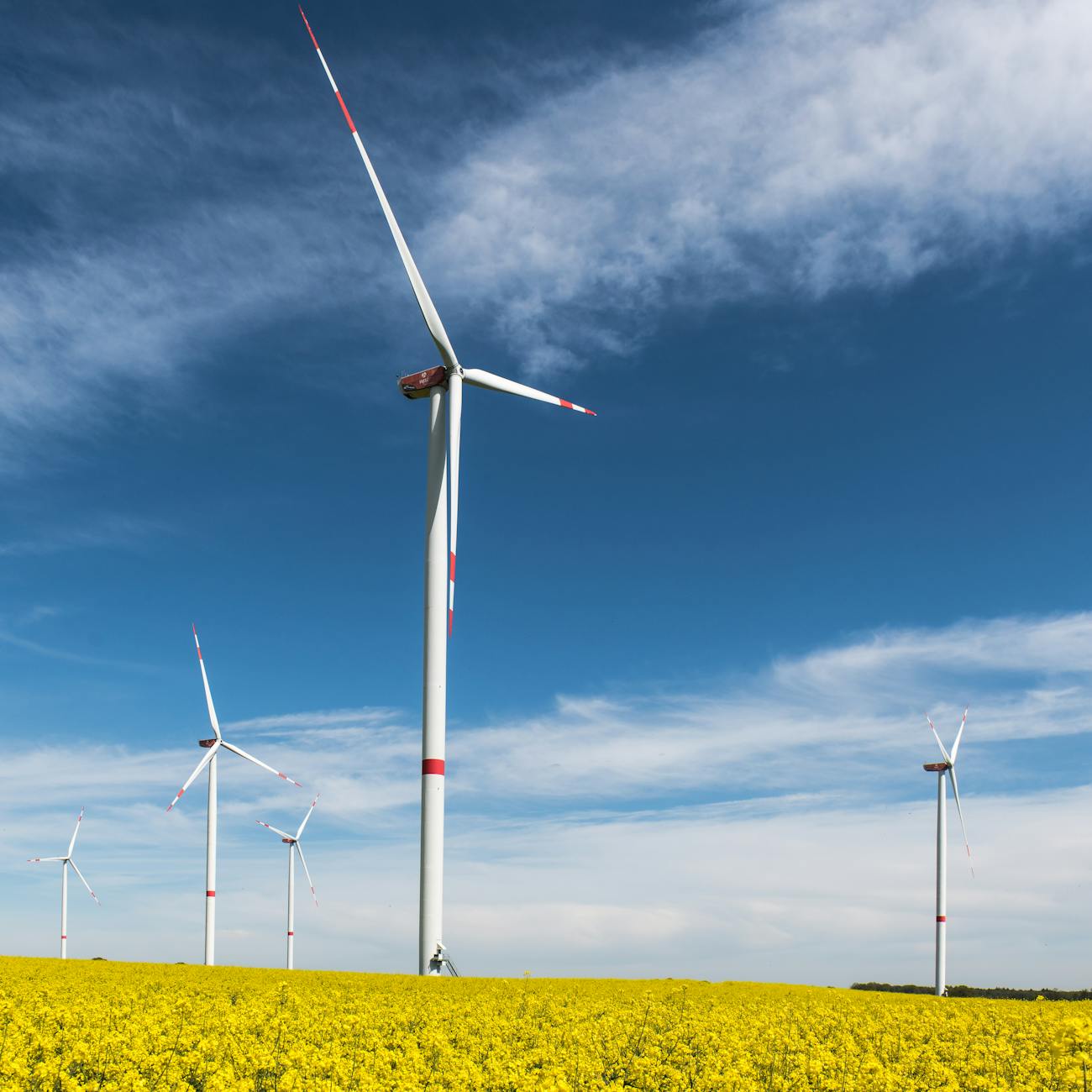
* A resource assessment for a solar power plant might involve measuring the DNI, DHI, and GHI at the site, as well as the tilt and orientation of the solar panels, to estimate the annual energy yield and LCOE. * An energy model for a wind farm might include the wind turbine specifications, the layout and spacing of the turbines, and the electrical and grid connection infrastructure, to estimate the annual energy production and capacity factor. * A TEA for a geothermal power plant might include the drilling and construction costs, the resource availability and temperature, and the conversion efficiency and capacity factor, to estimate the LCOE and payback period.
Practical Applications:
* Resource assessments are essential for identifying and quantifying the potential of renewable energy resources, and for selecting the most suitable technology and site for a renewable energy project. * Energy models are used to design and optimize renewable energy systems, to evaluate their performance and feasibility, and to forecast their energy production and revenue streams. * Techno-economic analyses are used to evaluate the costs and benefits of renewable energy systems, to compare different technology options and scenarios, and to inform decision-making and policy-making.
Challenges:
* Resource assessments require accurate and reliable data, which can be difficult to obtain, especially for remote or hostile environments. * Energy models require detailed and complex calculations, which can be time-consuming and computationally intensive. * Techno-economic analyses require assumptions and estimates, which can be uncertain or variable, and which can affect the accuracy and reliability of the results.
In conclusion, resource assessment and energy modeling are crucial components of the Certified Specialist Programme in Renewable Energy Project Feasibility. Understanding the key terms and vocabulary associated with these concepts is essential for designing, analyzing, and optimizing renewable energy systems, and for making informed decisions and policies about renewable energy projects.
Key takeaways
- Resource Assessment and Energy Modeling are critical components of the Certified Specialist Programme in Renewable Energy Project Feasibility.
- * Solar Resource: The amount of sunlight available at a particular location, measured in terms of direct normal irradiance (DNI), diffuse horizontal irradiance (DHI), and global horizontal irradiance (GHI).
- * An energy model for a wind farm might include the wind turbine specifications, the layout and spacing of the turbines, and the electrical and grid connection infrastructure, to estimate the annual energy production and capacity factor.
- * Techno-economic analyses are used to evaluate the costs and benefits of renewable energy systems, to compare different technology options and scenarios, and to inform decision-making and policy-making.
- * Techno-economic analyses require assumptions and estimates, which can be uncertain or variable, and which can affect the accuracy and reliability of the results.
- Understanding the key terms and vocabulary associated with these concepts is essential for designing, analyzing, and optimizing renewable energy systems, and for making informed decisions and policies about renewable energy projects.