
Intellectual Property Protection for Artists
Intellectual Property (IP) Protection is a critical area of law that every artist should understand. IP protection ensures that artists are fairly compensated for their creative works and prevents others from profiting off of their ideas wi…
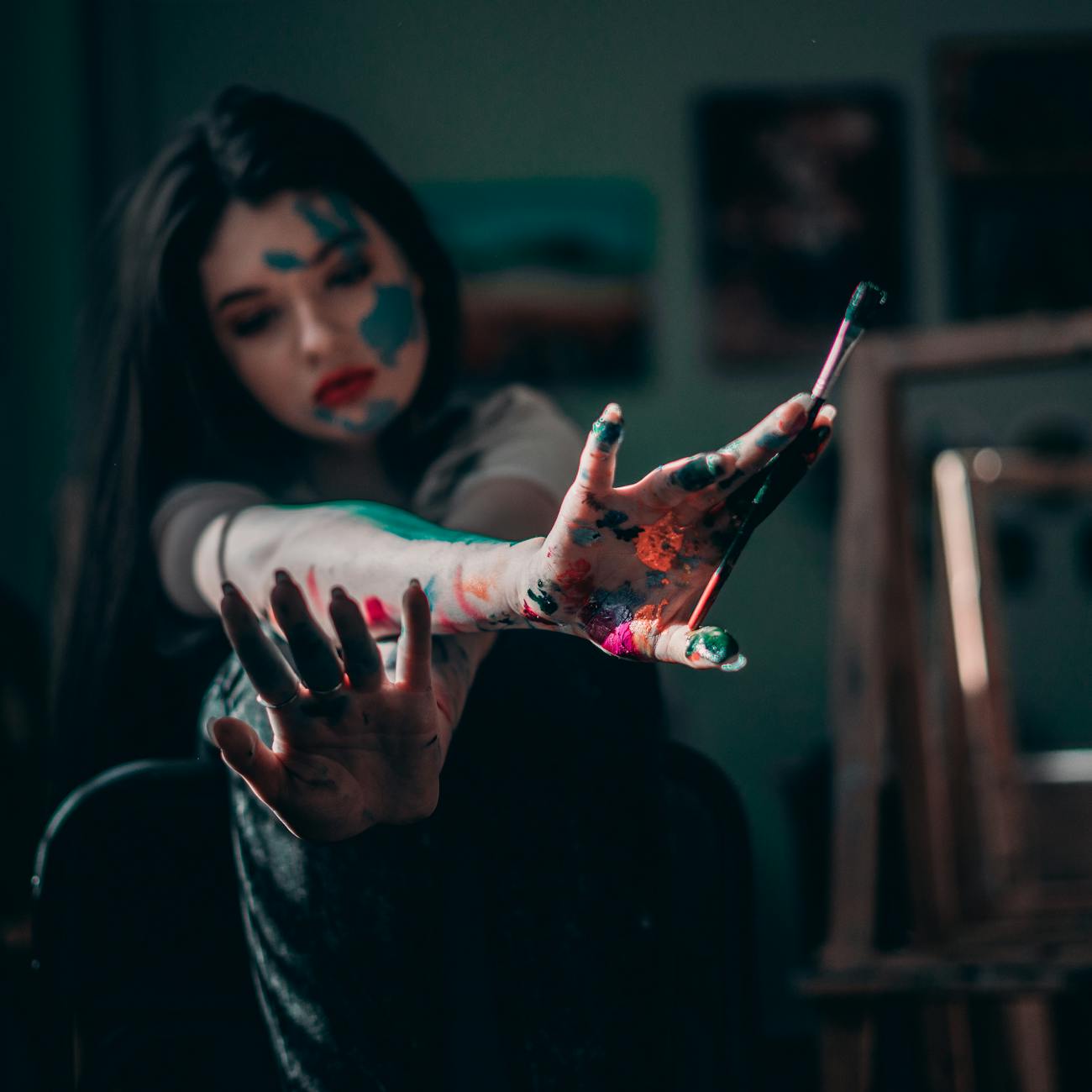
Intellectual Property (IP) Protection is a critical area of law that every artist should understand. IP protection ensures that artists are fairly compensated for their creative works and prevents others from profiting off of their ideas without permission. In this explanation, we will cover key terms and vocabulary related to IP protection that are essential for artists.
1. Copyright: Copyright is a legal right that protects original works of authorship, such as literature, music, and art. Copyright gives the owner exclusive rights to reproduce, distribute, and display the work publicly. In the United States, copyright protection is automatic as soon as the work is created and fixed in a tangible form. 2. Trademark: A trademark is a word, phrase, symbol, or design that identifies and distinguishes the source of goods or services of one party from those of others. Trademarks are crucial for artists to protect their brand and prevent others from using a similar mark that may cause confusion among consumers. 3. Patent: A patent is a legal right that gives the inventor exclusive rights to make, use, and sell an invention for a limited period, usually 20 years. Patents are essential for artists who create new and innovative products, such as sculptures, designs, or technology. 4. Trade Secret: A trade secret is any information that is not generally known or readily accessible to the public and gives its owner a competitive advantage in their business. Trade secrets can include customer lists, marketing strategies, or secret recipes, and are protected under state and federal laws. 5. Fair Use: Fair use is a legal doctrine that permits limited use of copyrighted material without obtaining permission from the copyright owner. Fair use allows for the use of copyrighted material for purposes such as criticism, commentary, news reporting, teaching, scholarship, or research. 6. Infringement: Infringement occurs when someone violates any of the exclusive rights granted to the copyright owner without their permission. Infringement can result in legal action, including injunctions, damages, and attorney's fees. 7. Licensing: Licensing is the process of granting permission to use copyrighted material in exchange for payment or other consideration. Licensing agreements can be exclusive or non-exclusive and can cover a wide range of uses, such as reproduction, distribution, or public display. 8. Moral Rights: Moral rights are the rights of authors to claim authorship of their work, to object to distortions, mutilations, or other modifications that would harm their honor or reputation, and to withdraw their work from circulation under certain circumstances. Moral rights are recognized in many countries, including the United States, and are often protected under copyright law. 9. Public Domain: The public domain refers to works that are no longer protected by copyright or never were protected by copyright. Works in the public domain can be used freely by anyone without obtaining permission from the copyright owner. 10. Derivative Works: A derivative work is a new work that is based on an existing work, such as a translation, musical arrangement, or abridgment. Derivative works require permission from the copyright owner of the original work, unless the work is in the public domain. 11. Digital Millennium Copyright Act (DMCA): The DMCA is a federal law that criminalizes the production and distribution of technology, devices, or services that are designed to circumvent measures that control access to copyrighted works. The DMCA also provides safe harbors for online service providers that host user-generated content, such as social media platforms. 12. International Copyright: International copyright refers to the protection of copyrighted works across national borders. Many countries have signed international treaties, such as the Berne Convention, that establish minimum standards for copyright protection and provide for the recognition of foreign copyrights. 13. Copyright Registration: Copyright registration is the process of registering a copyrighted work with the United States Copyright Office. Registration is not required for copyright protection, but it provides several benefits, such as the ability to seek statutory damages and attorney's fees in infringement actions. 14. Copyright Notice: A copyright notice is a statement that identifies the copyright owner, the year of first publication, and the copyright symbol (©). While a copyright notice is not required for copyright protection, it provides notice to the public that the work is protected by copyright and may deter infringement. 15. Work for Hire: A work for hire is a work created by an employee within the scope of their employment or a work specially ordered or commissioned for use as a contribution to a collective work, as a part of a motion picture or other audiovisual work, as a translation, as a supplementary work, as a compilation, as an instructional text, as a test, as an answer key for a test, or as an atlas. The employer or commissioning party is considered the author of a work for hire and owns the copyright in the work.
Challenges:
1. Understanding the complexities of IP law can be challenging for artists, especially those who are just starting their careers. It is essential to seek legal advice from a qualified IP attorney to ensure that your rights are protected. 2. Enforcing IP rights can be costly and time-consuming. It is crucial to monitor your work and take swift action against infringers to protect your rights and prevent further damage. 3. Balancing the need for IP protection with the promotion of creativity and innovation can be challenging. Fair use and other exceptions to copyright law are essential to ensure that artists can build upon existing works and contribute to the cultural landscape. 4. Navigating international IP laws can be complex, as different countries have different standards for copyright protection and enforcement. It is essential to understand the IP laws of the countries where you plan to distribute your work.
Examples:
1. Copyright protection: An artist creates a painting and automatically owns the copyright in the work. The artist can reproduce, distribute, and display the work publicly without obtaining permission from anyone else. 2. Trademark protection: An artist creates a distinctive logo for their brand and registers it as a trademark. The artist can prevent others from using a similar mark that may cause confusion among consumers. 3. Patent protection: An artist creates a new and innovative sculpture and obtains a patent on the design. The artist can prevent others from making, using, or selling the sculpture without their permission. 4. Trade secret protection: An artist develops a secret recipe for a paint color and keeps it confidential. The artist can prevent others from reverse-engineering the recipe and using it for their own benefit. 5. Fair use: A critic writes a review of an artist's work and includes images of the work in the review. The critic can use the images under the fair use doctrine for the purpose of criticism. 6. Infringement: An artist creates a painting that is substantially similar to another artist's painting without their permission. The second artist can bring an infringement action against the first artist for violating their exclusive rights. 7. Licensing: An artist licenses their work to a manufacturer who produces and sells products featuring the work. The manufacturer pays the artist a royalty for each product sold. 8. Moral rights: An artist creates a sculpture and sells it to a collector. The collector modifies the sculpture without the artist's permission, harming the artist's honor or reputation. The artist can bring a moral rights action against the collector for violating their rights. 9. Public domain: A work enters the public domain when the copyright expires or when the work was never protected by copyright. Anyone can use a public domain work freely without obtaining permission from the copyright owner. 10. Derivative works: An artist creates a new work based on a public domain work, such as a new adaptation of a Shakespeare play. The artist must obtain permission from the copyright owner of the original work or ensure that the work is in the public domain.
Conclusion:
Understanding IP protection is essential for artists to protect their creative works and prevent others from profiting off of their ideas without permission. Copyright, trademark, patent, trade secret, fair use, infringement, licensing, moral rights, public domain, and derivative works are key terms and concepts that every artist should know. Seeking legal advice from a qualified IP attorney, monitoring your work, and taking swift action against infringers are essential to protect your rights and prevent further damage. Balancing the need for IP protection with the promotion of creativity and innovation is crucial to ensure that artists can build upon existing works and contribute to the cultural landscape. Navigating international IP laws can be complex, but understanding the IP laws of the countries where you plan to distribute your work is essential.
Key takeaways
- IP protection ensures that artists are fairly compensated for their creative works and prevents others from profiting off of their ideas without permission.
- Digital Millennium Copyright Act (DMCA): The DMCA is a federal law that criminalizes the production and distribution of technology, devices, or services that are designed to circumvent measures that control access to copyrighted works.
- Fair use and other exceptions to copyright law are essential to ensure that artists can build upon existing works and contribute to the cultural landscape.
- The artist must obtain permission from the copyright owner of the original work or ensure that the work is in the public domain.
- Balancing the need for IP protection with the promotion of creativity and innovation is crucial to ensure that artists can build upon existing works and contribute to the cultural landscape.