
Power Plant Operations and Maintenance
Power Plant Operations and Maintenance (O&M) is a critical aspect of ensuring the reliable and efficient generation of power. The following terms and vocabulary are essential for understanding Power Plant Operations and Maintenance:
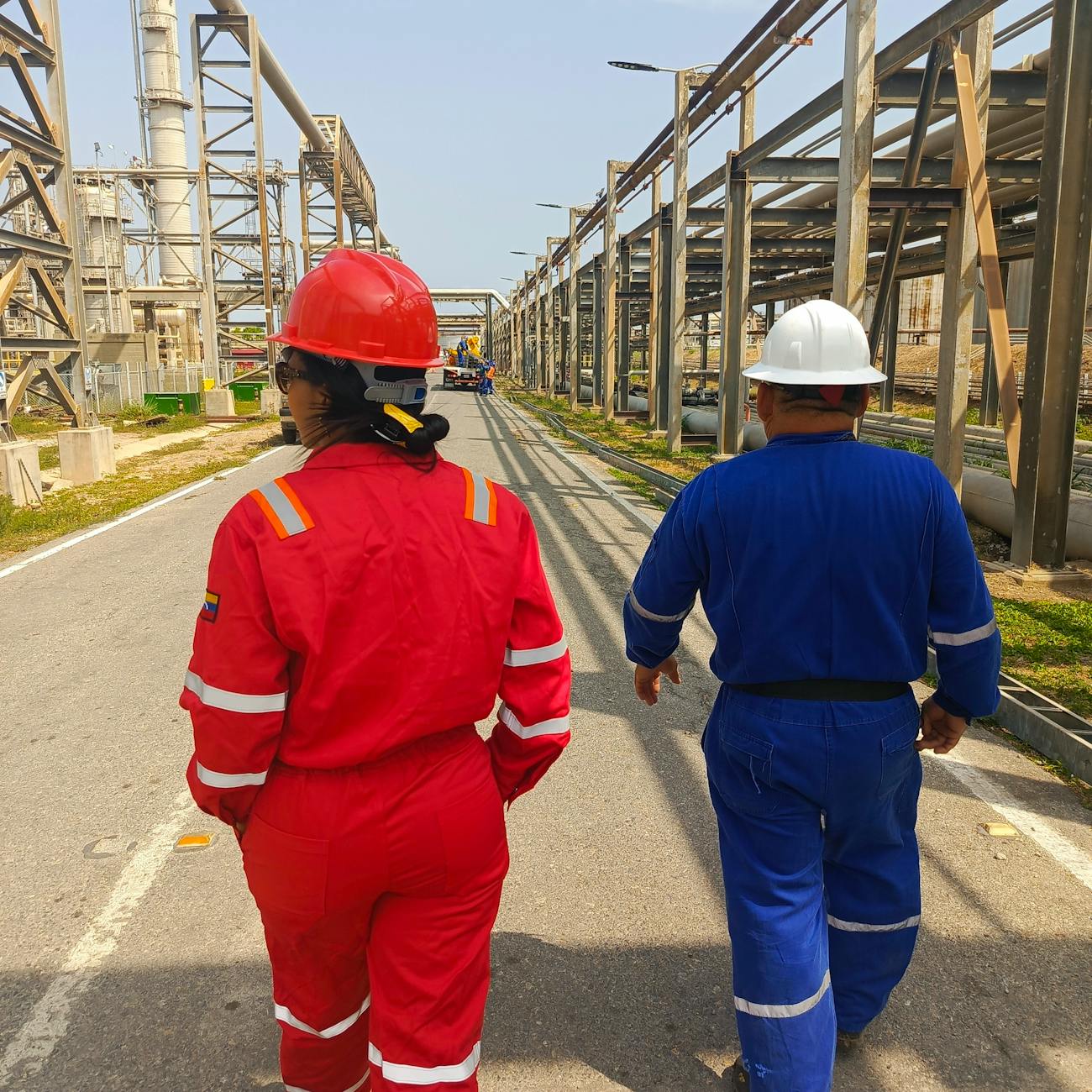
Power Plant Operations and Maintenance (O&M) is a critical aspect of ensuring the reliable and efficient generation of power. The following terms and vocabulary are essential for understanding Power Plant Operations and Maintenance:
1. Boiler: A boiler is a pressure vessel that heats water to produce steam. The steam generated in the boiler is used to drive turbines, which produce electricity. 2. Turbine: A turbine is a machine that converts the energy of a moving fluid (such as steam or water) into mechanical energy. In a power plant, the turbine is connected to a generator, which produces electricity. 3. Generator: A generator is a machine that converts mechanical energy into electrical energy. In a power plant, the generator is driven by a turbine, which is powered by steam or water. 4. Condensor: A condenser is a heat exchanger that cools and condenses the steam produced in the boiler. The condensed steam is then returned to the boiler to be heated and converted back into steam. 5. Combustion: Combustion is the process of burning fuel to produce heat. In a power plant, fuel (such as coal, natural gas, or oil) is burned in the boiler to produce heat, which is used to generate steam. 6. Efficiency: Efficiency is the ratio of the useful output of a machine or system to the input required to produce that output. In a power plant, efficiency is typically measured as the ratio of the electrical energy produced to the thermal energy input. 7. Overhaul: An overhaul is a major maintenance activity that involves disassembling and inspecting a machine or system to identify and repair any damage or wear. In a power plant, overhauls are typically performed on the boiler, turbine, and generator. 8. Outage: An outage is a planned or unplanned interruption in the operation of a power plant. Outages can be caused by a variety of factors, including equipment failure, maintenance activities, or natural disasters. 9. Preventive Maintenance: Preventive maintenance is a proactive approach to maintaining equipment by performing regular inspections and maintenance activities to prevent equipment failure. Preventive maintenance includes activities such as cleaning, lubrication, and replacement of worn parts. 10. Corrective Maintenance: Corrective maintenance is a reactive approach to maintaining equipment by repairing or replacing equipment that has failed. Corrective maintenance is performed after a failure has occurred and is intended to restore the equipment to its normal operating condition. 11. Reliability: Reliability is the ability of a machine or system to perform its intended function without failure. In a power plant, reliability is critical to ensuring a consistent and uninterrupted supply of electricity. 12. Availability: Availability is the percentage of time that a machine or system is available for use. In a power plant, availability is typically measured as the ratio of the total time the plant is available for operation to the total time it is scheduled to be in operation. 13. Maintenance Planning: Maintenance planning is the process of scheduling and coordinating maintenance activities to ensure that equipment is maintained in a timely and efficient manner. Maintenance planning includes activities such as developing maintenance schedules, ordering parts, and coordinating maintenance activities with operations personnel. 14. Spare Parts Management: Spare parts management is the process of managing the inventory of spare parts required to maintain equipment. Spare parts management includes activities such as ordering and tracking spare parts, managing storage and handling of spare parts, and ensuring that spare parts are available when needed. 15. Root Cause Analysis: Root cause analysis is a problem-solving technique used to identify the underlying causes of equipment failures or other problems. Root cause analysis involves identifying the symptoms of a problem, determining the underlying causes, and developing corrective actions to prevent the problem from recurring. 16. Training: Training is the process of developing the knowledge and skills required to perform specific tasks. In a power plant, training is critical to ensuring that personnel have the skills and knowledge required to operate and maintain equipment safely and efficiently. 17. Safety: Safety is the practice of ensuring that equipment and personnel are protected from harm. In a power plant, safety is critical to preventing accidents and injuries. 18. Environmental Compliance: Environmental compliance is the practice of ensuring that the operation of a power plant complies with environmental regulations and standards. In a power plant, environmental compliance is critical to minimizing the impact of power generation on the environment.
Examples:
* A power plant operator may perform routine maintenance activities such as cleaning, lubrication, and inspection of equipment to ensure reliability and availability. * A maintenance planner may develop a schedule for overhauling the boiler, turbine, and generator to ensure that they are maintained in a timely and efficient manner. * A root cause analysis may be performed to identify the underlying causes of a turbine failure and develop corrective actions to prevent the problem from recurring. * Training may be provided to personnel to ensure that they have the skills and knowledge required to operate and maintain equipment safely and efficiently. * Safety procedures may be implemented to prevent accidents and injuries, such as lockout/tagout procedures to ensure that equipment is properly shut down and isolated before maintenance activities are performed. * Environmental compliance measures may be implemented to minimize the impact of power generation on the environment, such as emissions monitoring and control, waste management, and water conservation.
Practical Applications:
* Power plant operators and maintenance personnel must have a thorough understanding of the terms and vocabulary used in power plant operations and maintenance to effectively communicate and work together. * Maintenance planners must have a thorough understanding of maintenance planning, spare parts management, and safety procedures to ensure that equipment is maintained in a timely and efficient manner. * Root cause analysis is a critical problem-solving technique that can help identify underlying causes of equipment failures and prevent them from recurring. * Training is essential to ensure that personnel have the skills and knowledge required to operate and maintain equipment safely and efficiently. * Safety procedures are critical to preventing accidents and injuries in a power plant. * Environmental compliance measures are critical to minimizing the impact of power generation on the environment.
Challenges:
* The complexity of power plant operations and maintenance requires a thorough understanding of the terms and vocabulary used in the industry. * Maintenance planning and spare parts management can be challenging due to the need to balance the need for timely and efficient maintenance with the availability and cost of spare parts. * Root cause analysis can be challenging due to the need to identify the underlying causes of equipment failures, which may be complex and multifaceted. * Training can be challenging due to the need to ensure that personnel have the skills and knowledge required to operate and maintain equipment safely and efficiently. * Safety procedures can be challenging to implement and enforce due to the need to balance the need for safety with the need for efficient and reliable power generation. * Environmental compliance can be challenging due to the need to balance the need for power generation with the need to minimize the impact on the environment.
In conclusion, understanding the terms and vocabulary used in power plant operations and maintenance is critical to ensuring the reliable and efficient generation of power. Maintenance planning, spare parts management, root cause analysis, training, safety, and environmental compliance are all critical aspects of power plant operations and maintenance. Effective communication, problem-solving, and collaboration are essential to ensuring the success of power plant operations and maintenance activities.
Key takeaways
- Power Plant Operations and Maintenance (O&M) is a critical aspect of ensuring the reliable and efficient generation of power.
- Preventive Maintenance: Preventive maintenance is a proactive approach to maintaining equipment by performing regular inspections and maintenance activities to prevent equipment failure.
- * Safety procedures may be implemented to prevent accidents and injuries, such as lockout/tagout procedures to ensure that equipment is properly shut down and isolated before maintenance activities are performed.
- * Power plant operators and maintenance personnel must have a thorough understanding of the terms and vocabulary used in power plant operations and maintenance to effectively communicate and work together.
- * Maintenance planning and spare parts management can be challenging due to the need to balance the need for timely and efficient maintenance with the availability and cost of spare parts.
- Maintenance planning, spare parts management, root cause analysis, training, safety, and environmental compliance are all critical aspects of power plant operations and maintenance.