
Stellar Dynamics and Propulsion
Stellar dynamics is the study of the motion of stars and other celestial objects within a galaxy or other astronomical system, and it plays a crucial role in understanding the behavior and evolution of these systems. The gravitational force…
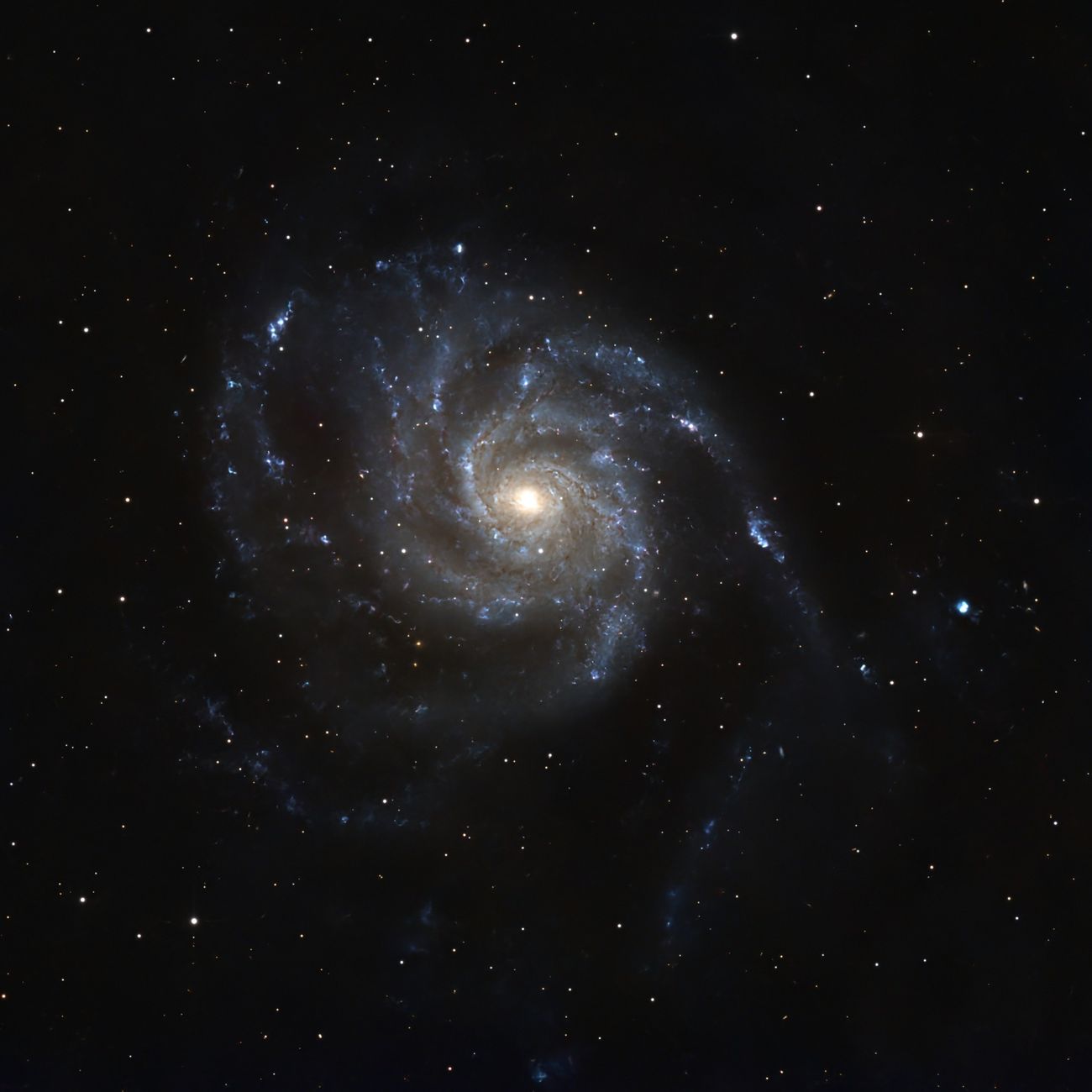
Stellar dynamics is the study of the motion of stars and other celestial objects within a galaxy or other astronomical system, and it plays a crucial role in understanding the behavior and evolution of these systems. The gravitational force is the primary force that governs the motion of stars and other celestial objects, and it is responsible for holding galaxies together. The study of stellar dynamics involves the use of complex mathematical models and computational simulations to understand the behavior of these systems.
One of the key concepts in stellar dynamics is the idea of orbits, which refers to the paths that stars and other celestial objects follow as they move through space. The shape and size of an orbit depend on the mass of the object and the velocity at which it is moving. For example, a star that is moving at a high velocity will have a more elliptical orbit than one that is moving at a slower velocity. The study of orbits is important for understanding the behavior of stars and other celestial objects, and it has many practical applications in fields such as aerospace engineering.
Another important concept in stellar dynamics is the idea of stellar populations, which refers to the different types of stars that are present in a galaxy or other astronomical system. There are many different types of stars, each with its own unique characteristics and properties. For example, main-sequence stars are the most common type of star and are characterized by their stable and long-lasting nature. In contrast, red giant stars are larger and cooler than main-sequence stars, and are characterized by their expansive and short-lived nature.
The study of stellar populations is important for understanding the evolution and behavior of galaxies and other astronomical systems. By studying the different types of stars that are present in a system, scientists can gain insights into the system's history and evolution. For example, the presence of young and blue stars in a galaxy may indicate that the galaxy is actively forming new stars, while the presence of old and red stars may indicate that the galaxy is evolving and aging.
In addition to the study of stellar populations, the field of stellar dynamics also involves the study of galactic structure and evolution. Galaxies are complex systems that are composed of many different types of stars, as well as gas and dust. The study of galactic structure and evolution involves the use of complex mathematical models and computational simulations to understand the behavior and evolution of these systems. For example, scientists may use simulations to model the formation and evolution of galaxies, or to study the interaction between galaxies and their environment.
The study of stellar dynamics and galactic structure has many practical applications in fields such as aerospace engineering and astronomy. For example, scientists may use the principles of stellar dynamics to design and optimize spacecraft trajectories, or to study the behavior of asteroids and other near-Earth objects. The study of galactic structure and evolution may also provide insights into the origin and destiny of the universe, and may help scientists to better understand the fundamental laws of physics that govern the behavior of the universe.
In terms of propulsion systems, there are many different types of engines and technologies that are used to power spacecraft and other vehicles. One of the most common types of propulsion system is the chemical rocket engine, which uses the combustion of fuel and oxidizer to generate thrust. Chemical rocket engines are widely used in aerospace applications, but they have several limitations, including their mass and size, as well as their limited efficiency.
Another type of propulsion system is the ion engine, which uses electrical energy to accelerate ions and generate thrust. Ion engines are more efficient than chemical rocket engines, but they have several limitations, including their low thrust and limited power source. Despite these limitations, ion engines have been used in several spacecraft applications, including the NASA Deep Space 1 mission.
In addition to chemical rocket engines and ion engines, there are many other types of propulsion systems that are being developed and tested for use in aerospace applications. For example, nuclear propulsion systems use nuclear reactors or radioisotope thermoelectric generators to generate electricity and power propulsion systems. Nuclear propulsion systems have several advantages, including their high specific impulse and long mission duration, but they also have several challenges and limitations, including their complexity and cost.
Another type of propulsion system is the solar sail, which uses the pressure of solar radiation to generate thrust. Solar sails are a type of propulsion system that uses the sun as a power source, and they have several advantages, including their low cost and simple design. However, solar sails also have several limitations, including their low thrust and limited mission duration.
The study of stellar dynamics and propulsion systems is a complex and multidisciplinary field that requires a deep understanding of physics, mathematics, and engineering principles. Scientists and engineers who work in this field must have a strong background in aerospace engineering, as well as a deep understanding of the fundamental laws of physics that govern the behavior of the universe. They must also have excellent problem-solving and analytical skills, as well as the ability to design and develop complex systems and technologies.
In terms of challenges and limitations, the study of stellar dynamics and propulsion systems is a complex and multidisciplinary field that requires a deep understanding of many different disciplines and technologies. One of the main challenges is the development of propulsion systems that are efficient and reliable, and that can withstand the harsh conditions of space. Another challenge is the design and development of spacecraft that can survive the long journey to other planets and stars, and that can withstand the extreme conditions of space.
Despite these challenges and limitations, the study of stellar dynamics and propulsion systems is a rapidly evolving field that is driven by advances in technology and our understanding of the universe. New technologies and discoveries are being developed and made all the time, and they are helping us to better understand the universe and our place in it. For example, the discovery of exoplanets and the detection of gravitational waves are just a few examples of the many exciting developments that are being made in this field.
In terms of practical applications, the study of stellar dynamics and propulsion systems has many important uses in fields such as aerospace engineering and astronomy. For example, the design and development of spacecraft that can travel to other planets and stars requires a deep understanding of propulsion systems and stellar dynamics. The study of stellar populations and galactic structure is also important for understanding the evolution and behavior of the universe.
The study of stellar dynamics and propulsion systems is also important for the search for life beyond Earth. The detection of exoplanets and the study of their atmospheres and surfaces is a major area of research in the field of astrobiology. The search for life beyond Earth is a complex and multidisciplinary field that requires a deep understanding of many different disciplines and technologies, including biology, chemistry, physics, and engineering.
In terms of future developments, the study of stellar dynamics and propulsion systems is a rapidly evolving field that is driven by advances in technology and our understanding of the universe. For example, the development of new propulsion systems such as fusion propulsion and antimatter propulsion could revolutionize the field of space exploration and allow us to travel to other stars and galaxies in a much shorter period of
The study of stellar dynamics and propulsion systems is also important for the development of new technologies and industries that are related to space exploration and development. For example, the development of space tourism and space mining industries could create new jobs and opportunities for people who are interested in space exploration and development. The study of stellar dynamics and propulsion systems is also important for the development of new technologies and industries that are related to energy and environmental protection.
In terms of educational resources, there are many different textbooks, online courses, and research papers that are available for people who are interested in learning more about stellar dynamics and propulsion systems. For example, the NASA website has a wealth of information about space exploration and development, including articles and videos about stellar dynamics and propulsion systems. The European Space Agency website also has a wealth of information about space exploration and development, including articles and videos about stellar dynamics and propulsion systems.
In addition to these online resources, there are also many different books and research papers that are available for people who are interested in learning more about stellar dynamics and propulsion systems. For example, the book "Stellar Dynamics" by James Binney and Scott Tremaine is a comprehensive introduction to the field of stellar dynamics, and it covers topics such as orbits, stellar populations, and galactic structure. The book "Rocket Propulsion Elements" by George P. Sutton and Oscar Biblarz is a comprehensive introduction to the field of rocket propulsion, and it covers topics such as chemical rocket engines, ion engines, and nuclear propulsion systems.
In terms of career opportunities, there are many different careers that are available for people who are interested in stellar dynamics and propulsion systems. For example, aerospace engineers design and develop aircraft, spacecraft, and missiles, and they must have a deep understanding of physics, mathematics, and engineering principles. Astrophysicists study the behavior of stars, galaxies, and other celestial objects, and they must have a deep understanding of physics, mathematics, and astronomy principles.
In addition to these careers, there are also many other careers that are available for people who are interested in stellar dynamics and propulsion systems. For example, space scientists study the behavior of space weather and the effects of space weather on spacecraft and astronauts. Planetary scientists study the behavior of planets and other celestial objects, and they must have a deep understanding of geology, biology, and astronomy principles.
In terms of research opportunities, there are many different research projects that are available for people who are interested in stellar dynamics and propulsion systems. For example, the NASA website has a list of research opportunities that are available for students and professionals who are interested in space exploration and development. The European Space Agency website also has a list of research opportunities that are available for students and professionals who are interested in space exploration and development.
In addition to these research opportunities, there are also many different grants and scholarships that are available for people who are interested in stellar dynamics and propulsion systems. For example, the National Science Foundation website has a list of grants and scholarships that are available for students and professionals who are interested in science, technology, engineering, and mathematics (STEM) fields. The NASA website also has a list of grants and scholarships that are available for students and professionals who are interested in space exploration and development.
In terms of future directions, the study of stellar dynamics and propulsion systems is a rapidly evolving field that is driven by advances in technology and our understanding of the universe.
Key takeaways
- Stellar dynamics is the study of the motion of stars and other celestial objects within a galaxy or other astronomical system, and it plays a crucial role in understanding the behavior and evolution of these systems.
- The study of orbits is important for understanding the behavior of stars and other celestial objects, and it has many practical applications in fields such as aerospace engineering.
- Another important concept in stellar dynamics is the idea of stellar populations, which refers to the different types of stars that are present in a galaxy or other astronomical system.
- By studying the different types of stars that are present in a system, scientists can gain insights into the system's history and evolution.
- For example, scientists may use simulations to model the formation and evolution of galaxies, or to study the interaction between galaxies and their environment.
- For example, scientists may use the principles of stellar dynamics to design and optimize spacecraft trajectories, or to study the behavior of asteroids and other near-Earth objects.
- Chemical rocket engines are widely used in aerospace applications, but they have several limitations, including their mass and size, as well as their limited efficiency.