
Surveillance and Reconnaissance
Surveillance and Reconnaissance (S&R) are critical components of intelligence gathering and analysis in military and law enforcement operations. The terms refer to the act of observing and collecting information about a target or area of in…
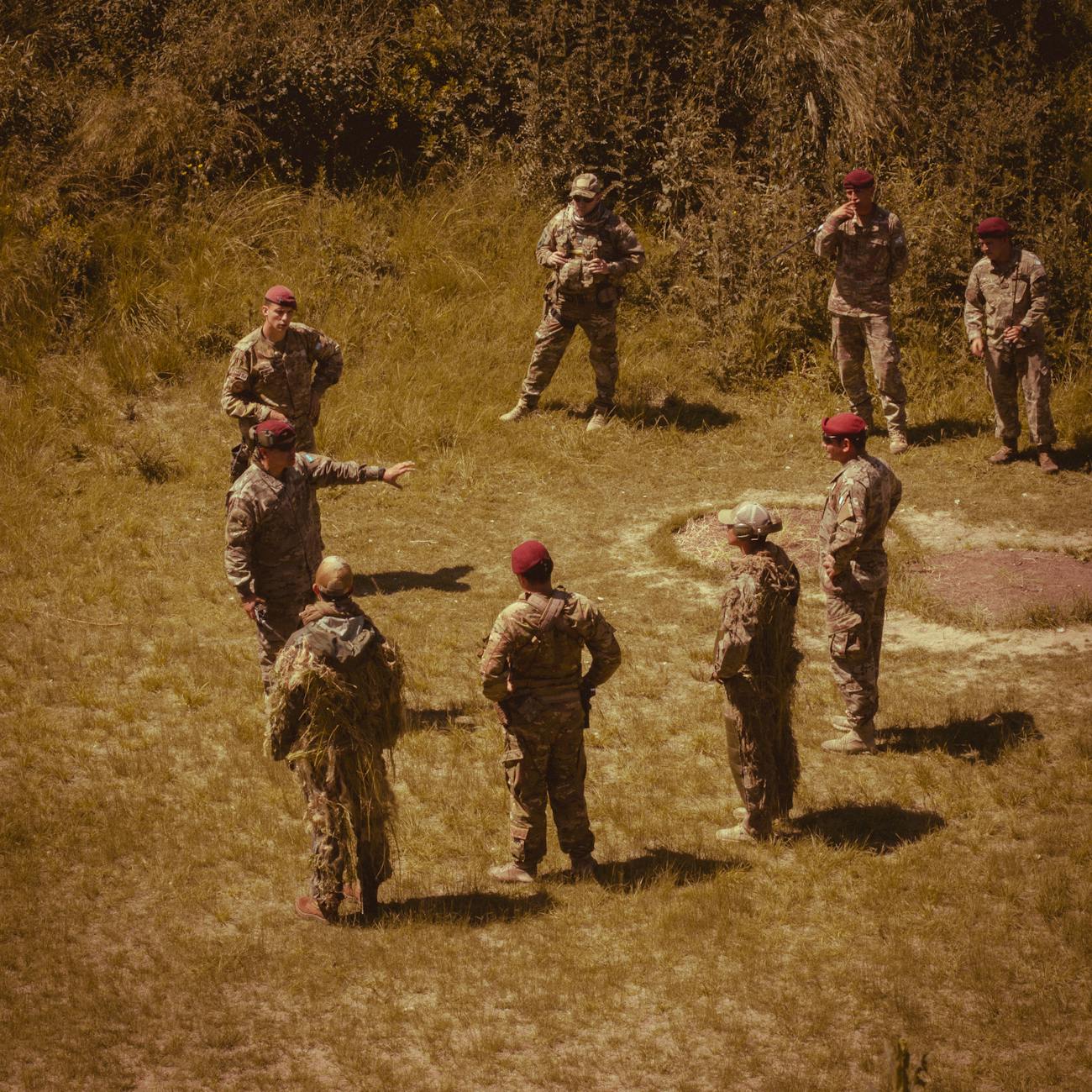
Surveillance and Reconnaissance (S&R) are critical components of intelligence gathering and analysis in military and law enforcement operations. The terms refer to the act of observing and collecting information about a target or area of interest, typically from a distance and without the target's knowledge. In this explanation, we will discuss key terms and vocabulary related to S&R in the context of the Masterclass Certificate in Special Operations Intelligence.
1. Surveillance: Surveillance is the act of observing and collecting information about a target or area of interest over a period of time. Surveillance can be conducted from a distance, using various methods such as optical devices, electronic eavesdropping, and data analysis. Surveillance is typically covert, meaning that the target is unaware that they are being observed. 2. Reconnaissance: Reconnaissance is the act of gathering information about a target or area of interest, typically through visual observation or data analysis. Reconnaissance can be conducted from a distance, using various methods such as aerial surveillance, satellite imagery, and ground-based observation. Reconnaissance can also involve the physical exploration of an area, such as a building or terrain feature. 3. HUMINT: Human Intelligence (HUMINT) is the collection of information from human sources. HUMINT can be collected through various means such as interviews, interrogations, and debriefings. HUMINT is an important source of information for S&R operations, as it can provide insights into the motivations, behaviors, and capabilities of human targets. 4. SIGINT: Signals Intelligence (SIGINT) is the collection of information from electronic signals. SIGINT can be collected through various means such as intercepting communications, analyzing electronic emissions, and monitoring data networks. SIGINT is an important source of information for S&R operations, as it can provide insights into the communications, activities, and intentions of electronic targets. 5. IMINT: Imagery Intelligence (IMINT) is the collection of information from visual imagery. IMINT can be collected through various means such as aerial surveillance, satellite imagery, and ground-based observation. IMINT is an important source of information for S&R operations, as it can provide detailed information about the physical characteristics, layout, and activities of a target or area of interest. 6. MASINT: Measurement and Signature Intelligence (MASINT) is the collection of information from the physical characteristics and emissions of targets. MASINT can be collected through various means such as acoustic sensors, seismic sensors, and infrared sensors. MASINT is an important source of information for S&R operations, as it can provide insights into the unique signatures and characteristics of targets. 7. Covert Operations: Covert operations are operations that are meant to be kept secret from the public and often from other governments. Covert operations can include surveillance, reconnaissance, and other activities that are intended to gather information or influence events without being detected. 8. Counter-Surveillance: Counter-surveillance is the act of detecting and neutralizing surveillance. Counter-surveillance can be conducted through various means such as technical surveillance countermeasures (TSCM), physical security measures, and personnel security measures. 9. Technical Surveillance Countermeasures (TSCM): TSCM is the process of detecting and neutralizing technical surveillance devices such as hidden cameras, microphones, and tracking devices. TSCM is an important component of counter-surveillance, as it can help to protect sensitive information and communications. 10. Physical Security: Physical security refers to the measures taken to protect personnel, facilities, and equipment from physical threats such as theft, vandalism, and terrorism. Physical security measures can include access controls, alarms, and surveillance cameras. 11. Personnel Security: Personnel security refers to the measures taken to protect personnel from threats such as espionage, sabotage, and kidnapping. Personnel security measures can include background checks, security briefings, and personnel screening. 12. Sensor Systems: Sensor systems are devices used to detect and measure various types of information such as temperature, pressure, and motion. Sensor systems can be used for surveillance, reconnaissance, and other intelligence-gathering activities. 13. UAVs: Unmanned Aerial Vehicles (UAVs) are aircraft that are operated remotely, without a pilot on board. UAVs can be used for surveillance, reconnaissance, and other intelligence-gathering activities. 14. Satellites: Satellites are spacecraft that orbit the Earth and can be used for various purposes such as communication, navigation, and imagery collection. Satellites can be used for surveillance, reconnaissance, and other intelligence-gathering activities. 15. Cyber Intelligence: Cyber intelligence is the collection and analysis of information related to cyber threats and activities. Cyber intelligence can be used to detect, prevent, and respond to cyber attacks, as well as to understand the motivations and capabilities of cyber adversaries. 16. Social Engineering: Social engineering is the use of psychological manipulation to trick people into revealing confidential information or performing actions that are not in their best interest. Social engineering can be used for various purposes such as espionage, identity theft, and cyber attacks. 17. OPSEC: Operations Security (OPSEC) is the process of protecting sensitive information from being revealed to unauthorized personnel. OPSEC can be used to protect information related to military operations, law enforcement activities, and other sensitive activities.
In summary, Surveillance and Reconnaissance (S&R) are critical components of intelligence gathering and analysis. S&R involve the act of observing and collecting information about a target or area of interest, typically from a distance and without the target's knowledge. HUMINT, SIGINT, IMINT, and MASINT are different types of intelligence that can be collected through various means such as interviews, electronic intercepts, and imagery analysis. Covert operations, counter-surveillance, TSCM, physical security, personnel security, sensor systems, UAVs, satellites, cyber intelligence, social engineering, and OPSEC are all important concepts related to S&R. Understanding these key terms and vocabulary is essential for anyone working in the field of special operations intelligence.
It is important to note that the use of S&R in intelligence gathering and analysis must be conducted in accordance with laws, regulations, and ethical guidelines. The information collected must be used for legitimate purposes, and the privacy and rights of individuals must be respected. Additionally, S&R operations must be planned and executed carefully to minimize the risk of detection and to ensure the safety of personnel.
When it comes to practical applications of S&R, there are many challenges that must be addressed. For example, targets may use countermeasures such as signal jamming, encryption, and disguise to evade detection. Environmental conditions such as weather, terrain, and lighting can also affect the effectiveness of S&R operations. Furthermore, the vast amount of data that can be collected through S&R can be overwhelming, and analysts must be trained to identify and interpret relevant information.
In conclusion, Surveillance and Reconnaissance are crucial elements of intelligence gathering and analysis in special operations. The Masterclass Certificate in Special Operations Intelligence covers these topics in depth and provides students with the skills and knowledge needed to conduct effective S&R operations. Understanding key terms and vocabulary is essential for anyone working in this field, and mastering the techniques and technologies used in S&R can provide a significant advantage in intelligence operations. However, it is important to use these skills and technologies ethically and in accordance with laws and regulations.
Key takeaways
- The terms refer to the act of observing and collecting information about a target or area of interest, typically from a distance and without the target's knowledge.
- IMINT is an important source of information for S&R operations, as it can provide detailed information about the physical characteristics, layout, and activities of a target or area of interest.
- Covert operations, counter-surveillance, TSCM, physical security, personnel security, sensor systems, UAVs, satellites, cyber intelligence, social engineering, and OPSEC are all important concepts related to S&R.
- It is important to note that the use of S&R in intelligence gathering and analysis must be conducted in accordance with laws, regulations, and ethical guidelines.
- Furthermore, the vast amount of data that can be collected through S&R can be overwhelming, and analysts must be trained to identify and interpret relevant information.
- Understanding key terms and vocabulary is essential for anyone working in this field, and mastering the techniques and technologies used in S&R can provide a significant advantage in intelligence operations.