
Machine Learning Techniques in Maritime Industry
Supervised Learning is a foundational technique where models are trained on labeled data to predict outcomes. In the maritime context, this often involves using historical ship performance records to forecast fuel consumption or to classify…
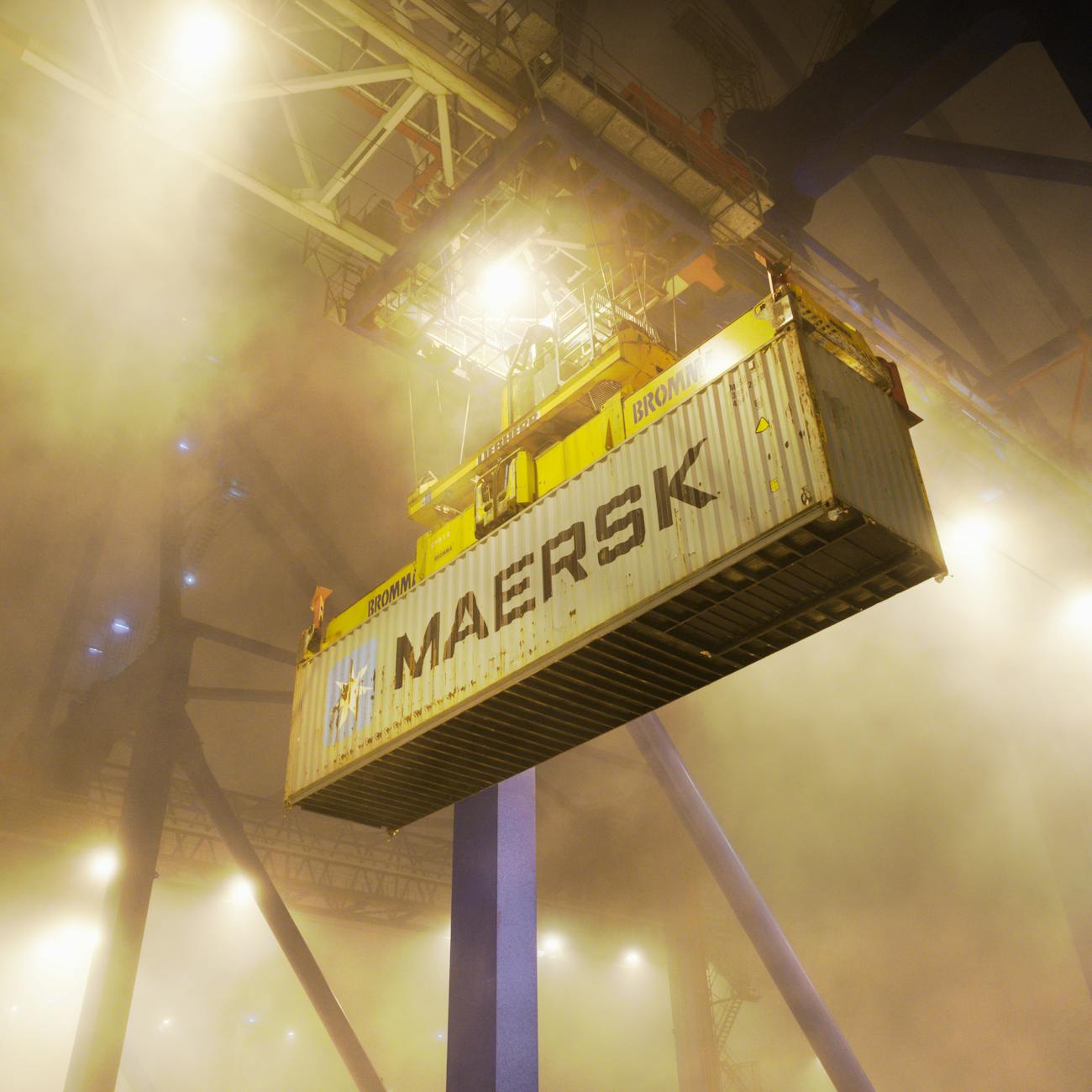
Supervised Learning is a foundational technique where models are trained on labeled data to predict outcomes. In the maritime context, this often involves using historical ship performance records to forecast fuel consumption or to classify vessel types from AIS messages. The label provides the “answer” the algorithm learns to reproduce, such as the amount of fuel burnt per nautical mile. A common example is a regression model that predicts a ship’s speed based on engine settings, weather conditions, and hull fouling level. The main challenge lies in obtaining accurate, high‑quality labels; many maritime datasets contain gaps, inconsistent reporting standards, or delayed updates, which can degrade model performance if not carefully cleaned.
Unsupervised Learning does not rely on explicit labels. Instead, algorithms discover hidden structures within the data. Clustering techniques, such as k‑means or hierarchical clustering, are frequently applied to AIS trajectory data to identify typical traffic patterns around busy ports. By grouping similar routes, analysts can detect emerging congestion zones or abnormal vessel behavior that may indicate illegal fishing or piracy. Dimensionality reduction methods like Principal Component Analysis (PCA) or t‑Distributed Stochastic Neighbor Embedding (t‑SNE) help visualize high‑dimensional sensor data from onboard monitoring systems, revealing correlations that were not obvious in raw form. The primary difficulty with unsupervised methods is interpreting the resulting clusters or components in a maritime‑specific way, as the algorithm does not provide semantic meaning automatically.
Reinforcement Learning (RL) models learn optimal actions through trial and error, receiving rewards for desirable outcomes. In shipping, RL can be employed for autonomous route planning where the agent receives positive feedback for minimizing travel time while avoiding high‑risk weather zones. A practical implementation might involve a ship navigating through a sea state model, where each step’s reward balances fuel efficiency against safety constraints. RL requires extensive simulation environments to train safely, and creating realistic maritime simulators that capture currents, wind, and traffic interactions is a non‑trivial engineering task.
Neural Networks are computational structures composed of interconnected layers that transform input data into predictions. Basic feed‑forward networks are useful for simple classification tasks, such as identifying vessel categories from static attributes like gross tonnage, length overall, and flag state. When the problem involves sequential data—like time‑series sensor readings or AIS position logs—more sophisticated architectures become necessary.
Deep Learning refers to neural networks with many hidden layers, capable of learning complex, hierarchical representations. Convolutional Neural Networks (CNNs) excel at processing spatial data, making them ideal for analyzing satellite imagery of ports or detecting ships in SAR (Synthetic Aperture Radar) images. For instance, a CNN trained on labeled SAR images can automatically count the number of vessels anchored in a harbor, supporting capacity planning. The challenge with deep models lies in their data hunger; acquiring sufficient labeled maritime images can be costly, and the models may overfit to specific sensor characteristics if not regularized properly.
Recurrent Neural Networks (RNNs) handle sequences by maintaining internal states that capture temporal dependencies. Long Short‑Term Memory (LSTM) networks, a popular RNN variant, mitigate the vanishing gradient problem and are effective for forecasting vessel arrival times based on historical AIS streams. An LSTM model may ingest a ship’s past positions, speed, and heading, then output an estimated time of arrival (ETA) at the next port. Training such models demands careful handling of irregular sampling intervals typical in AIS data, often requiring interpolation or masking strategies.
Autoencoders are unsupervised neural networks that learn to compress data into a latent representation and then reconstruct it. In maritime applications, autoencoders can detect anomalies in engine sensor streams by measuring reconstruction error; unusually high error suggests a potential fault or abnormal operating condition. The latent space can also be used for feature extraction, feeding into downstream classifiers that predict maintenance needs. A common pitfall is that autoencoders may learn to reconstruct noise if the training data contains many outliers, so preprocessing to remove obvious errors is essential.
Transfer Learning leverages knowledge from a pre‑trained model on a large dataset to improve performance on a smaller, domain‑specific dataset. For example, a CNN trained on general object detection (e.g., ImageNet) can be fine‑tuned on a limited set of ship images to accelerate learning and achieve higher accuracy with fewer maritime images. Transfer learning reduces computational cost and mitigates data scarcity, yet it requires careful selection of which layers to freeze and which to adapt, as maritime visual characteristics may differ substantially from the source domain.
Feature Engineering involves creating informative variables from raw data to improve model performance. In the maritime sector, this may include deriving the “course over ground variance” from AIS headings, calculating “fuel consumption per cargo ton” from bunker reports, or estimating “wave‑induced motion” using sea state indices. Good features often capture domain expertise, such as the effect of hull fouling on drag, which can be approximated by a “fouling factor” derived from cleaning records. Poorly engineered features can introduce multicollinearity or irrelevant noise, leading to unstable models.
Feature Selection techniques reduce the number of input variables to those most predictive, enhancing interpretability and reducing overfitting risk. Methods like recursive feature elimination (RFE), mutual information ranking, or embedded approaches in tree‑based models (e.g., Random Forest importance) are commonly applied. Selecting the right subset of maritime features—such as prioritizing wind speed over temperature for fuel usage predictions—requires both statistical analysis and subject‑matter insight.
Dimensionality Reduction compresses high‑dimensional data into a lower‑dimensional space while preserving essential structure. PCA transforms correlated variables into orthogonal components, often revealing that a few principal components explain most variance in ship performance metrics. t‑SNE offers a non‑linear alternative for visualizing clusters of vessel trajectories, helping analysts spot outliers that may correspond to illegal activities. The trade‑off between computational cost and interpretability must be considered; PCA components are linear combinations that can be back‑translated to original features, whereas t‑SNE embeddings are more abstract.
Clustering groups similar data points without supervision. K‑means partitions data into a predefined number of clusters by minimizing intra‑cluster variance; it is straightforward to apply to geo‑spatial AIS points to discover typical anchorage zones. Hierarchical clustering builds a tree of nested clusters, useful for multi‑scale analysis of shipping lanes where broader clusters represent major routes and finer clusters capture local deviations. The main difficulty is choosing appropriate distance metrics and the number of clusters, especially when maritime data exhibits irregular shapes and varying density.
Anomaly Detection identifies observations that deviate markedly from normal patterns. In maritime contexts, this can flag vessels that deviate from expected routes, indicating potential smuggling or navigation errors. Techniques range from statistical thresholds (e.g., z‑score) to machine‑learning models like Isolation Forests or one‑class SVMs. Real‑time anomaly detection on streaming AIS data requires low‑latency processing pipelines, and false positives must be minimized to avoid unnecessary alerts.
Predictive Maintenance uses machine‑learning models to anticipate equipment failures before they occur. By analyzing sensor streams from engine temperature, vibration, and oil pressure, models can predict the remaining useful life of critical components, allowing scheduled maintenance that avoids costly unscheduled downtime. A practical case involves a shipboard condition monitoring system that triggers a maintenance ticket when predicted failure probability exceeds a set threshold. Challenges include dealing with imbalanced failure data (few failures versus many normal observations) and ensuring model explainability for crew trust.
Route Optimization seeks the most efficient path between origin and destination, balancing fuel consumption, time, and safety. Classical algorithms (e.g., Dijkstra) can be augmented with machine‑learning estimators that predict fuel burn for each leg based on weather forecasts, currents, and ship load. Reinforcement‑learning agents can learn policies that adapt to dynamic conditions, such as avoiding storm cells while maintaining schedule adherence. Integrating real‑time data streams and ensuring compliance with maritime regulations (e.g., emission control areas) adds layers of complexity.
AIS (Automatic Identification System) data is a primary source for maritime analytics. It provides vessel identifiers, positions, speed, heading, and voyage‑related information. Machine‑learning pipelines ingest AIS streams to generate traffic density maps, predict vessel arrival times, and detect abnormal behavior. However, AIS data suffers from irregular transmission intervals, missing fields, and spoofing risks; robust preprocessing, including interpolation, outlier removal, and validation against external sources (e.g., radar), is essential.
Sensor Fusion combines data from multiple sources—such as AIS, radar, satellite imagery, and onboard engine sensors—to create a richer situational picture. For example, fusing AIS with radar can improve vessel detection accuracy in congested ports where AIS signals may be obstructed. Machine‑learning models that accept fused inputs often achieve higher predictive performance, yet they must handle differing data rates, units, and uncertainties.
Time Series Forecasting predicts future values based on historical sequences. In maritime analytics, this includes forecasting vessel arrival times, fuel consumption trends, or port congestion levels. Classical statistical models like ARIMA or Prophet provide interpretable baselines, while deep‑learning approaches (e.g., Temporal Convolutional Networks) can capture complex non‑linear patterns. Model selection depends on data length, seasonality, and the need for interpretability.
Ensemble Methods combine multiple base learners to improve robustness and accuracy. Random Forest aggregates decision trees trained on bootstrapped data subsets, offering resistance to overfitting and providing feature importance measures useful for maritime analysts. Gradient Boosting frameworks such as XGBoost, LightGBM, or CatBoost iteratively correct errors of prior models, often achieving state‑of‑the‑art performance on tabular shipping data (e.g., predicting bunker fuel usage). Hyperparameter tuning—via grid search or Bayesian optimization—is critical to balance model complexity against generalization.
Decision Trees form the basis of many ensemble techniques. They recursively split data based on feature thresholds, producing interpretable rules like “if wind speed > 15 knots and hull fouling index > 0.8 then fuel consumption increases.” While single trees are prone to overfitting, they provide clear decision pathways valuable for regulatory reporting. Pruning and setting depth limits mitigate this risk.
Support Vector Machines (SVM) find hyperplanes that separate classes with maximal margin. In maritime classification tasks—such as distinguishing between cargo, tanker, and passenger vessels based on AIS attributes—SVMs perform well with limited training data. Kernel methods extend SVMs to non‑linear separations, enabling the modeling of complex relationships like the interaction between speed, draft, and cargo load. SVMs require careful scaling of features and can be computationally intensive on large datasets.
Classification assigns discrete labels to inputs, while Regression predicts continuous values. Both are central to maritime analytics: classification may label a vessel as “high‑risk” for security screening, whereas regression estimates the exact fuel consumption for a given voyage. Evaluation metrics differ: classification uses accuracy, precision, recall, F1 score, and ROC‑AUC; regression relies on Mean Absolute Error (MAE), Root Mean Squared Error (RMSE), and R‑squared. Selecting the appropriate metric aligns model objectives with operational goals.
Segmentation, a form of clustering, partitions data into meaningful groups. In the context of port operations, segmentation can group vessels by size, cargo type, and turnaround time, informing berth allocation strategies. Effective segmentation reduces congestion and improves resource utilization. However, heterogeneous vessel characteristics and fluctuating demand patterns make static segmentation insufficient; dynamic, data‑driven approaches are preferred.
Maritime Domain Awareness (MDA) encompasses the comprehensive understanding of maritime activities, threats, and trends. Machine‑learning models contribute to MDA by processing massive streams of AIS, radar, and satellite data to generate situational insights. Applications include early warning of illegal entry, monitoring compliance with emission regulations, and forecasting traffic density for strategic planning. Integrating multiple models—each specialized for detection, prediction, and classification—creates a layered MDA architecture.
Ship Classification involves assigning vessels to categories based on design, function, or operational profile. Machine‑learning classifiers can automate this process using features such as length overall, beam, draft, and flag. Accurate classification supports regulatory compliance, risk assessment, and fleet management. The challenge lies in handling ambiguous cases where vessels serve multiple roles (e.g., multi‑purpose vessels) and ensuring that the model stays current with evolving ship designs.
Fuel Consumption Modeling predicts how much fuel a ship will use under specific operating conditions. Input variables typically include speed, displacement, hull condition, weather, and cargo weight. Models range from physics‑based empirical formulas to data‑driven regression and neural‑network approaches. Accurate fuel forecasts enable operators to plan bunkering, optimize routes, and meet emission targets. Model drift caused by engine upgrades or changes in fuel type must be monitored and corrected regularly.
Emission Estimation quantifies pollutants such as CO₂, NOₓ, SOₓ, and particulate matter released by vessels. Machine‑learning regressors can map operational parameters (speed, fuel type, engine load) to emission outputs, often calibrated against measurement campaigns. These estimates support compliance with IMO regulations like the Energy Efficiency Existing Ship Index (EEXI) and Carbon Intensity Indicator (CII). Data sparsity, especially for small vessels lacking monitoring equipment, poses a hurdle for reliable emission modeling.
Weather Prediction integrates atmospheric models with ship‑specific forecasts. Machine‑learning models trained on historical weather and ship performance data can predict localized wind, wave height, and currents that directly affect navigation decisions. For example, a Gradient Boosting model may forecast wave height along a planned route, allowing the navigator to adjust speed to avoid excessive fuel burn. The main difficulty is the high variability of marine weather and the need for high‑resolution data.
Sea State and Wave Modeling describe the condition of the ocean surface, affecting vessel motion, comfort, and safety. Machine‑learning surrogates can approximate computationally expensive hydrodynamic simulations, delivering rapid wave height estimates for real‑time route planning. Training such surrogates requires a diverse dataset covering different sea states, and validation against physical measurements to ensure reliability.
Navigation Risk Assessment combines vessel trajectory data, environmental factors, and traffic density to evaluate collision probability. Classification models can label a navigation scenario as “low,” “moderate,” or “high” risk based on features like closest point of approach (CPA), time to CPA, and relative bearing. Integrating risk scores into decision support systems enables proactive maneuvering. False alarms are a significant concern; models must balance sensitivity with specificity to avoid crew fatigue.
Collision Avoidance systems use real‑time sensor inputs and predictive models to recommend evasive actions. Reinforcement‑learning agents trained in simulation can learn optimal avoidance maneuvers that respect maritime rules of the road (COLREGs). Transferring these policies to real vessels requires extensive validation, as the cost of a misprediction could be catastrophic.
Port Congestion Modeling predicts the buildup of ships awaiting berths, influencing scheduling and logistics. Time‑series models such as Prophet can forecast congestion indices based on historical arrival patterns, tide schedules, and labor availability. Accurate forecasts enable shipping lines to adjust departure times, reducing idle time and associated costs. Unpredictable events—like sudden weather disruptions—introduce uncertainty that must be accounted for, often through scenario analysis.
Berth Allocation Optimization assigns incoming vessels to specific berths, balancing constraints like vessel size, cargo type, and equipment availability. Integer programming models can be enhanced with machine‑learning predictions of handling time, allowing more precise scheduling. The dynamic nature of port operations, with frequent changes in ship arrival times and equipment status, necessitates adaptive algorithms that can re‑optimize in near real‑time.
Cargo Handling Optimization focuses on the efficient loading and unloading of containers, bulk cargo, or liquid cargo. Machine‑learning classifiers can predict the time required for each operation based on vessel characteristics and terminal resources. These predictions feed into broader scheduling tools that aim to minimize turnaround time while respecting labor regulations. Data quality is critical; inaccurate handling time estimates can cascade into larger delays.
Piracy Detection and Security Threat Modeling identify vessels at risk of piracy or other illicit activities. Anomaly‑detection models applied to AIS trajectories can flag vessels that deviate from typical trade routes, especially in high‑risk regions such as the Gulf of Aden. Combining AIS data with external intelligence (e.g., known piracy hotspots) enhances model relevance. Ethical considerations arise when labeling vessels as “high‑risk,” requiring transparent criteria and avenues for dispute.
Cyber‑Physical Security addresses vulnerabilities where digital systems control physical ship functions. Machine‑learning intrusion‑detection systems monitor network traffic for anomalous patterns that may indicate hacking attempts. Training such systems requires labeled attack data, which is scarce in the maritime sector, prompting the use of synthetic attack generation or unsupervised methods. False positives could disrupt critical operations, so models must be finely tuned.
Data Quality Management ensures that raw maritime datasets are fit for analysis. Common issues include missing values, duplicate records, inconsistent units, and erroneous timestamps. Techniques such as missing‑value imputation (mean, median, model‑based) and outlier detection (Z‑score, robust statistical methods) are applied before model training. Poor data quality can lead to biased models that misrepresent actual ship performance.
Data Preprocessing steps transform raw inputs into model‑ready formats. Normalization or scaling (e.g., Min‑Max, StandardScaler) ensures that features with different units do not dominate learning. Categorical variables—such as ship flag or cargo type—are encoded via label encoding or one‑hot encoding, depending on model requirements. Temporal alignment of asynchronous sensor streams often involves resampling to a common interval, with interpolation for missing points.
Cross‑Validation evaluates model generalization by partitioning data into multiple training and validation folds. In maritime datasets, stratified sampling may be necessary to preserve the distribution of vessel types across folds. Time‑series cross‑validation (rolling window) respects chronological order, preventing leakage of future information into training. Proper validation mitigates overfitting and provides reliable performance estimates.
Train‑Test Split separates data into distinct subsets for model fitting and final evaluation. A typical split might allocate 70 % of voyages for training and 30 % for testing, ensuring that the test set contains ships not seen during training to assess true generalization. When data is limited, techniques like k‑fold cross‑validation become valuable.
Hyperparameter Tuning adjusts algorithm parameters (e.g., tree depth, learning rate) to optimize performance. Grid Search exhaustively evaluates combinations, while Bayesian Optimization intelligently explores the space based on past results. Automated tools can accelerate tuning but require careful definition of search boundaries to avoid excessive computation.
Model Evaluation employs metrics appropriate to the problem. For classification, the confusion matrix reveals true positives, false positives, true negatives, and false negatives, from which precision, recall, and F1 score are derived. The ROC curve plots true‑positive rate versus false‑positive rate, with the AUC summarizing overall discriminative ability. For regression, MAE measures average absolute error, RMSE penalizes larger errors, and R‑squared indicates proportion of variance explained. Selecting metrics aligned with business impact (e.g., prioritizing recall for safety‑critical detection) guides model selection.
Bias‑Variance Trade‑off describes the balance between model simplicity (high bias) and complexity (high variance). In maritime analytics, overly simple models may ignore critical nonlinear interactions (e.g., between wind and hull form), while highly complex deep models may overfit to noisy sensor data, leading to poor performance on new voyages. Regularization techniques (L1, L2, dropout) help manage this trade‑off.
Overfitting occurs when a model captures noise rather than underlying patterns, resulting in high training accuracy but low test performance. Techniques such as cross‑validation, early stopping, and pruning reduce overfitting risk. Underfitting, the opposite problem, arises when the model is too constrained to capture relevant relationships, often indicated by high error on both training and test sets. Adjusting model capacity or adding informative features can remedy underfitting.
Model Interpretability is essential for stakeholder trust, especially in regulated maritime environments. Methods like SHAP (SHapley Additive exPlanations) assign importance values to each feature for individual predictions, revealing why a model flagged a vessel as high‑risk. LIME (Local Interpretable Model‑agnostic Explanations) approximates the model locally with a simpler surrogate to explain specific decisions. These tools help operators understand and validate model behavior.
Explainable AI (XAI) extends interpretability to provide transparent, auditable models. In maritime certification processes, regulators may require evidence that a predictive maintenance model bases its alerts on measurable engine parameters, not on opaque deep‑learning features. XAI techniques generate visual or textual explanations that satisfy such regulatory scrutiny.
Deployment moves a trained model into production where it can process live data. Options include edge computing—running inference directly on shipboard hardware for latency‑critical tasks like collision avoidance—and cloud platforms that host large‑scale analytics like fleet‑wide fuel optimization. Containerization technologies such as Docker encapsulate model dependencies, ensuring reproducibility across environments. Orchestration tools like Kubernetes manage scaling and fault tolerance for cloud‑based services.
Real‑Time Inference processes incoming data streams to produce immediate predictions, essential for navigation safety and dynamic route adjustment. Low‑latency pipelines often combine stream processing frameworks (e.g., Apache Flink) with lightweight models optimized for speed (e.g., quantized neural networks). Batch Processing, by contrast, aggregates data over longer intervals for tasks like monthly emission reporting, where latency is less critical.
Streaming Analytics continuously ingests and analyzes data, enabling use cases such as live traffic heat maps or instant anomaly alerts on AIS streams. Implementing robust streaming pipelines requires handling data ordering, back‑pressure, and fault tolerance to avoid missed detections.
Internet of Things (IoT) devices aboard ships—such as vibration sensors, temperature probes, and GPS modules—generate high‑frequency data that fuels machine‑learning models. Ensuring reliable connectivity, power management, and secure transmission are practical challenges in maritime environments, where harsh weather and remote locations are common.
Satellite Imagery provides a macro view of maritime activities, allowing detection of vessel positions even when AIS is disabled. Computer Vision models, including object detection frameworks like YOLO (You Only Look Once), can locate and classify ships in high‑resolution images, supporting surveillance and illegal fishing detection. Cloud cover, image resolution limits, and processing large image archives are ongoing hurdles.
Computer Vision extends beyond detection to tasks such as vessel type classification, damage assessment after collisions, and monitoring of offshore structures. Training robust vision models requires diverse labeled datasets that capture varying lighting, sea states, and sensor angles. Data augmentation and transfer learning help mitigate limited labeled data.
Object Detection models output bounding boxes and class labels for each detected ship, enabling downstream analytics like counting vessels per sector or tracking movements across frames. Accuracy depends on precise labeling during training and on handling occlusions where ships overlap.
Maritime Surveillance integrates multiple data sources—AIS, radar, satellite imagery—to maintain a comprehensive picture of maritime traffic. Machine‑learning fusion algorithms reconcile discrepancies (e.g., mismatched timestamps) and generate unified situational awareness dashboards for authorities.
Vessel Detection in satellite imagery leverages convolutional networks trained to recognize ship silhouettes against the ocean background. Challenges include distinguishing small vessels from waves and dealing with varying sensor resolutions. False positives can be reduced through post‑processing steps that cross‑reference detections with AIS records.
Anomaly Detection in AIS focuses on identifying vessels that exhibit unexpected behaviors, such as sudden speed changes, erratic course alterations, or prolonged idling in restricted zones. Unsupervised clustering combined with statistical thresholds can flag such anomalies for further investigation.
Maritime Traffic Forecasting predicts future vessel densities and flows, supporting capacity planning for ports and coastal authorities. Sequence‑to‑sequence models, often used in natural language processing, can be adapted to forecast traffic volumes over multiple time horizons, incorporating exogenous variables like seasonal trade patterns.
Port Call Prediction estimates the arrival and departure times of ships at a port, aiding berth planning and resource allocation. Machine‑learning regressors trained on historical port call data, combined with weather forecasts and berth availability, improve ETA accuracy. Accurate predictions reduce berth idle time and improve terminal throughput.
Berth Scheduling uses optimization algorithms, sometimes guided by machine‑learning predictions of handling time, to assign ships to berths in an order that minimizes total turnaround time. Constraints such as tidal windows for deep‑draft vessels and equipment readiness are incorporated. Stochastic models account for uncertainties like unexpected delays.
Route Planning under Constraints considers multiple objectives—fuel efficiency, emission limits, safety zones—while respecting operational constraints like draft restrictions and canal transit windows. Multi‑objective evolutionary algorithms can generate Pareto‑optimal routes, offering decision makers a set of trade‑off solutions.
Fuel Efficiency Optimization combines predictive models of consumption with route planning to select speeds and courses that minimize fuel usage while meeting schedule commitments. Adaptive cruise control systems on ships can implement these recommendations in real time, adjusting propulsion settings to match optimal fuel curves.
Emissions Compliance requires models that estimate pollutant output under varying operating conditions, supporting reporting to authorities and adherence to IMO standards such as MARPOL Annex VI. Machine‑learning estimators calibrated with real‑world emission measurements provide more accurate compliance assessments than static emission factors.
IMO Regulations like the Energy Efficiency Existing Ship Index (EEXI) and the Carbon Intensity Indicator (CII) set performance benchmarks for vessels. Data‑driven models help ship owners assess current performance against these benchmarks and identify improvement opportunities, such as hull cleaning or speed reduction.
Digital Twins create virtual replicas of physical ships, integrating real‑time sensor data with simulation models to predict future states. Machine‑learning components within digital twins can forecast hull fouling progression, enabling proactive maintenance scheduling. Maintaining synchronization between the twin and the actual vessel, especially under changing operating conditions, remains a technical challenge.
Simulation and Synthetic Data Generation produce artificial maritime scenarios for training machine‑learning models when real data is scarce or sensitive. For example, simulated AIS streams can augment training sets for piracy detection, while preserving privacy of actual vessel movements. Ensuring that synthetic data captures the statistical properties of real-world data is essential for model transferability.
Data Governance establishes policies for data stewardship, access control, and lifecycle management. In maritime analytics, governance frameworks must address cross‑jurisdictional issues, as ships operate under multiple flag states and port regulations. Clear data ownership and consent mechanisms facilitate collaboration while complying with privacy regulations.
Data Privacy concerns arise when handling personally identifiable information (PII) of crew members or proprietary operational data of shipping companies. Techniques such as anonymization, aggregation, and differential privacy can protect sensitive information while still enabling valuable analytics. Balancing privacy with utility requires careful policy design.
Data Security involves protecting maritime data pipelines from unauthorized access, tampering, and cyber‑attacks. Encryption of data at rest and in transit, secure authentication mechanisms, and regular vulnerability assessments are standard practices. In a maritime context, limited connectivity and remote locations increase the difficulty of maintaining robust security postures.
Ethics in Maritime AI demands fairness, transparency, and accountability. Models that prioritize certain vessels for inspection based on historical patterns could inadvertently reinforce biases against specific flags or operators. Ethical guidelines encourage diverse training data, bias audits, and stakeholder involvement in model development.
Bias Mitigation techniques—such as re‑weighting samples, adversarial debiasing, or fairness‑aware regularization—help ensure that predictive models do not disadvantage particular groups. Continuous monitoring for drift in bias metrics is necessary, especially as shipping patterns evolve.
Sustainability goals drive the adoption of machine‑learning solutions that reduce fuel consumption, lower emissions, and improve operational efficiency. Quantifying the environmental impact of analytics initiatives supports corporate responsibility reporting and aligns with global climate commitments.
By mastering the terminology and concepts outlined above, learners in the Certificate in Maritime Data Analytics will be equipped to apply machine‑learning techniques effectively across the diverse challenges of the maritime industry.
Key takeaways
- The main challenge lies in obtaining accurate, high‑quality labels; many maritime datasets contain gaps, inconsistent reporting standards, or delayed updates, which can degrade model performance if not carefully cleaned.
- The primary difficulty with unsupervised methods is interpreting the resulting clusters or components in a maritime‑specific way, as the algorithm does not provide semantic meaning automatically.
- RL requires extensive simulation environments to train safely, and creating realistic maritime simulators that capture currents, wind, and traffic interactions is a non‑trivial engineering task.
- Basic feed‑forward networks are useful for simple classification tasks, such as identifying vessel categories from static attributes like gross tonnage, length overall, and flag state.
- The challenge with deep models lies in their data hunger; acquiring sufficient labeled maritime images can be costly, and the models may overfit to specific sensor characteristics if not regularized properly.
- Long Short‑Term Memory (LSTM) networks, a popular RNN variant, mitigate the vanishing gradient problem and are effective for forecasting vessel arrival times based on historical AIS streams.
- In maritime applications, autoencoders can detect anomalies in engine sensor streams by measuring reconstruction error; unusually high error suggests a potential fault or abnormal operating condition.