
Equine Parasite Control Strategies
Equine parasite control strategies are essential for maintaining the health and well-being of horses. One of the key terms in this field is parasite , which refers to any organism that lives on or in another organism, called the host, and c…
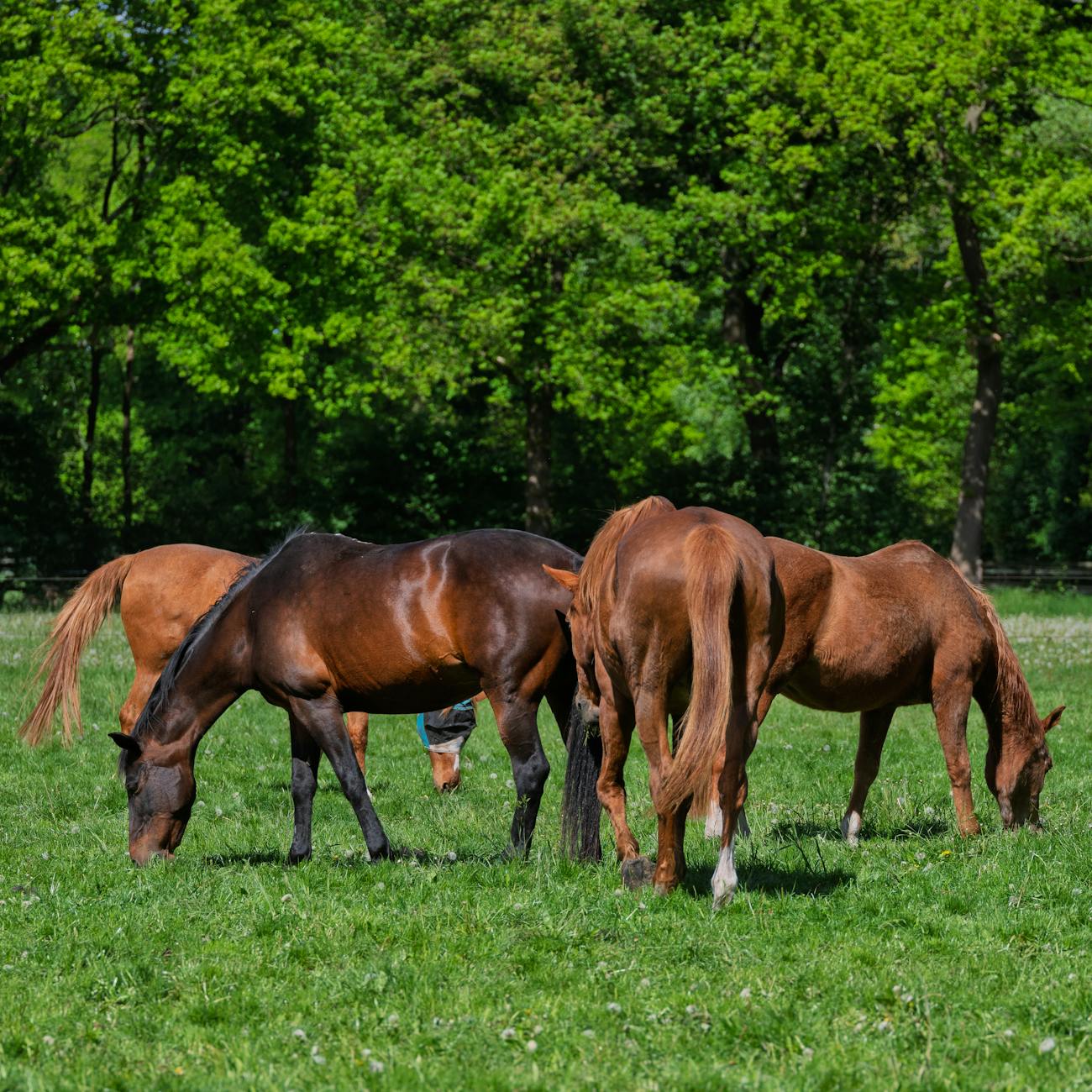
Equine parasite control strategies are essential for maintaining the health and well-being of horses. One of the key terms in this field is parasite, which refers to any organism that lives on or in another organism, called the host, and causes harm. In the context of equine parasitology, parasites can be internal, such as worms, or external, such as ticks and lice. Understanding the different types of parasites that can affect horses is crucial for developing effective control strategies.
Internal parasites, such as strongyles, are a significant concern in equine parasitology. These parasites can cause a range of health problems, including diarrhea, weight loss, and colic. There are several types of internal parasites that can affect horses, including tapeworms, roundworms, and pinworms. Each type of parasite has a unique life cycle and requires a specific control strategy.
External parasites, such as ticks and lice, can also cause significant health problems for horses. These parasites can transmit diseases, such as equine infectious anemia, and cause discomfort and stress. Understanding the life cycle of external parasites is essential for developing effective control strategies, such as using insecticides and repellents.
Another key term in equine parasitology is anthelmintic, which refers to a drug used to treat internal parasites. There are several types of anthelmintics available, including benzimidazoles and pyrimidines. Each type of anthelmintic has a unique mechanism of action and is effective against specific types of parasites.
The life cycle of a parasite is an essential concept in equine parasitology. Understanding the life cycle of a parasite is crucial for developing effective control strategies. For example, the life cycle of a strongyle parasite typically involves several stages, including the egg, larva, and adult stages. Each stage of the life cycle requires a specific control strategy, such as using anthelmintics to kill adult parasites or larvicides to kill larvae.
Fecal egg count is a diagnostic tool used to determine the number of parasite eggs present in a horse's feces. This test is essential for monitoring the effectiveness of parasite control strategies and identifying horses that require treatment. A fecal egg count reduction test can be used to determine the effectiveness of an anthelmintic treatment.
Parasite resistance is a significant concern in equine parasitology. The overuse or misuse of anthelmintics can lead to the development of resistance in parasite populations. This means that the parasites become less susceptible to the effects of the anthelmintic, making it less effective as a control strategy. To minimize the risk of resistance, it is essential to use anthelmintics judiciously and to monitor the effectiveness of treatments regularly.
Integrated parasite management is a comprehensive approach to controlling parasites in horses. This approach involves using a combination of control strategies, such as pasture management, anthelmintics, and biological control, to minimize the risk of parasite infection. Integrated parasite management is essential for maintaining the health and well-being of horses and for minimizing the risk of parasite resistance.
Pasture management is a critical component of integrated parasite management. This involves managing the pasture to reduce the number of parasites present, such as rotating pastures and harvesting hay. By reducing the number of parasites in the pasture, the risk of infection can be minimized.
Biological control is another component of integrated parasite management. This involves using natural predators or competitors to control parasite populations. For example, dung beetles can be used to control the population of fly larvae in pastures.
Equine parasitology is a complex and fascinating field that requires a comprehensive understanding of the biology and ecology of parasites. By understanding the life cycle of parasites, the mechanisms of infection, and the control strategies available, horse owners and caregivers can develop effective parasite control programs to maintain the health and well-being of their horses.
The epidemiology of equine parasites is an essential concept in understanding the transmission and control of parasites. This involves studying the factors that contribute to the spread of parasites, such as climate, geography, and animal movement. By understanding the epidemiology of equine parasites, horse owners and caregivers can develop targeted control strategies to minimize the risk of infection.
Parasite transmission is a critical concept in equine parasitology. This involves understanding how parasites are transmitted from one horse to another, such as through direct contact or indirect contact with contaminated feces or pasture. By understanding the modes of transmission, horse owners and caregivers can develop effective control strategies to minimize the risk of infection.
Veterinary parasit!Ology is a specialized field of study that focuses on the diagnosis, treatment, and control of parasites in animals. Veterinary parasitologists play a critical role in developing effective parasite control programs and providing guidance on the use of anthelmintics and other control strategies.
The diagnosis of equine parasites is a critical step in developing effective control strategies. This involves using a range of diagnostic tools, such as fecal egg counts and blood tests, to identify the presence and type of parasites. By accurately diagnosing parasite infections, horse owners and caregivers can develop targeted treatment and control programs.
Control programs are essential for maintaining the health and well-being of horses. These programs involve using a combination of control strategies, such as pasture management, anthelmintics, and biological control, to minimize the risk of parasite infection. Control programs should be tailored to the specific needs of each horse or herd and should be regularly monitored and updated to ensure their effectiveness.
Parasite control is an ongoing process that requires regular monitoring and attention. Horse owners and caregivers should work closely with veterinary parasitologists to develop and implement effective control programs. By taking a proactive and comprehensive approach to parasite control, horse owners and caregivers can minimize the risk of parasite infection and maintain the health and well-being of their horses.
The impact of parasites on horse health and well-being can be significant. Parasites can cause a range of health problems, including diarrhea, weight loss, and colic. In severe cases, parasite infections can be life-threatening. By developing and implementing effective parasite control programs, horse owners and caregivers can minimize the risk of these health problems and maintain the overall health and well-being of their horses.
Research is ongoing in the field of equine parasitology, with scientists working to develop new and more effective control strategies. This includes the development of new anthelmintics and vaccines, as well as the use of genetic testing to identify parasite-resistant horses. By staying up-to-date with the latest research and developments, horse owners and caregivers can ensure that their parasite control programs are effective and targeted.
The economics of parasite control is an essential consideration for horse owners and caregivers. The cost of parasite control programs can be significant, and horse owners and caregivers must weigh the costs and benefits of different control strategies. By developing and implementing effective parasite control programs, horse owners and caregivers can minimize the economic impact of parasite infections and maintain the overall health and well-being of their horses.
Education and awareness are critical components of effective parasite control. Horse owners and caregivers must be aware of the risks and consequences of parasite infections and must be educated on the latest control strategies and techniques. By working together with veterinary parasitologists and staying up-to-date with the latest research and developments, horse owners and caregivers can develop and implement effective parasite control programs.
The future of equine parasitology is exciting and rapidly evolving. New technologies and control strategies are being developed, and scientists are working to better understand the biology and ecology of parasites. By staying at the forefront of these developments, horse owners and caregivers can ensure that their parasite control programs are effective and targeted, and that their horses remain healthy and thriving.
In terms of practical applications, equine parasitology has a significant impact on the horse industry. Horse owners and caregivers must develop and implement effective parasite control programs to maintain the health and well-being of their horses. This includes using a combination of control strategies, such as pasture management, anthelmintics, and biological control, to minimize the risk of parasite infection.
The challenges of equine parasitology are significant, and horse owners and caregivers must be aware of the risks and consequences of parasite infections. The development of resistance to anthelmintics is a major concern, and horse owners and caregivers must use these drugs judiciously and monitor their effectiveness regularly. By working together with veterinary parasitologists and staying up-to-date with the latest research and developments, horse owners and caregivers can develop and implement effective parasite control programs and minimize the risks associated with parasite infections.
In conclusion, equine parasitology is a complex and fascinating field that requires a comprehensive understanding of the biology and ecology of parasites. Ongoing research and education are essential for staying up-to-date with the latest developments and technologies in equine parasitology, and for ensuring that parasite control programs are effective and targeted.
Key takeaways
- One of the key terms in this field is parasite, which refers to any organism that lives on or in another organism, called the host, and causes harm.
- There are several types of internal parasites that can affect horses, including tapeworms, roundworms, and pinworms.
- Understanding the life cycle of external parasites is essential for developing effective control strategies, such as using insecticides and repellents.
- Another key term in equine parasitology is anthelmintic, which refers to a drug used to treat internal parasites.
- Each stage of the life cycle requires a specific control strategy, such as using anthelmintics to kill adult parasites or larvicides to kill larvae.
- This test is essential for monitoring the effectiveness of parasite control strategies and identifying horses that require treatment.
- To minimize the risk of resistance, it is essential to use anthelmintics judiciously and to monitor the effectiveness of treatments regularly.